Join The Club





Update 3 December, 2025: Samsung says the claim that its Semiconductor Division has "rejected certain customer requests" is incorrect. The company says: "Recent reports that Samsung's DS division has rejected certain customer requests are baseless and not true. We are in close communication with global customers to address industry needs." The original story below was based on these "incorrect reports."
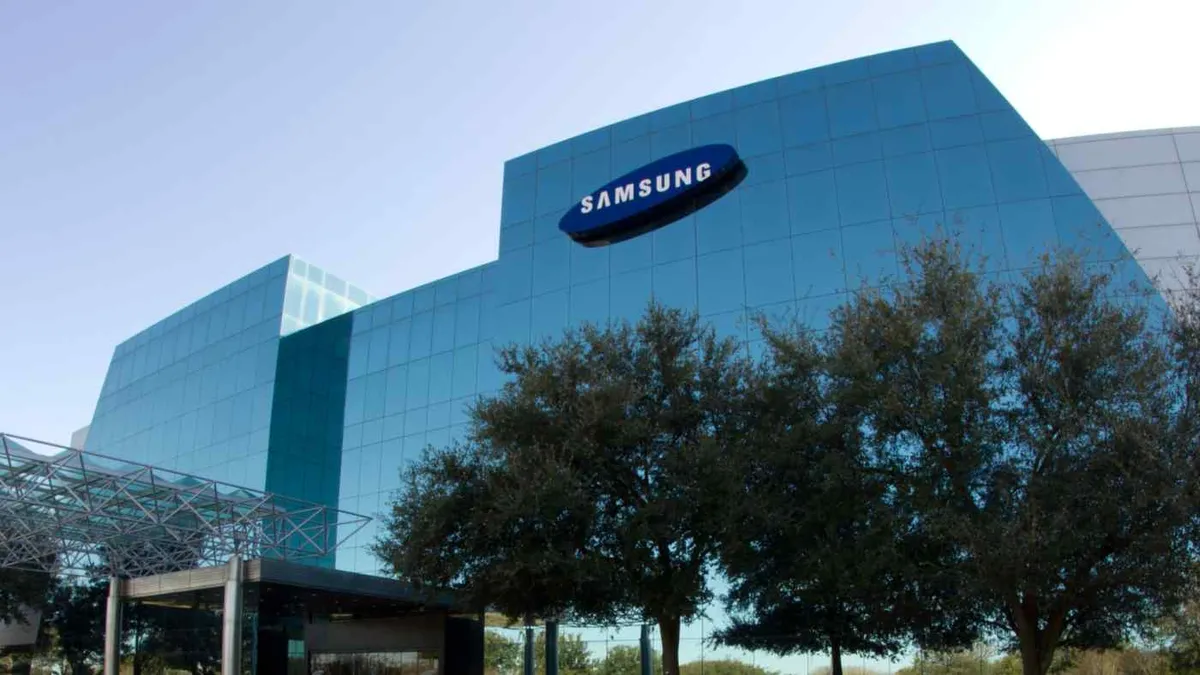
According to SEDaily (via Wccftech), Samsung's Semiconductor Division (DS) won't give its Mobile Experience (MX) division—its smartphone division—a 12-month supply of DRAM. The latter will instead have to request DRAM quarterly.
Article continues belowY'know, because prices might rise quick enough for quarterly renegotiations to make sense. Yep, those would be Samsung v Samsung negotiations.
Apparently, this "comes as Samsung Semiconductor is restructuring its production lines to focus on high-margin products such as high-bandwidth memory for artificial intelligence accelerators and low-power DRAM for mobile devices, in an effort to maximize profitability."
It's surely the former that's the real impetus to restructure here, though. The Smartphone market is hardly exploding in new profitability. The AI industry, on the other hand… well, even the most cursory glance at the news over the past few months will have seen you greeted with funding and investment numbers in the tens and hundreds of billions.
The newly booming AI industry is, in fact, the main progenitor of this sad state of affairs. The long and short of it is that AI servers require lots of memory, and AI companies are desiring way more than all the memory companies—primarily Samsung, SK Hynix, and Micron—can produce. Thus, a shortage and prices that seem to be climbing more and more each month.
And thus, too, Samsung's semiconductor division recognising that it might not be advisable to commit to 12 months of static prices for its memory, even with a sister division. Prices are rising so steeply and quickly that it seems Samsung has judged it makes sense to leave the door open for renegotiated prices each quarter.
More than anything, though, for me, this ordeal is simply a reminder that big company divisions are weird. I mean, they're not, they're entirely par for the course in the PC hardware industry, but it still doesn't sit right with me. I'm sure someone will explain to me how it's an inevitable result of late-stage capitalism, and along with shortages and industry bubbles, I wouldn't doubt it.

1. Best DDR5 overall:
G.Skill Trident Z5 RGB 32 GB DDR5-7200
2. Best budget DDR5:
Teamgroup T-Force Vulcan DDR5-5200
3. Best high-capacity DDR5:
G.Skill Trident Z5 64 GB DDR5-6400 CL32
4. Best DDR4 overall:
TEAM XTREEM 16 GB DDR4-3600
5. Best budget DDR4:
G.Skill Ripjaws V 16 GB DDR4-3600
6. Best high-capacity DDR4:
Corsair Dominator Platinum RGB 32 GB DDR4-3200

You must confirm your public display name before commenting
Please logout and then login again, you will then be prompted to enter your display name.