Nvidia's DLSS upscaling beats AMD's FSR and plain old native rendering at 4K in a poll of over 1,000 gamers
Upscaling is only becoming more important.
Keep up to date with the most important stories and the best deals, as picked by the PC Gamer team.
You are now subscribed
Your newsletter sign-up was successful
Want to add more newsletters?
Every Friday
GamesRadar+
Your weekly update on everything you could ever want to know about the games you already love, games we know you're going to love in the near future, and tales from the communities that surround them.
Every Thursday
GTA 6 O'clock
Our special GTA 6 newsletter, with breaking news, insider info, and rumor analysis from the award-winning GTA 6 O'clock experts.
Every Friday
Knowledge
From the creators of Edge: A weekly videogame industry newsletter with analysis from expert writers, guidance from professionals, and insight into what's on the horizon.
Every Thursday
The Setup
Hardware nerds unite, sign up to our free tech newsletter for a weekly digest of the hottest new tech, the latest gadgets on the test bench, and much more.
Every Wednesday
Switch 2 Spotlight
Sign up to our new Switch 2 newsletter, where we bring you the latest talking points on Nintendo's new console each week, bring you up to date on the news, and recommend what games to play.
Every Saturday
The Watchlist
Subscribe for a weekly digest of the movie and TV news that matters, direct to your inbox. From first-look trailers, interviews, reviews and explainers, we've got you covered.
Once a month
SFX
Get sneak previews, exclusive competitions and details of special events each month!
German website ComputerBase.de has conducted a blind comparison test pitting AMD's and Nvidia's latest AI-based upscaling technologies against native rendering at 4K in a poll of over 1,000 gamers. Across six different games, Nvidia DLSS came out on top as the stated preference of gamers, beating not only AMD FSR but also native 4K rendering.
The six games tested were Anno 117, Arc Raiders, Cyberpunk 2077, Horizon Forbidden West, Satisfactory, and The Last of Us Part 2. Around 1,000 to 1,200 gamers voted for their preference in each title based on viewing pre-rendered videos comparing the two upscaling technologies with native 4K rendering.
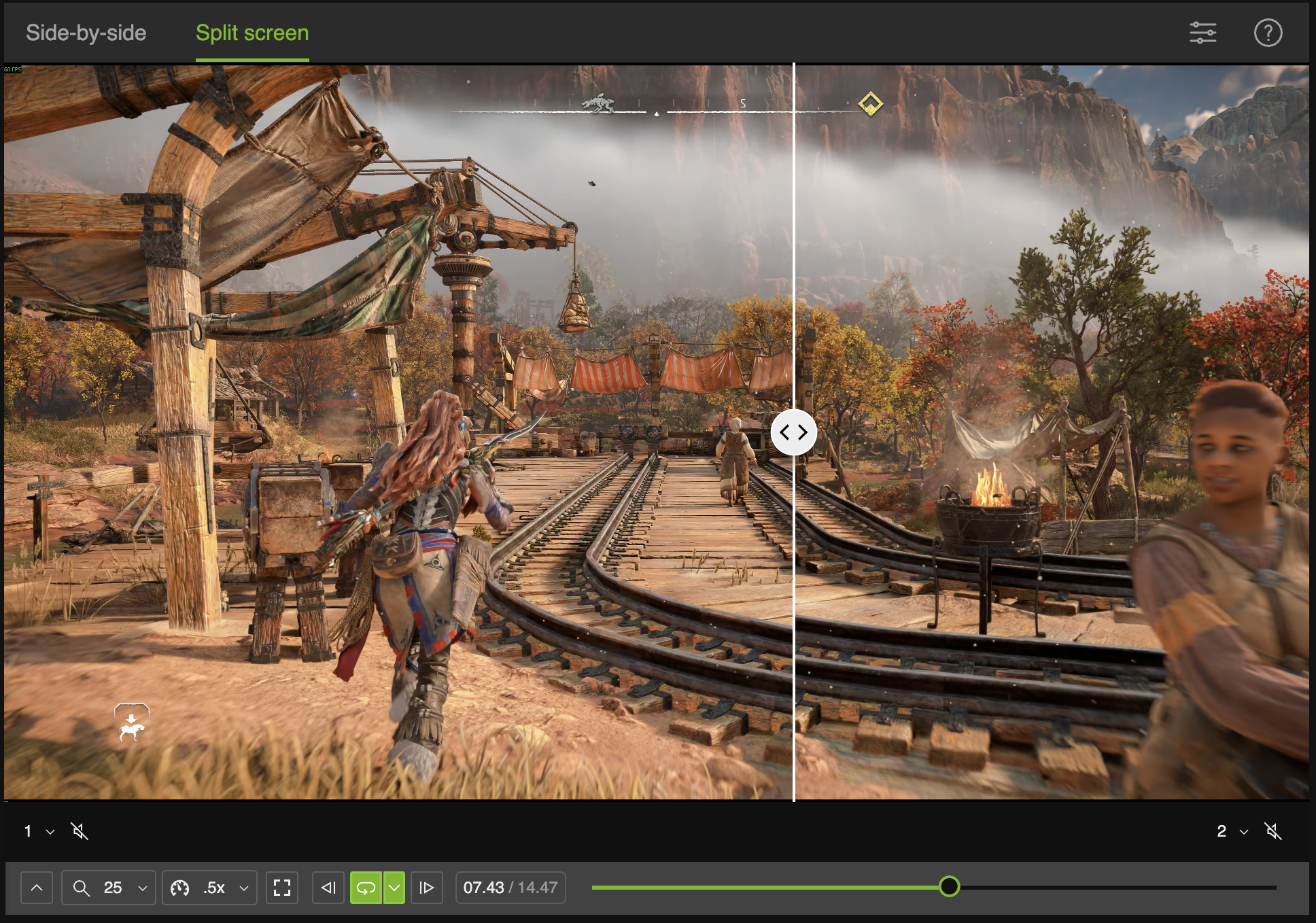
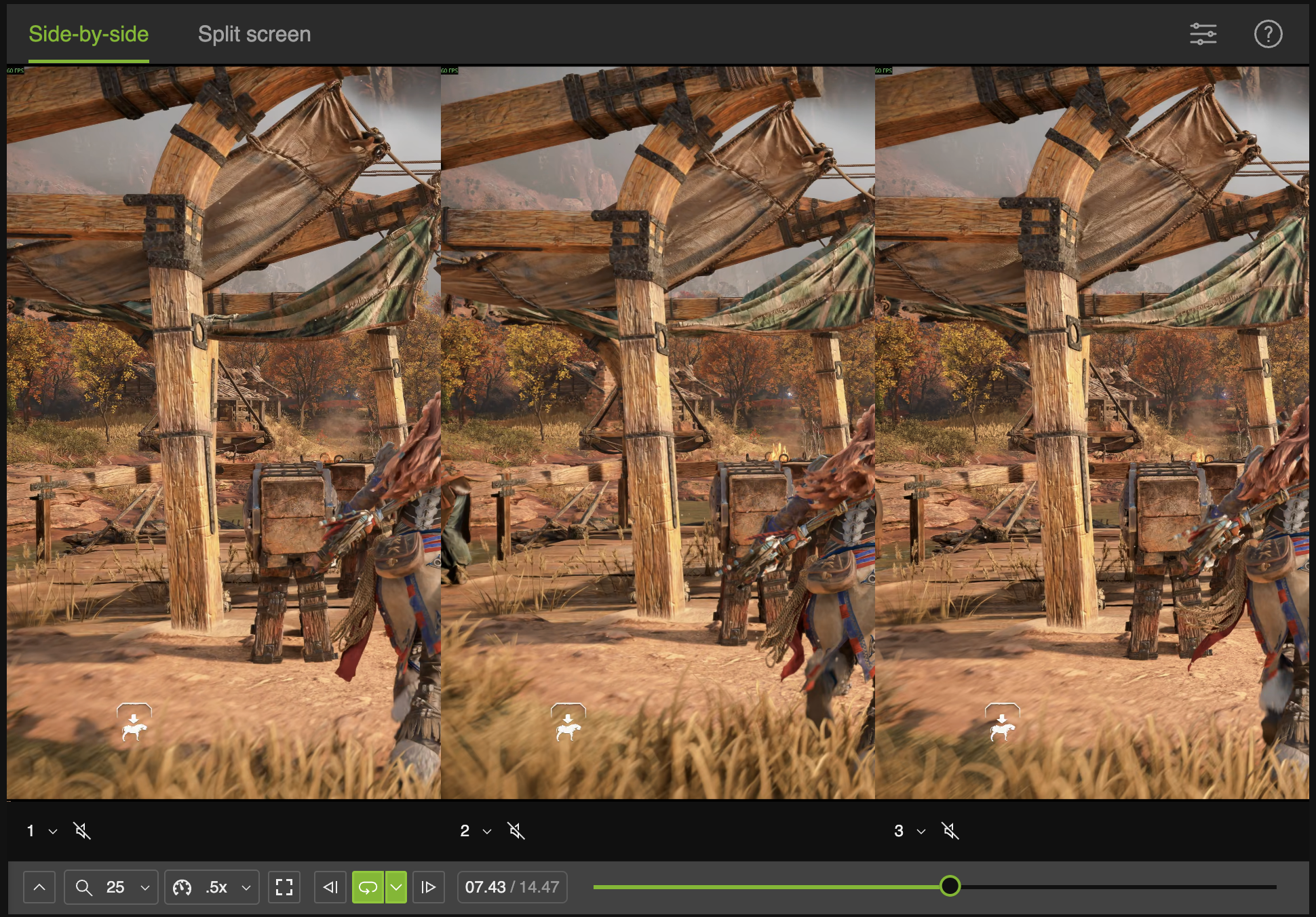
The video player used by ComputerBase allows users to see all three rendering modes side-by-side or any two in split-screen with a manual slider to switch between the two modes. Users can zoom in and out, pause or adjust the playback, all allowing for a pretty forensic examination of image quality.
In each test, the competing rendering modes were not identified, allowing for a true "blind" comparison. For the record, the upscalers were set to Quality with a target output of 4K, while the native 4K mode used the game's TAA (temporal anti-aliasing) implementation.
Remarkably, DLSS 4.5 won every single game, with native 4K rendering coming in second across the board, and thus AMD's latest AI-based FSR (variously known as FSR 4 or FSR Redstone) coming in last in every title. DLSS's winning margin was greatest in Satisfactory, where 60.9% of gamers preferred it, with just 15.1% choosing native 4K and a mere 12.4% favouring FSR. The closest result was Cyberpunk 2077, where 34.4% chose DLSS, 32.4% preferred native, and 10.6% thought FSR looked best. Roughly 10% of gamers across all six titles said they did not have a preference.


...or viewing all three rendering options at the same time.
That DLSS is preferred to FSR probably isn't a huge surprise, though the total dominance of Nvidia's upscaler is impressive. But what about DLSS beating native rendering? There are some good reasons why DLSS upscaling can look better than native, especially at 4K.
DLSS generates detail based on several methods, including temporal and vector data. As a consequence, DLSS can actually sharpen textures beyond their native appearance. So, upscaled rendering can actually look more detailed than native in some scenarios. Moreover, many modern games are coded with upscaling in mind, so optimal image quality is intentionally achieved with upscaling.
Keep up to date with the most important stories and the best deals, as picked by the PC Gamer team.
Of course, both DLSS and FSR have developed substantially over the years. So, this is just a snapshot in time. But, right now, this survey clearly puts DLSS ahead, a conclusion with which I would personally concur. AMD's AI-based FSR update is certainly an improvement. But DLSS is still better, most of the time.
An interesting added insight that this comparison doesn't include is Intel's XeSS upscaling, which has generally been pretty competitive and, perhaps, splits the difference between DLSS and FSR. Intel's presence in the GPU market is obviously very limited, so the most advanced version of XeSS, which requires an Intel Arc GPU is of questionable relevance. However, Intel also offers a version of XeSS that runs on all three of the GPU vendors' hardware. So, it would be interesting to see how well that would fare.
Anywho, what with the mess the hardware market is right now, thanks to the AI boom, extracting ever more performance out of existing GPUs has never been more important. Like it or lump it, upscaling quality and performance has become incredibly important.
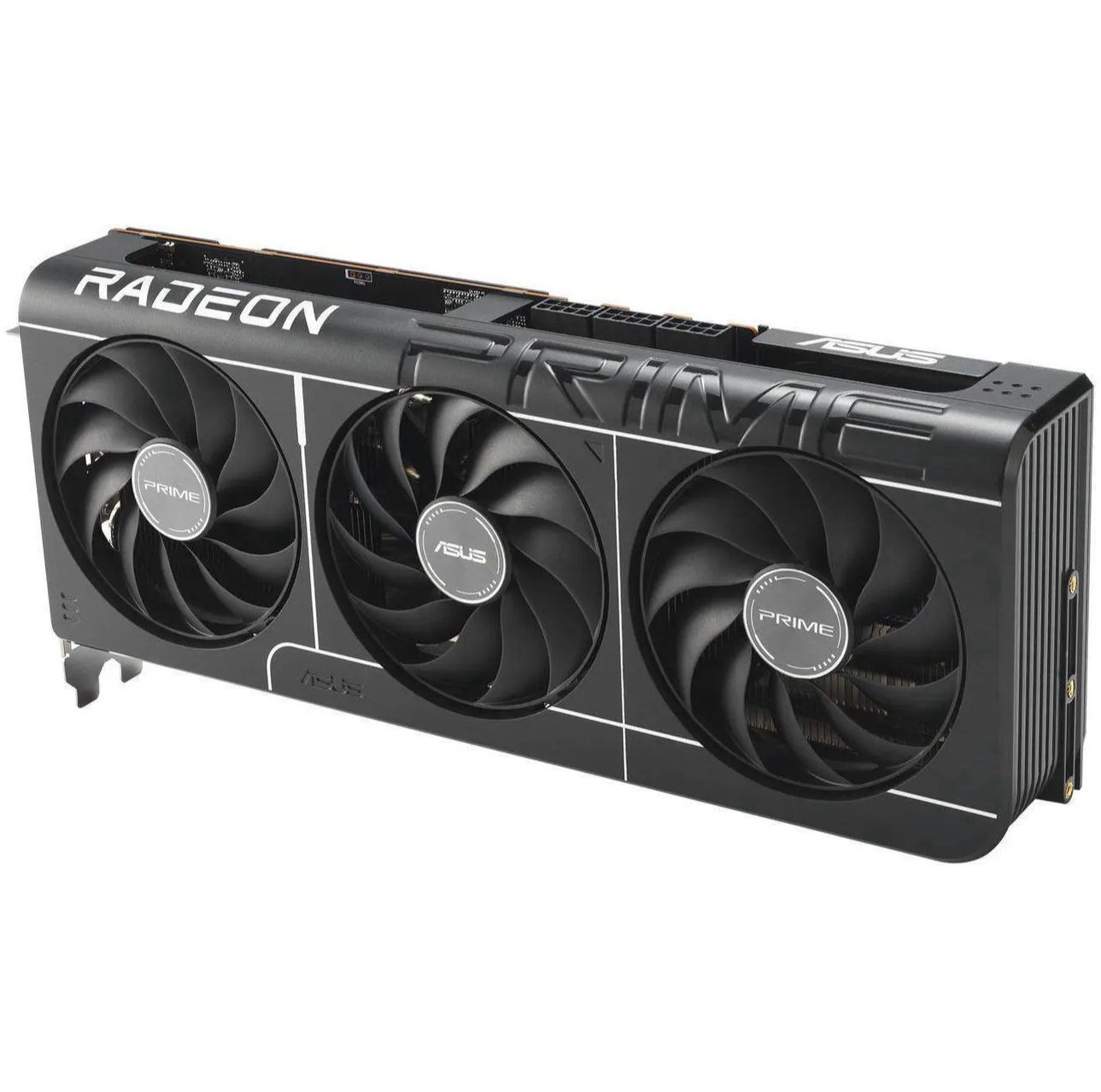
1. Best overall: AMD Radeon RX 9070
2. Best value: AMD Radeon RX 9060 XT 16 GB
3. Best budget: Intel Arc B570
4. Best mid-range: Nvidia GeForce RTX 5070 Ti
5. Best high-end: Nvidia GeForce RTX 5090

Jeremy has been writing about technology and PCs since the 90nm Netburst era (Google it!) and enjoys nothing more than a serious dissertation on the finer points of monitor input lag and overshoot followed by a forensic examination of advanced lithography. Or maybe he just likes machines that go “ping!” He also has a thing for tennis and cars.
You must confirm your public display name before commenting
Please logout and then login again, you will then be prompted to enter your display name.