Join The Club





This week I've been: Spending probably too much time in Counter-Strike 2 deathmatches and aim training maps. It's all work, not pleasure, I assure you... Okay, maybe a little pleasure.
The last couple of weeks have been such a deep breath of fresh air. It's been nice to focus on the positivity of a leap forward in gaming mouse technology with the Logitech G Pro X2 Superstrike rather than doom-maxxing with more 'state of the industry' reflections on high memory prices and high GPU prices and high– well, you get the idea.
We've not had this before in a gaming mouse. Some have pointed out that the Swiftpoint Z series has had pressure-sensitive clicks for a while, but these clicks are nothing like the Superstrike's. The Swiftpoint Z has an initial mechanical click and then uses pressure pads rather than electromagnetic sensing to measure the button press.
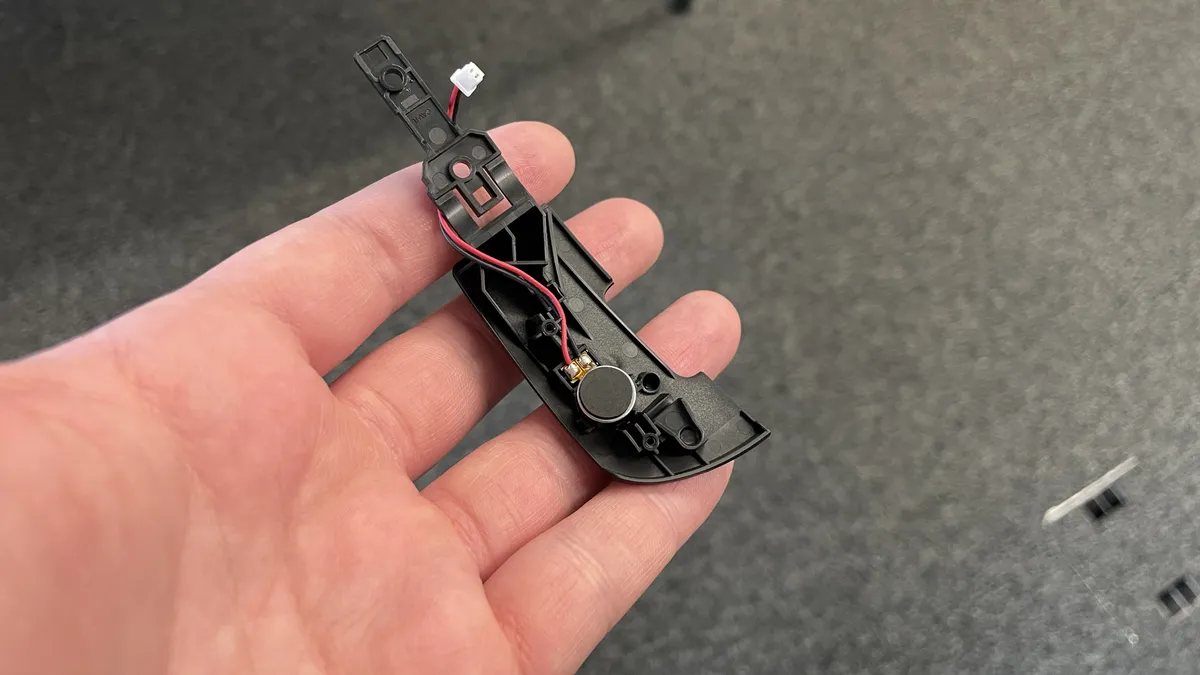
Article continues belowThe Superstrike's Haptic Inductive Trigger System (HITS), on the other hand, completely eliminates the initial mechanical click and allows for ultra-light actuation, plus rapid trigger. In other words, it's giving the same advantages that Hall effect and other popular analogue technologies give for keyboards.
Speaking of Hall effect keyboards, that's pretty much what we're dealing with here, in terms of how Logitech's HITS tech will likely affect the market. I don't see smaller mouse 'clone' companies ignoring it for very long; I'd expect there to be cheaper copycats within the next few months, especially given the hype over the Superstrike that these companies will no doubt have noticed.
When analogue gaming keyboards started popping up and gaining traction a few years ago—especially once they started using Hall effect rather than optical tech—there was scepticism in some corners of the internet. Some of that was very justified, because it was about the overall build quality of these keyboards, which didn't match good enthusiast typing experiences.
Now, though, we have budget Hall effect keyboards and ones that sound and feel just as good as traditional mechanical keyboards. In fact, these days, it's often worth opting for a Hall effect or some other kind of analogue keyboard (TMR, optical, induction) even if you're not a competitive gamer, just because you won't be losing out on anything, but you will be gaining the ability to set your actuation point to exactly where you like.
Any scepticism over Hall effect and other analogue technologies for gaming keyboards has been shown to be unfounded. I think the same will be true for analogue technology in gaming mice.
In fact, I think this technology has more of a chance to be vindicated even quicker than Hall effect was on keyboards. That's because we've already seen how well analogue tech can cement itself in the peripheral market, so there should be less resistance from manufacturers. And many companies will already have experience implementing this technology in their keyboards, so there's less risk on that front, too.

Admittedly, there is more of a question about the importance of having adjustable actuation in a mouse than in a keyboard. But after having used the Superstrike extensively for a couple of weeks now, I think this is an argument that will be rebuffed when enough people have tried it. The benefits, at least for tactical FPS games or very click-heavy games like MOBAs and RTS games, feel tangible and can definitely raise the skill ceiling.
And look, I'm not saying the mouse is perfect—it's not—but isn't it nice to actually get excited over something for a change, and to actually have a reason to? This is why many of us get into PC gaming hardware in the first place, is it not: because sometimes there can be exciting developments rather than piecemeal improvements?
I've seen some people complaining about it essentially being a G Pro X Superlight 2 apart from the new click tech, and this is a valid complaint because, yes, it's basically the same mouse, and there are downsides to this. For instance, I've noticed the Superstrike's middle click stops registering after holding it down for a while if you don't use a very firm touch, which was also a known problem with the Superlight 2. And the skates aren't great for cloth pads, either, as they're quite slow UPE ones.

The counterpoint to the argument that it's essentially a Superlight 2 is that the company has brought the mouse to market very quickly, to get the tech into people's hands ASAP and before another company does. Logitech's chief engineer Regis Croisonnier told me as much:
"Here, we knew we had a golden nugget in our hands, right? We wanted to move fast, so we took all the shortcuts we could… I think for us, it was clear that we had to move fast… we have a fantastic idea. And on the other hand, it's obvious, right? When you know it, when you have it in your hand, it's obvious, right?"
The implication, of course, is that if it wasn't brought to market as quickly as possible, then others might have beaten them to it. Which isn't a very consumer-focused reason, of course, but the benefit for us is that we get this technology quicker.

Whatever you think of that argument, though—whether you're happy with it or would have rather waited longer for a Superstrike with a different design—there's no denying that the technology is exciting.
Setting aside the specifics of its implementation in the Superstrike, HITS itself has shown the gaming mouse market that analogue and rapid trigger technology in a gaming mouse is possible and useful in some competitive games. I'll take that kind of a leap forward over slight frame rate increases, increasingly ridiculous refresh rates, 8K polling, and any number of other PC gaming hardware changes we've seen over the last few years.
The Superstrike's haptic and induction technology joins the likes of Hall effect for keyboards, OLED for monitors, and 3D V-Cache for CPUs in terms of its market-transforming power. It's just a question of how long it will take for that to come to fruition in the market at large, and even on that front, I think there's reason to be optimistic.
1. Best wireless:
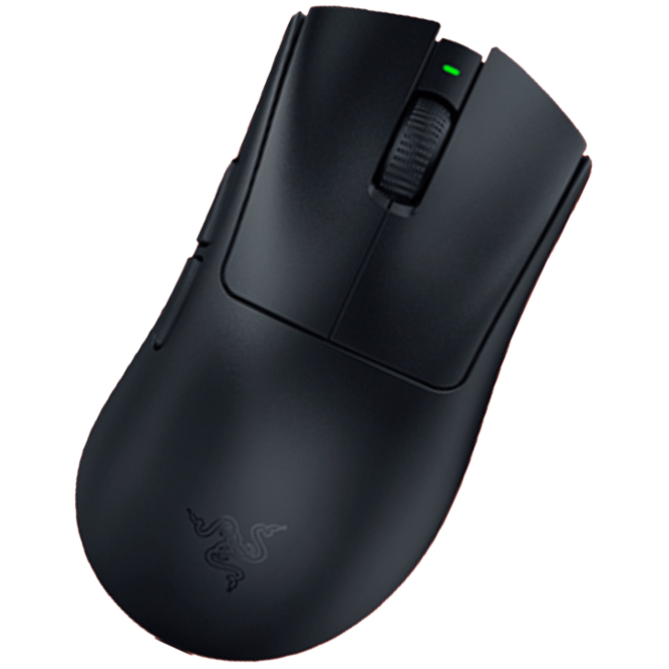
Razer DeathAdder V4 Pro
2. Best wired:
Logitech G502 X
3. Best budget wireless:
Logitech G305 Lightspeed
4. Best budget wired:
Glorious Model O Eternal
5. Best lightweight:
Corsair Sabre V2 Pro
6. Best MMO:
Corsair Scimitar Elite Wireless SE
7. Best compact:
Razer Cobra Pro
8. Best ambidextrous:
Logitech G Pro
9. Best ergonomic:
Keychron M5
10. Best customizable:
Orbital Pathfinder

You must confirm your public display name before commenting
Please logout and then login again, you will then be prompted to enter your display name.