Join The Club





Apple turns 50 today. The big 5-0. That company from Cupertino, California is one of the biggest success stories in tech. It's built an empire from selling phones and laptops to people that have moustaches tattooed on their fingers and unironically wore suspenders in 2010. A mighty accomplishment.
Alright, I will lay off the sarcasm for Apple's big day, even if it is also April Fool's—arguably the worst day on the calendar. Even a PC gamer such as myself can admit what Apple has achieved in recent years is impressive. It's no longer selling Intel-powered laptops with fewer options at higher prices. It's selling homegrown, powerful Arm silicon with an OS and software stack that feels more in sync than Microsoft or anyone else could dream of.
It's easy for PC users to poke fun at Apple users: everyone's buying the same thing for the same high price. And Apple has done its fair share to reinforce that snarky relationship. In my mind, it was just a couple years ago—though, in fact, 20 years have passed—when the company lived rent free in PC owners' heads with the launch of its very popular adverts, known for the opening line, "I'm a Mac. I'm a PC." These painted PC users as snivelling dorks. At the very least I'm not snivelling.
Article continues below 
But forget Pencils, Apple's strongest feature, at least to a performance-obsessed PC gamer such as myself, is the silicon.
When it first announced the M1 chip in 2020, ditching a long-standing relationship with Intel in the process, I had feared the worst for Apple's ecosystem. Mobile applications do not replace desktop applications. Let alone mobile applications running on an Arm-based processor, which is what Apple's silicon is. But that line between mobile and desktop is thinning. No more so since the release of the MacBook Neo.

The MacBook Neo was well reviewed by our Ian Evenden. As by many more. It's an affordable laptop that's powered by a processor previously used in iPhones. It's not just a mobile chip in the sense that it's for laptops. It's literally a mobile phone chip. A mobile phone chip that's competitive with older M-series chips and shares similarities with the M4 chip, only smaller, and requiring only a cutesy motherboard. It's not something you could fathom on PC, but Apple can do it; made possible by the company's in-house chip design and total ownership of the silicon and software stack.
Apple didn't start designing chips when it made the M1. It began working on its own Arm-powered processors way back with the A4 chip in the iPhone 4—that was actually the last iPhone I owned before this one. It wasn't starting from scratch: it had developed a pile of mobile chips before it ever turned its hand to something more powerful for use in its laptops and, later, high-end iPads.

It also had the foresight of building out its MacBook operating system, OS X, to more easily switch between underlying architectures. Switching from PowerPC to Intel in the early noughts meant Apple had already laid the groundwork for a momentous architectural shake-up. It made that switch at the time by cleverly anticipating the move all along: OS X had already been running on Intel chips for years prior to Apple's announcement. Developers, too, could get their applications ready for the switch with tools like Rosetta.
Rosetta was introduced around 2006 as a translation layer to run software designed for PowerPC chips on Intel chips. That was a big shift. Later, Rosetta (Rosetta 2) was introduced to do something very similar for the modern era of Apple devices: run software designed for Intel chips on Apple silicon chips. Rosetta 2 will mostly be ditched by 2027, meaning that's when developers need to ship an Apple silicon-native application or ship out.
Apple gets to force big changes on developers by holding the keys to both software and hardware. Microsoft, on the other hand, can only push developers in a direction. Windows on Arm is not a wholesale shift for Microsoft from Windows on x86. It's doing both, because it has to. The PC market is totally dominated by x86 chips, and it takes a company like Qualcomm to design and spend a lot of money trying to break into the PC market with an Arm-powered processor to incite any sort of major change.
Mercury Research suggests Arm PCs, including those with Apple's M-series chips, make up roughly 13% of the overall client market. Compare that to around 6% in Q1, 2021, this marks a huge increase in a relatively short period of time—AMD has been fighting tooth and nail with Intel for decades to earn roughly 25% of the market. Though the release of Qualcomm's most recent X2 chips hasn't moved the dial much. This time last year, Arm share in client PCs was estimated to sit at, again, around 13%.
Our hobby of PC gaming and DIY builds is far better for the flexibility afforded to it. However,
while I do not want its singular influence over my gaming rig and what's in it, Apple has leveraged its total control over its own hardware and software incredibly well over the past few years.

Just look at Ian's performance testing for Apple's most recent M5 chip in GeekBench 6. In the new MacBook Pro, the M5 hit a single-threaded score of 4,310. The Ryzen 9 9950X3D, ostensibly the fastest desktop processor for gaming today, scored just 3,332. The Core Ultra 9 285K reached 3,214. Need I remind you, the M5 is in a slim 14-inch laptop. The performance from this chip is quite extraordinary.
Qualcomm also finds pace in testing with its latest and largest Arm processor, the X2 Elite Extreme. It remains slower than Apple's comparative M5 silicon in single-threaded performance but blasts past Intel and AMD's chips, the Core Ultra X9 388H and AMD Ryzen AI 9 HX 370, respectively. It also has 18 cores in total for big multithreaded gains.
That said, we do have to talk about the elephant in the room. A big one for a website called PC Gamer. That is, of course, gaming.
Gaming is traditionally Apple's weak point. Even with the best will in the world—and a sizeable GPU—the M5 just isn't going to be the choice among gamers. The Intel Arc B390 iGPU found in Panther Lake, however, is a graphical wunderkin in our testing. Though I don't think we're far from a reality where gaming on Apple is more commonplace.

It is possible to play games like Resident Evil Village, Death Stranding, Cyberpunk 2077, and Control on a Mac. Native support, and whether said support is worth it for developers, being the biggest hurdle for gaming on Mac rather than explicit hardware capability.
Though there are exciting developments in the world of Arm gaming. The Steam Frame, Valve's upcoming VR headset, runs on a Qualcomm Snapdragon 8 Gen 3 (SM8650) processor. It uses a translation layer called FEX to translate garbled x86 commands into something its Arm chip can understand. In doing so, it loses around 10-20% of performance (as of late last year when I asked Valve), but it works. I tried it, it was good. Valve is also running a translation layer to run games for Windows on the Linux-based SteamOS at the same time.
As I've said before, Valve is all in on Arm and even launched a native Steam client for Apple silicon in June last year.

Apple has something similar: the Game Porting Toolkit. It's intended for evaluating the possibility of a native Mac port, rather than rolling out for users to give it a go. Nevertheless, we are reaching a point where the question of how you translate a game designed for Windows and x86 to Arm and other operating systems is high on the agenda. Microsoft is something similar with Prism, designed to run Windows games on Windows on Arm. Even Nvidia may have a vested interested as it's rumoured to be close to launching an Arm-based consumer chip, the N1X, with cores to match Intel and AMD's alongside a chunky GPU.
For Microsoft, Nvidia, Qualcomm and others, Apple has proven the formula; how to migrate to an entirely new architecture without much delay or major issue. How to leverage silicon in new and exciting ways, as users look for more powerful devices in form factors usually reserved for lesser mobile chips. Apple silicon covers most bases for performance and affordability; consequently blurring the lines between laptop and mobile. That's especially interesting when Valve is talking about the Steam Frame in similar ways, and, to be honest, we'd be all over an Arm-powered Steam Deck with excellent battery life.
It's certainly convinced me. Not because I want to buy an Apple device for my next gaming machine, far from it, but because I totally would buy an Arm one.
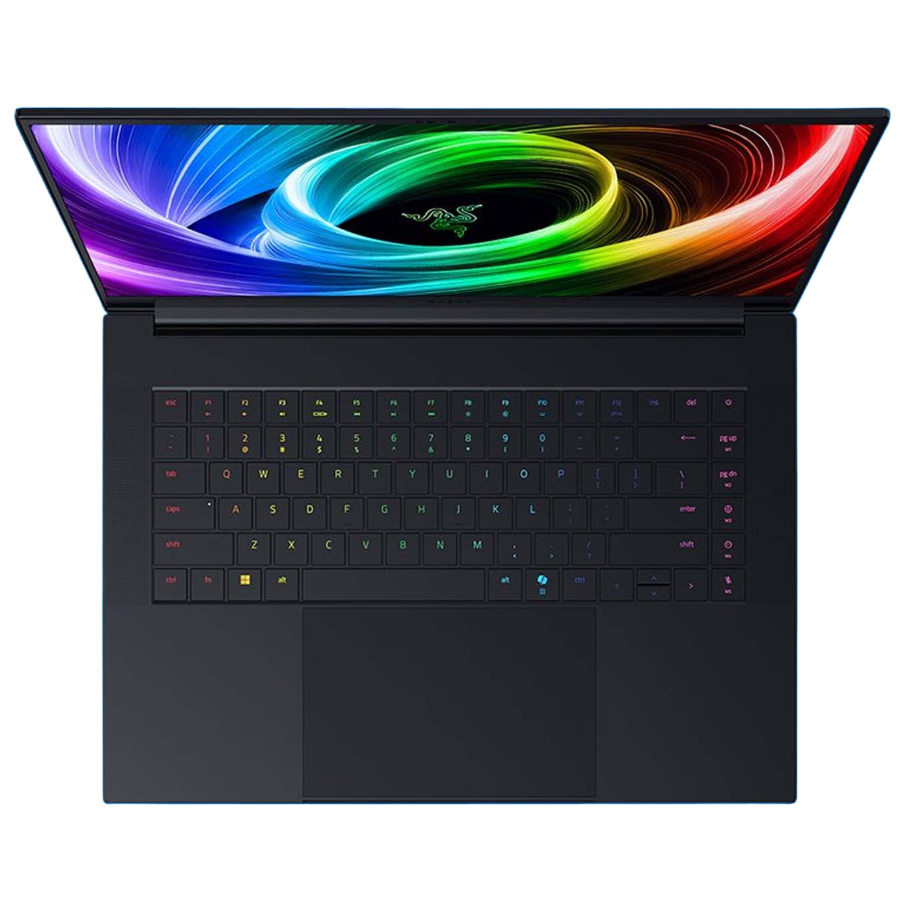
1. Best overall:
Razer Blade 16 (2025)
2. Best budget:
Lenovo LOQ 15 Gen 10
3. Best 14-inch:
Razer Blade 14 (2025)
4. Best mid-range:
MSI Vector 16 HX AI
5. Best high-performance:
Lenovo Legion Pro 7i Gen 10
6. Best 18-inch:
Alienware 18 Area-51

You must confirm your public display name before commenting
Please logout and then login again, you will then be prompted to enter your display name.