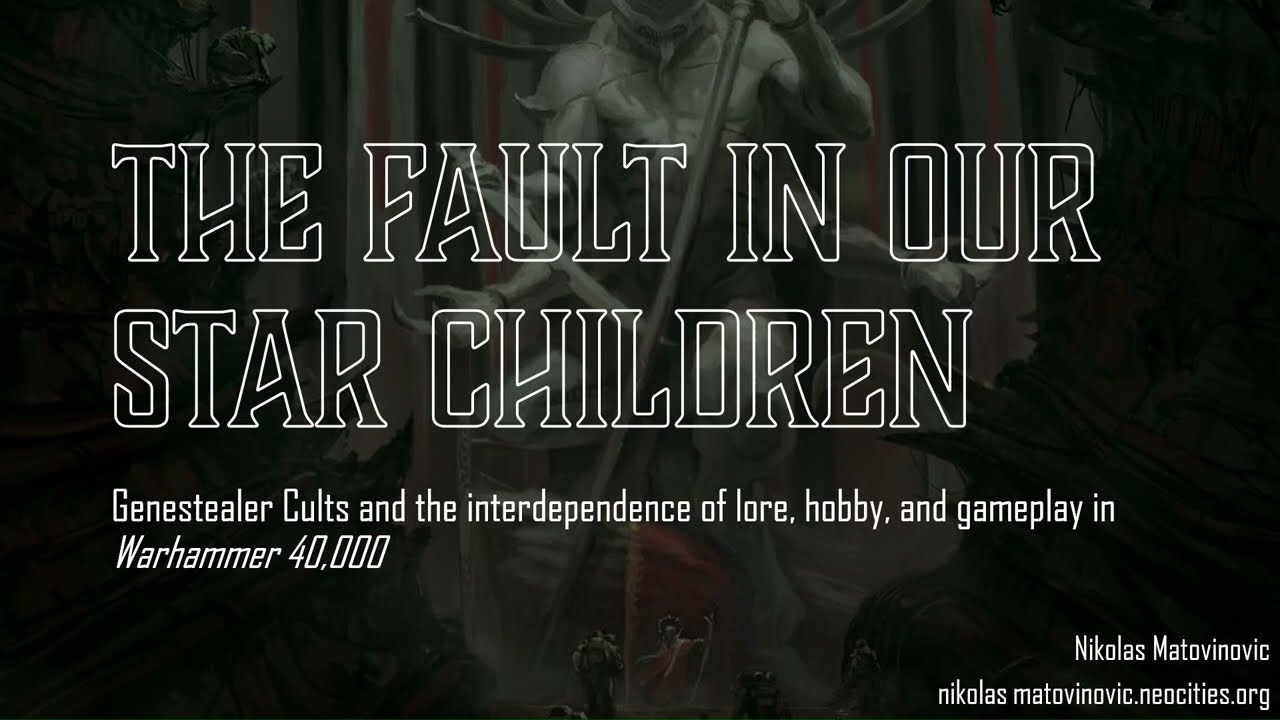
The second annual Warhammer Conference took place in September—two whole days of academic talks about Warhammer 40,000 as a model of social power relations in Western societies since the 19th century and the terror of androgyny with particular reference to xenos species at the University of Heidelberg in Germany.
The Warhammer Conference is an independent event organized by a group of academics who were sick of having their abstracts rejected by more general conferences, and decided to create a place where Warhammer was the only topic. When I asked Dr Nikolas Matovinovic about it (he presented The Fault in Our Star Children: Genestealer Cults and the Interdependence of Lore, Hobby, and Gameplay in Warhammer 40,000 remotely this year), he said, "This is one of the more diverse and interdisciplinary conferences I have ever attended."
Article continues belowThat broadness of approach is combined with an understanding the audience will also be broader than the average conference. As Matovinovic put it, "it's always interesting to step outside one's comfort zone and I think it makes the papers themselves more approachable for a non-academic audience as the presenters can't fall back on the assumed training of the audience as much as they could in their own fields."
As someone who bounced off academia so hard there was an audible "ding", I'm glad the papers have that little bit of extra approachability. The presenters are still scholars, but they're often scholars of cultural studies and history with a modern edge, and even a dropout like me can keep up with most of what they say.
Matovinovic is a screen studies researcher, "which means I focus on the cultural significance of films, TV, streaming, and videogames. My PhD research was on the films of the American director and musician John Carpenter and I'm working on publishing that research as a book sometime in the next two years. Specifically, my research focuses on fantasy and science fiction as an expression of public thoughts and feelings about environmental systems and crises. My most recent research project looked at the videogame series Splatoon and how it fits into other representations of squids in media."
While some of the Warhammer Conference is recorded live in Heidelberg and uploaded to YouTube, many of the talks are presented remotely, as Matovinovic's was. "Of course, attending in-person affords more opportunities to socialise and network," he says, "but online conferences have been one of the better legacies of the pandemic as they allow researchers to present their work who otherwise wouldn’t have been able to travel."
While the Imperium of Man in the 41st millennium may not be a broad church, it's wonderful to see the world of Warhammer-adjacent academia is. Whether your interest veers toward The (Green) Stuff Games Are Made of: Towards a Media Ecology of Warhammer 40,000 or Masse und Macht und Waaagh: Orks through Canetti’s Crowds and Power, then the Warhammer Conference YouTube channel has you covered.
You can also read some of the articles and conference papers by Dr Nikolas Matovinovic (PhD, BA (Hons), BSc) on his website.
You must confirm your public display name before commenting
Please logout and then login again, you will then be prompted to enter your display name.