Microsoft's acquisition of Activision Blizzard is a very big deal. At a cost of $68.7 billion, Microsoft has added some of the biggest games in history to its roster, including Call of Duty, World of Warcraft, and Overwatch, along with a mountainous back catalog. The deal cost nine times as much as Microsoft's buyout of Bethesda, which was a blockbuster in its own right when it happened just over a year ago.
The Bethesda deal was announced in September 2020 but not actually completed until March 2021, and the Activision Blizzard is not expected to close until sometime in the company's 2023 fiscal year, after clearing the required regulatory hurdles. But with the acquisition set to make Microsoft the third-largest gaming company in the world by revenue, there is some concern that the buyout could face opposition from governing bodies over potential antitrust violations.
Antitrust regulations, monitored and enforced in the US by the Federal Trade Commission, are intended to promote competition and prevent monopolies. In 2020, for instance, the FTC filed antitrust actions against Facebook (citing its acquisition of Instagram, among other things), and more recently it took action to halt Nvidia's takeover of ARM. Microsoft itself faced an antitrust lawsuit filed by the FTC in 1998: It was initially ordered to break up, but that order was overturned on appeal and a lesser penalty was eventually negotiated.


The absorption of Activision Blizzard will unquestionably turn Microsoft into a game industry behemoth, but the general consensus right now is that it's unlikely to trigger antitrust action because it's a "vertical" transaction: A larger company purchasing a smaller one that performs an essentially different function. Activision Blizzard, with revenues in excess of $8 billion in 2020, is certainly a major videogame publisher, but it's dwarfed by Microsoft, which posted more than $143 billion in revenues over the same period.
"Antitrust issues typically arise with horizontal mergers, where a company acquires a competitor, as these mergers limit competition in that particular market. For example, Microsoft buying Sony," attorney Kellen Voyer, founder of Voyer Law, told PC Gamer. "Vertical mergers, where a company purchases a downstream company that provides a different function, such as one of its suppliers, may also attract antitrust review but the anticompetitive nature of the transaction is not as clear and there’s a better chance of passing review on this basis."
"Many are viewing this transaction as an example of vertical integration, given the different roles played by each company in the industry. I feel it’s a weaker argument to claim horizontal integration on the basis that each company is a large player in the video game development and publication market—but you can’t predict the regulator's view of the transaction."
That lack of predictability is especially true in the wake of an FTC announcement—made on the same day as the Microsoft—Activision Blizzard deal, but not directly related to it—that it is launching a review of its merger guidelines, with an eye toward clamping down on consolidation and diminished competition across US industries.
"With increased scrutiny of Big Tech by US regulators, there’s no guarantee that past transactions can provide complete certainty on how this new transaction will be viewed," Voyer said. "Indeed, the FTC and DOJ recently announced a review of merger rules, with a focus on digital markets. However, I feel that a large shift in how these agencies view these sorts of transactions may be required in order for a material challenge to be raised."
That's a view shared by Gene Munster, a former investment banking analyst at Piper Jaffray and founder of the venture capital firm Loup. Munster made headlines for telling CNBC's Squawk Box program that the deal is setting up a "collision course" with the FTC, because Microsoft is effectively ignoring signals being sent by the Biden administration. In a July 2021 executive order, for instance, President Biden said it is his policy "to enforce the antitrust laws to combat the excessive concentration of industry, the abuses of market power, and the harmful effects of monopoly and monopsony," and "to enforce the antitrust laws to meet the challenges posed by new industries and technologies."
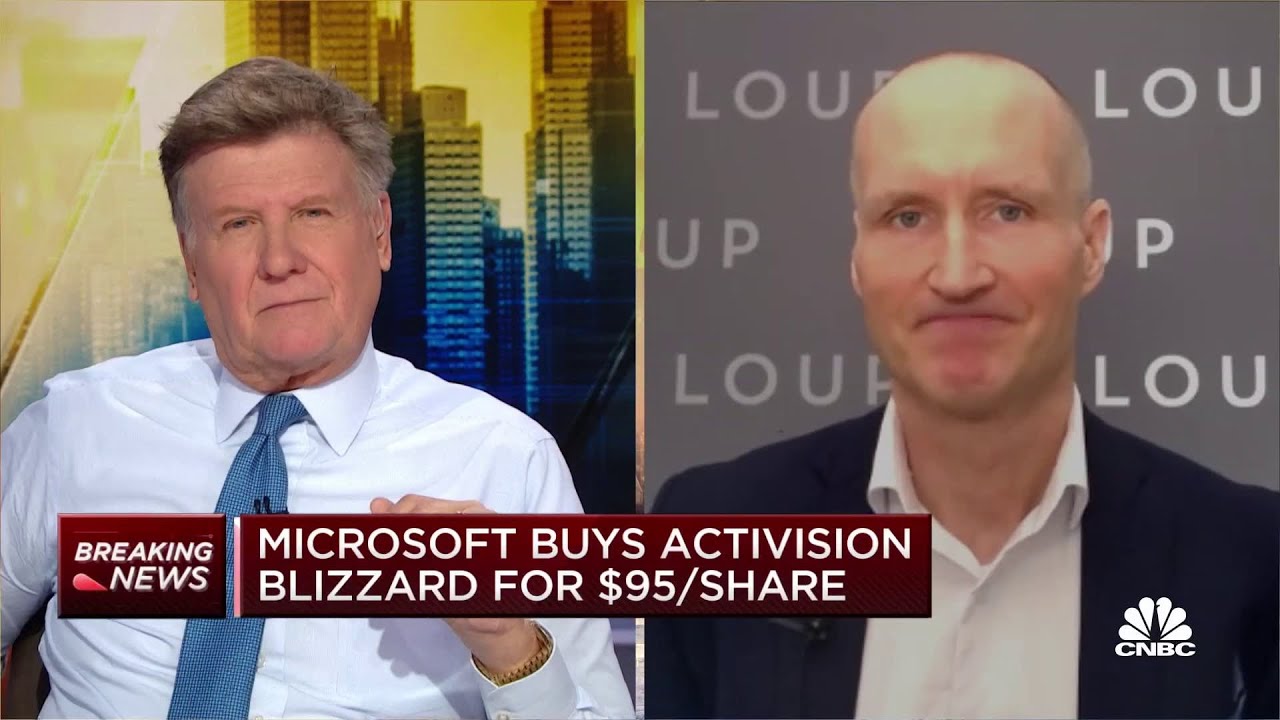
But Munster also said he believes that the deal will be passed, because regulators don't actually have standing to block it.
"I think there's going to be some drama," Munster said. "In the end, I think the deal gets done … and part of the reason is, I think that a lot of the saber rattling that we've heard from Capitol Hill over the past two years, I think it's been off base ... these big tech companies, despite frustration from many about the kind of wealth that they've created for themselves, I think that they are ultimately making consumers' lives better."
Both Activision Blizzard and Microsoft have gently downplayed consolidation concerns in the immediate wake of the acquisition announcement. In an interview with VentureBeat, Activision Blizzard CEO Bobby Kotick noted that "most of the content [Microsoft] create has nothing to do with gaming," while Microsoft Gaming CEO Phil Spencer recently told Bloomberg that Microsoft is not looking to "pull communities away" from Sony—and more recently expressed Microsoft's desire to "keep Call of Duty on PlayStation."