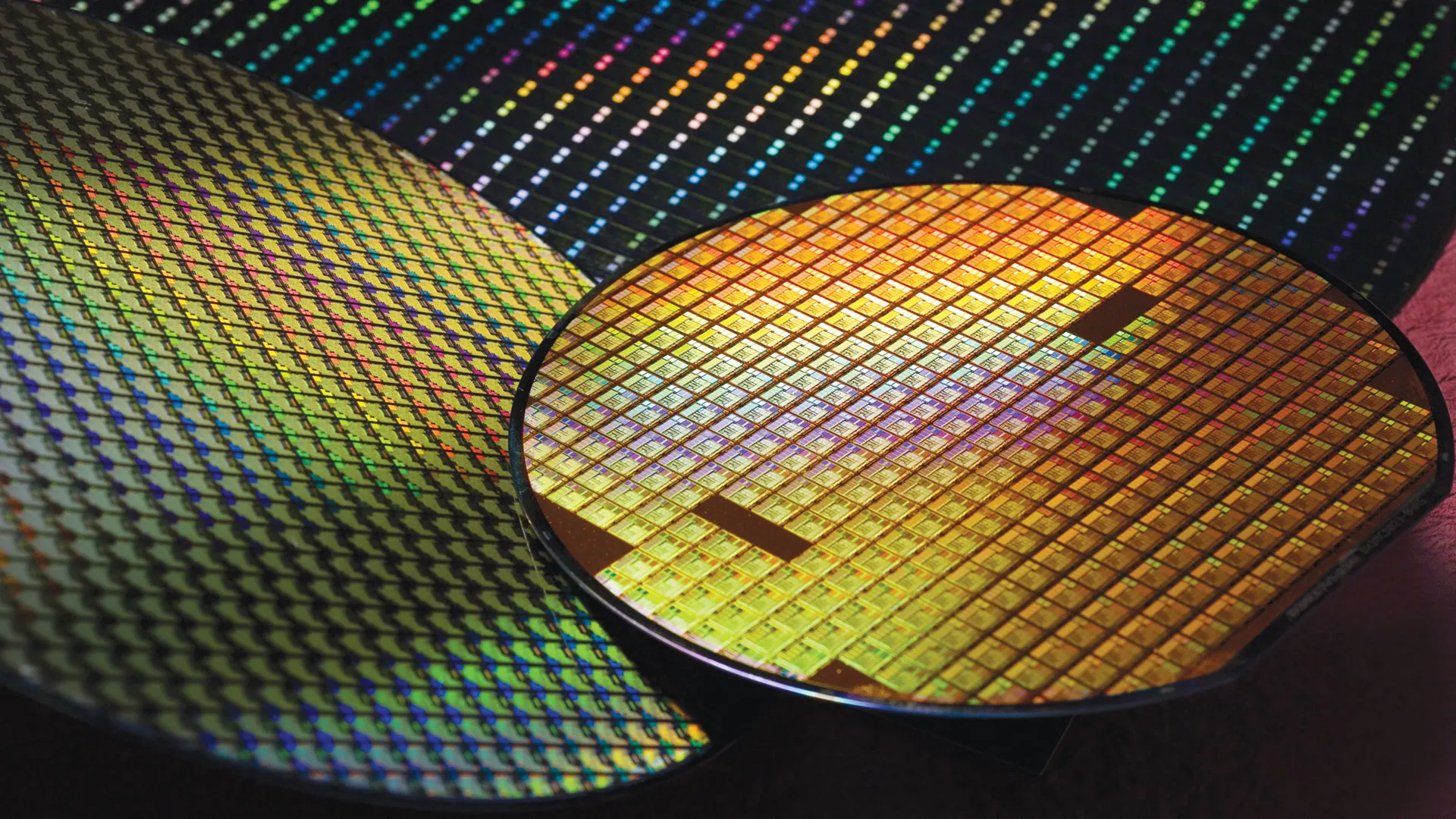
TSMC has delivered a hefty smackdown to Intel, claiming that its current 3nm chip production technology is as good as Intel's plans for its 18A process in 2025.
Speaking at a recent company earnings call with investors (via Tom's Hardware), TSMC CEO C.C. Wei said, "our internal assessment shows that our N3P technology demonstrated comparable PPA to 18A, my competitors' technology."
To decode that, "PPA" stands for Power Performance Area, indicating the three critical measures of chip achievement, namely how much power a chip uses, how much performance it delivers, and how small TSMC can make it. "N3P", meanwhile, is one of several 3nm-class production nodes TSMC currently offers. Apple is already selling iPhones containing chips based on another 3nm-class TSMC node, known as N3B. "18A" meanwhile is Intel's next-but-two node, due in 2025.
Intel currently sells CPUs based on the Intel 7 node, such as the latest Raptor Lake refresh CPUs, with Intel 4 due shortly in the form of Meteor Lake mobile CPUs and Intel 20A coming in 2024. Intel says 18A, which is a refined version of 20A, will arrive in 2025, at which point Intel CEO Pat Gelsinger claims Intel will have regained "unquestioned leadership" in chip production technology.
Well, not according to TSMC, which thinks its existing silicon production is as advanced as what Intel has planned for 2025. Slightly complicating the comparison, Intel has some fairly exotic plans for its 20A node, most notably a feature called backside power deliver which is said to allow for much greater transistor density.
TSMC isn't planning to add backside power delivery until its second-iteration 2nm-class node in 2026, some two years after Intel. That will no doubt allow Intel to claim that it has, indeed, regained leadership. From a certain point of view.
Best CPU for gaming: The top chips from Intel and AMD
Best gaming motherboard: The right boards
Best graphics card: Your perfect pixel-pusher awaits
Best SSD for gaming: Get into the game ahead of the rest
Of course, C.C. Wei also said during the earnings call that TSMC's 2nm technology would be superior to Intel 18A when it arrives in 2025, even without backside power delivery. So, both companies are positioning themselves as the clear market leader.
Overall, then, it looks like it will be a subjective call between TSMC and Intel in the coming years over who has the most advanced production technology. It may well turn out that both companies end up with plausible claims to leadership depending on the measures you favour.
But the good news is that both companies seem confident they can continue to advance the art of chip manufacturing, and that should mean ever faster bits for our PCs. Which is what matters, right?