Our Verdict
An outstandingly affordable classy chassis, with support for 360 mm AIOs, chunky GPUs, and Micro-ATX motherboards. You could make one of the world’s most powerful systems in here if you wanted. Build quality is solid, and the pricing to die for. Just remember to grab a blow duster.
For
- Extraordinarily compact form factor
- Micro-ATX is back
- Impressively cheap
Against
- Materials could be better
- Power supply installation can be finicky
PC Gamer's got your back Our experienced team dedicates many hours to every review, to really get to the heart of what matters most to you. Find out more about how we evaluate games and hardware.
I bloody love the Phanteks XT V3. There’s just something about it that resonates with me. Small form factor cases are massively underrated. They really are. The very concept of them channels this essence of what technological advancement should be about. They’re arguably some of the best PC cases out there, on a purely philosophical basis, and I will die, on, that, hill.
Processing should shrink year-on-year (whether or not we’re reaching the limits of Moore’s law besides). You should be able to do more with less. More performance, less energy. More efficiency, less space. The idea that we need these massive goliath full-tower PCs, brimming with slots and cables and fans to deliver the performance we need, is just nonsensical, particularly when you could theoretically get to the moon these days with nothing more than the processing power of a Raspberry Pi.
It’s that ethos that the XT V3 facilitates wholeheartedly, and I 100% get behind.
This is a Micro-ATX case from Phanteks, based off the back of the company’s remarkably affordable budget XT line. It comes in at an incredibly low price point of just £60 in the UK or $66 in the US, cheaper if you go for the white variant. There’s also an M3 version, that’s remarkably similar, albeit includes a mesh front-panel with additional support for two 120 mm front intakes as well. Again, in both black and white.

Form factor: Compact Micro-ATX
Dimensions: 41.0 x 12.2 x 6.0 cm
Motherboard support: ITX, mATX + Back connectors
Expansion slots: 4 horizontal
Front IO: 1x USB 3.0, 1x USB 3.2 Gen2x2 Type C, 1x Microphone/Headphone Combo
Total fan support: 7
Fan count: 3x 120 mm TOP, 3x 120 mm BOTTOM, 1x 120 mm REAR
Radiator support: Up to 360 mm TOP
Graphics card support: 430 mm length, 175 mm Width
Storage: 2x 2.5-inch; 1x 3.5-inch
PSU support: ATX (up to 150 mm)
Weight: 6.05 kg
Price: $66/£60
It’s seriously clean, and although the materials on the non-glass elements aren’t the most premium, we can let it slide, particularly given what you’re getting for the price. Phanteks even threw in three 120 mm RGB reverse-blade fans in the floor too.
The V3 is remarkably compact all things said and done, coming in at just 460x235x370 mm, it fits quite snugly on top of any desk space you might have. The real beauty of that is that despite its humble sizing, it actually packs in a serious amount of kit.
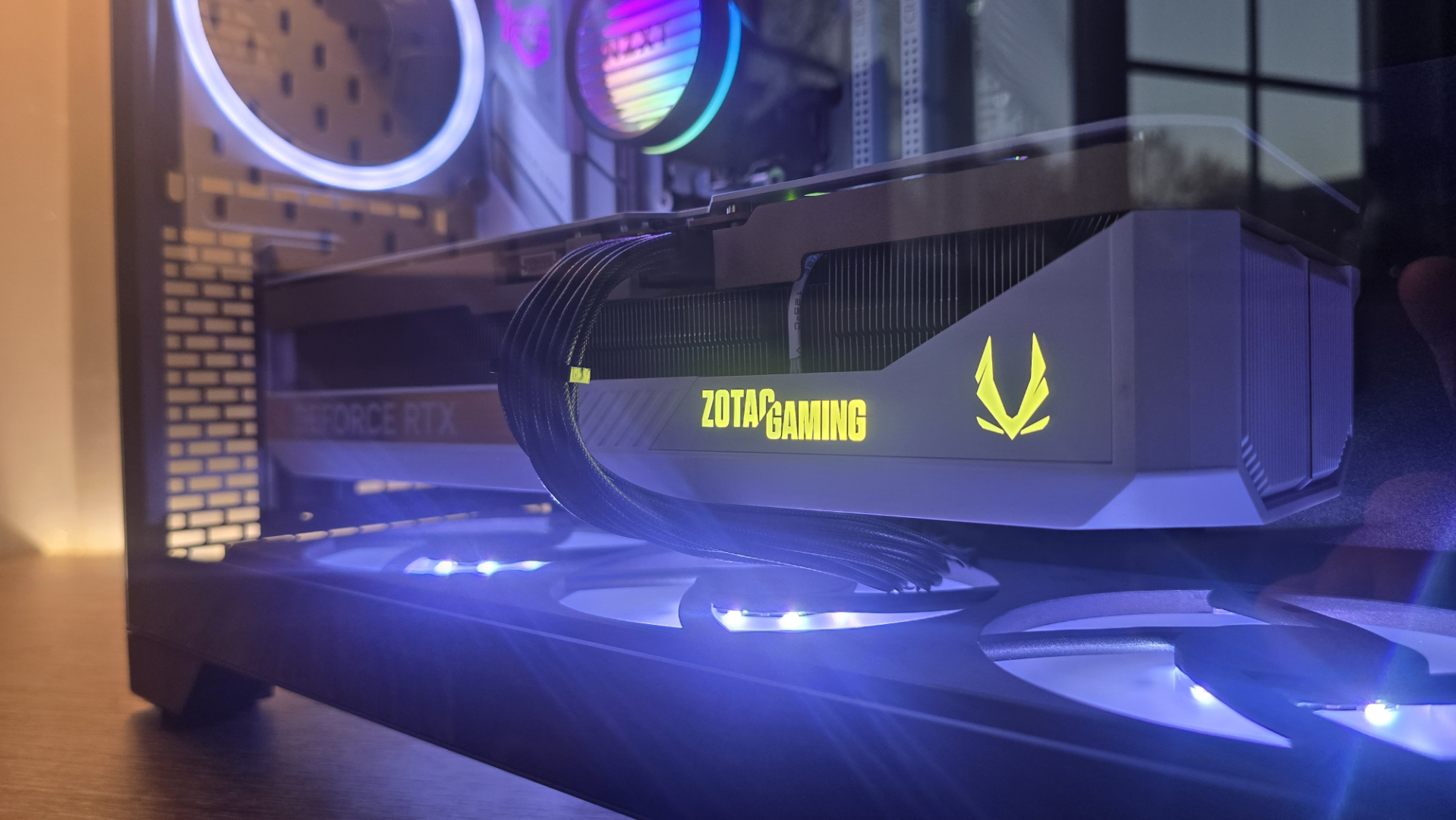
Of course, you get the Micro-ATX and ITX mobo support as standard, but you can also fit seven 120 mm fans in here, a 360 mm AIO, full-fat power supplies up to 150 mm, and a chunky four-slot GPU if your heart so desires (in fact, I slammed a Zotac RTX 5080 in here with relative ease).

Storage support is fairly minimal admittedly. You can house two 2.5-inch drives on a single caddy, and one 3.5-inch HDD on another, all tucked away in the back of the motherboard tray, and that’s it.
Now I would typically throw that out as a non-factor at this point. A year ago, you could just grab those two caddies, chuck them in the trash, and move on, particularly given how affordable some of the best SSDs on the market were in the M.2 sector at the time. But as the AI takeover has well and truly trashed PC building, I’m starting to question whether these two older form factors and the SATA connection standard might actually be making an unfortunate comeback sooner than we think.
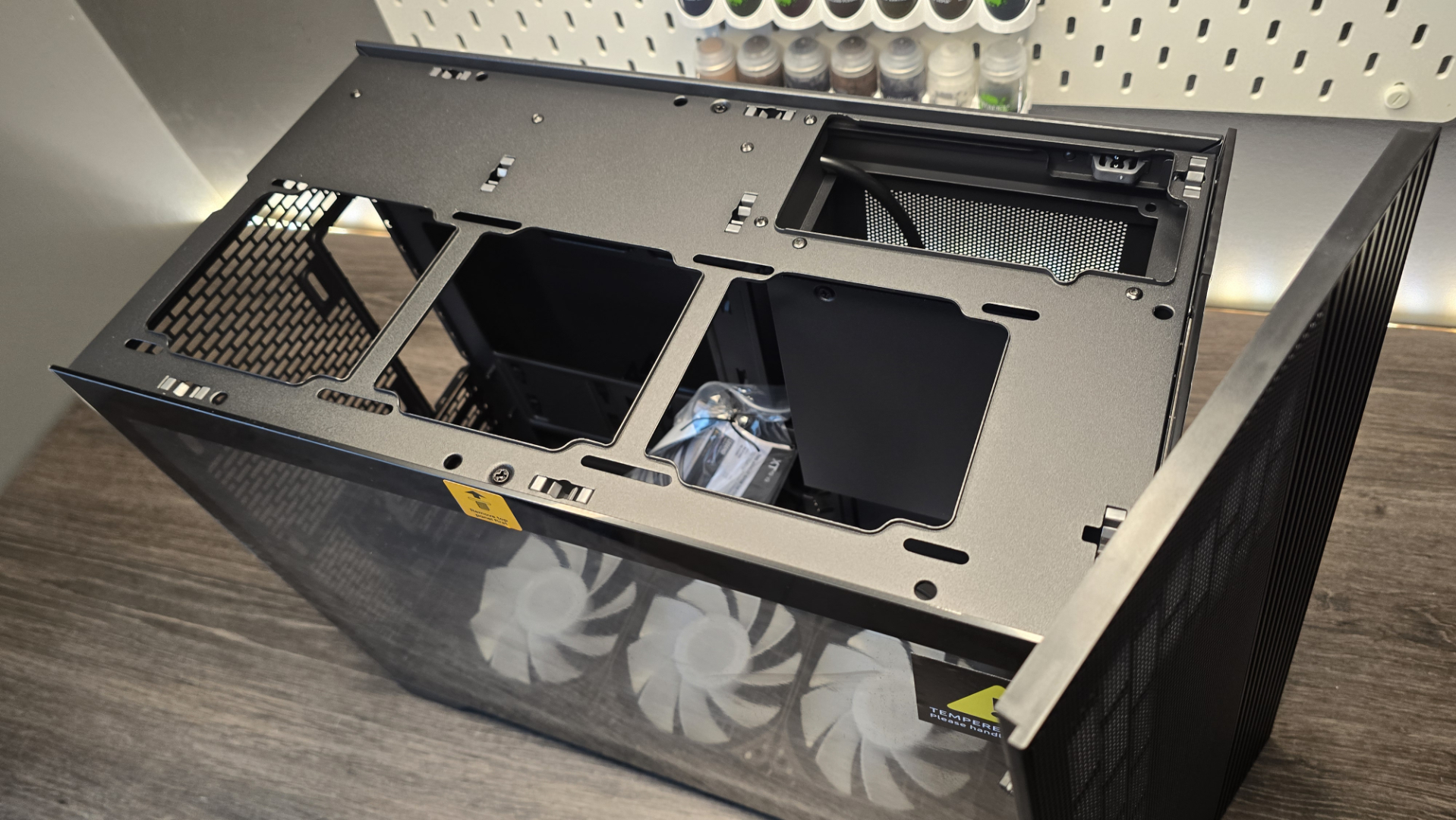
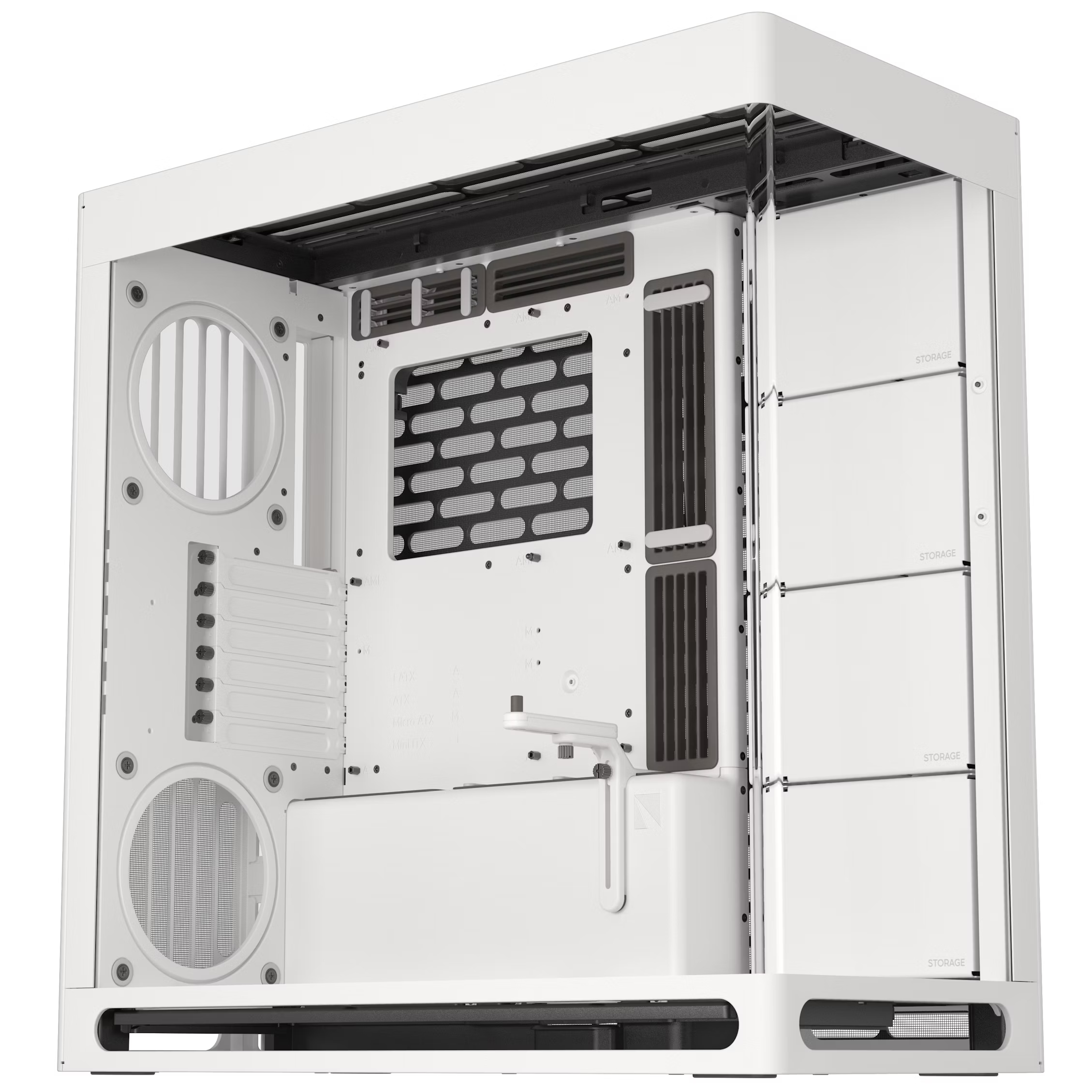
As for the build experience, Phanteks has done an impressive job here, too. Pull the roof panel off from the rear, and you’ll be greeted with the top of the chassis’ skeleton, with mounting locations for the power supply, 360 mm AIO, and two securing screws for the glass side panels. Remove those, and you can then unpop the two windows and store them safely as you build. That’s great for transport too. They ain’t going nowhere in shipping. That then gives you access to the front glass panel, again secured in position with another Philips head off to the side.

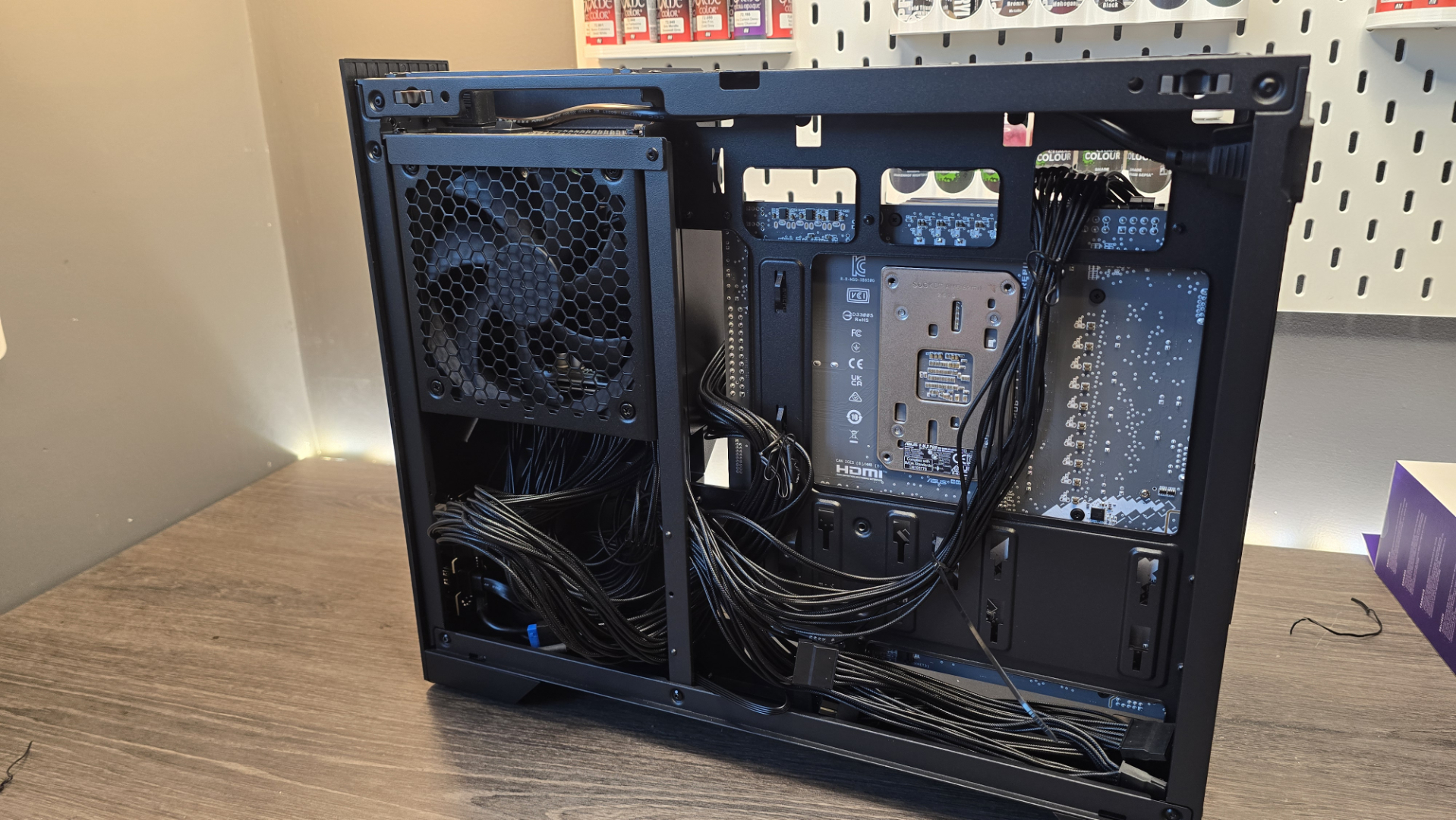
Once you’re around the back of the motherboard tray, there’s a few neat additions worth pointing out here too. There’s a PSU shroud cable cover to help tidy things up (I actually ended up wedging all the excess cables I needed in here, plus an NZXT fan controller), and those two hard-drive caddies I mentioned earlier.
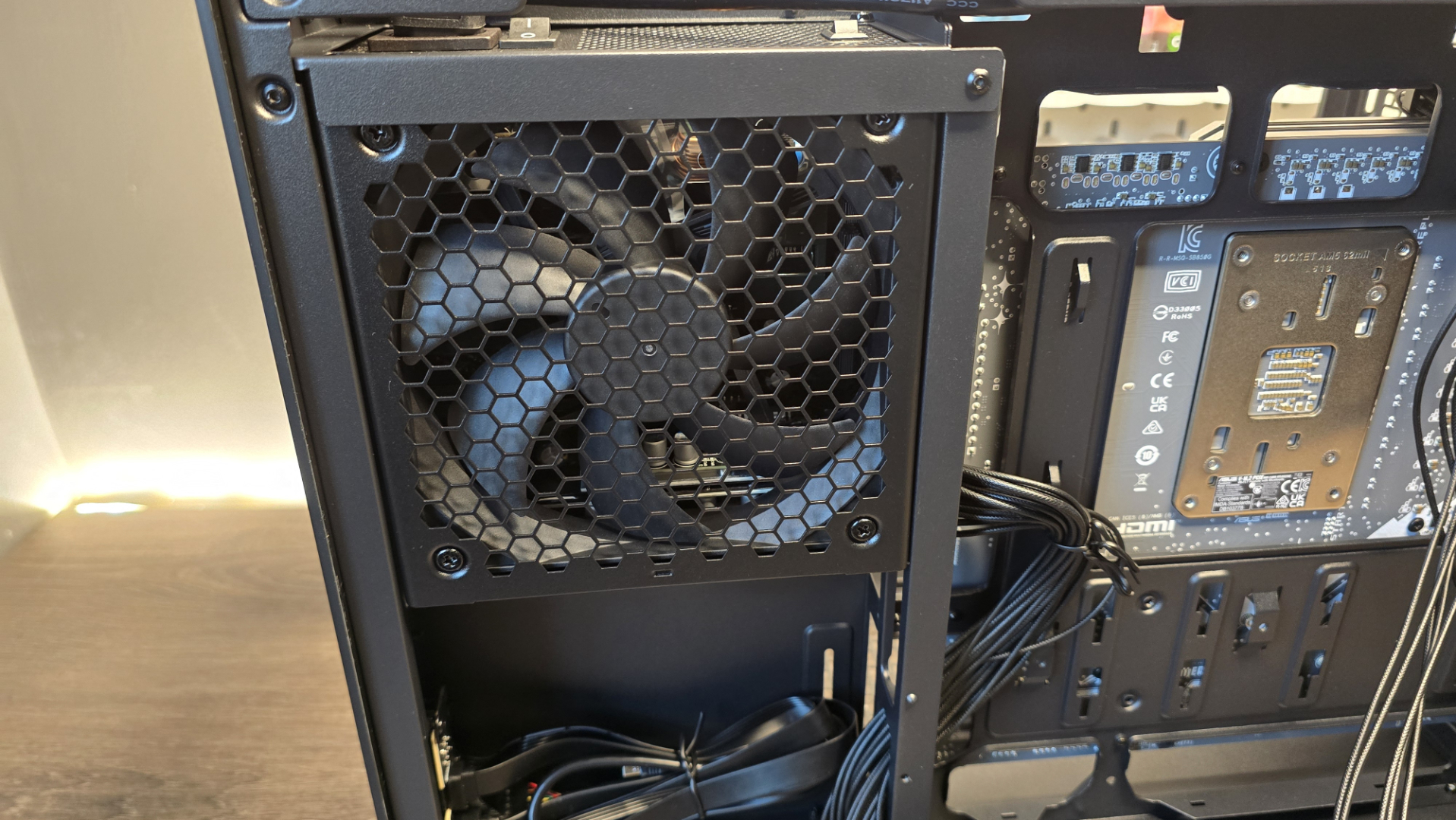
The PSU installs sideways and then is secured from the roof of the frame, and there’s a pass-through power cable that you must plug in here as well, running to the rear of the case, just above your motherboard’s I/O. Just make sure you remember to flip the PSU switch here, before sealing the entire chassis up, otherwise you’ll be screaming at first boot.
You’ll also need to plug any modular cables you need into the PSU before securing it to the top of the case, as it’s incredibly awkward if you pre-install the unit first, then try to plug in the cables afterwards. My advice? Install everything else in the chassis first, barring the GPU. Then plug your cables into the motherboard, route your PCIe power or 12VHPWR where you need them to go, and pull them all through to the back into the PSU compartment, then into your PSU, then secure that up top. Bang, done. Otherwise, the rest of the build process is fairly clean. Phanteks has even included a GPU anti-sag bracket here as well, which is a nice feature, given the price.
Test system
CPU: Intel Core i9 14900K | RAM: 32 GB (2x16 GB) Kingston Fury DDR5 @ 6000 C34 | SSD: 2 TB Samsung 990 Pro M.2 PCIe 4.0 SSD | GPU: Gigabyte GeForce RTX 5060 Ti Gaming OC 16G | Motherboard: MSI MPG Z790i Edge WiFi | CPU Cooler: NZXT Kraken Elite 240 RGB | PSU: 1000 W NZXT C1000 80+ Gold
As for negatives, there aren’t that many to report on, really. The plastic fascia does feel a little cheap, and the internal finish is a bit basic, but really, given the cost, it’s easy to square that one away. The only major downside I found, if you can call it that, was those PSU installation intricacies, and that’s it.
Airflow access equally is incredibly solid, and the XT V3 leans into passive convection quite nicely as well, even including three 120 mm RGB fans in the floor, to bolster that effort. That’s quite remarkable, as a set of these will usually set you back about $20, and they’re reverse-blade RGB units too, which, although not the most premium, will deliver plenty of airflow for your GPU and AIO.
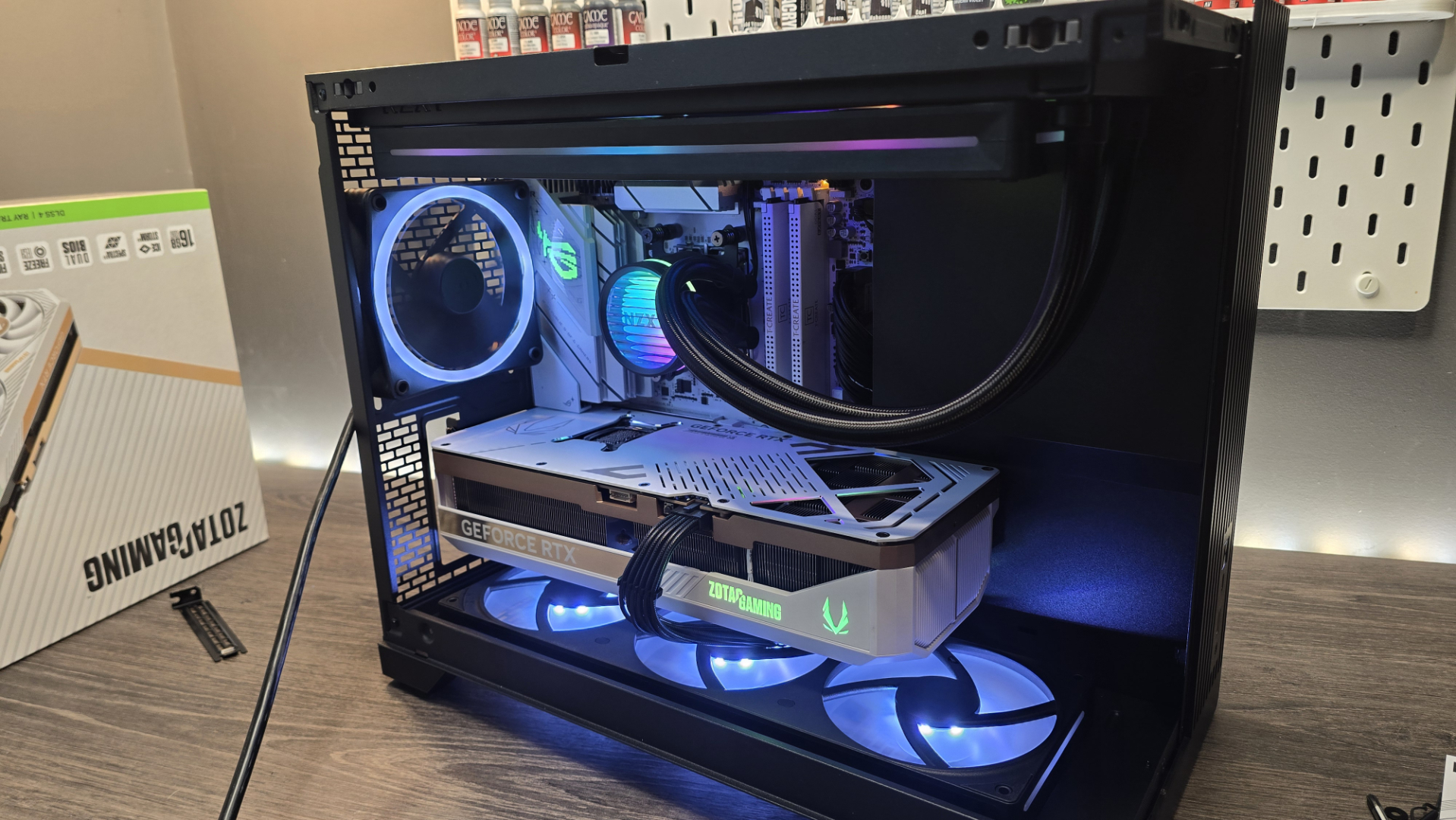
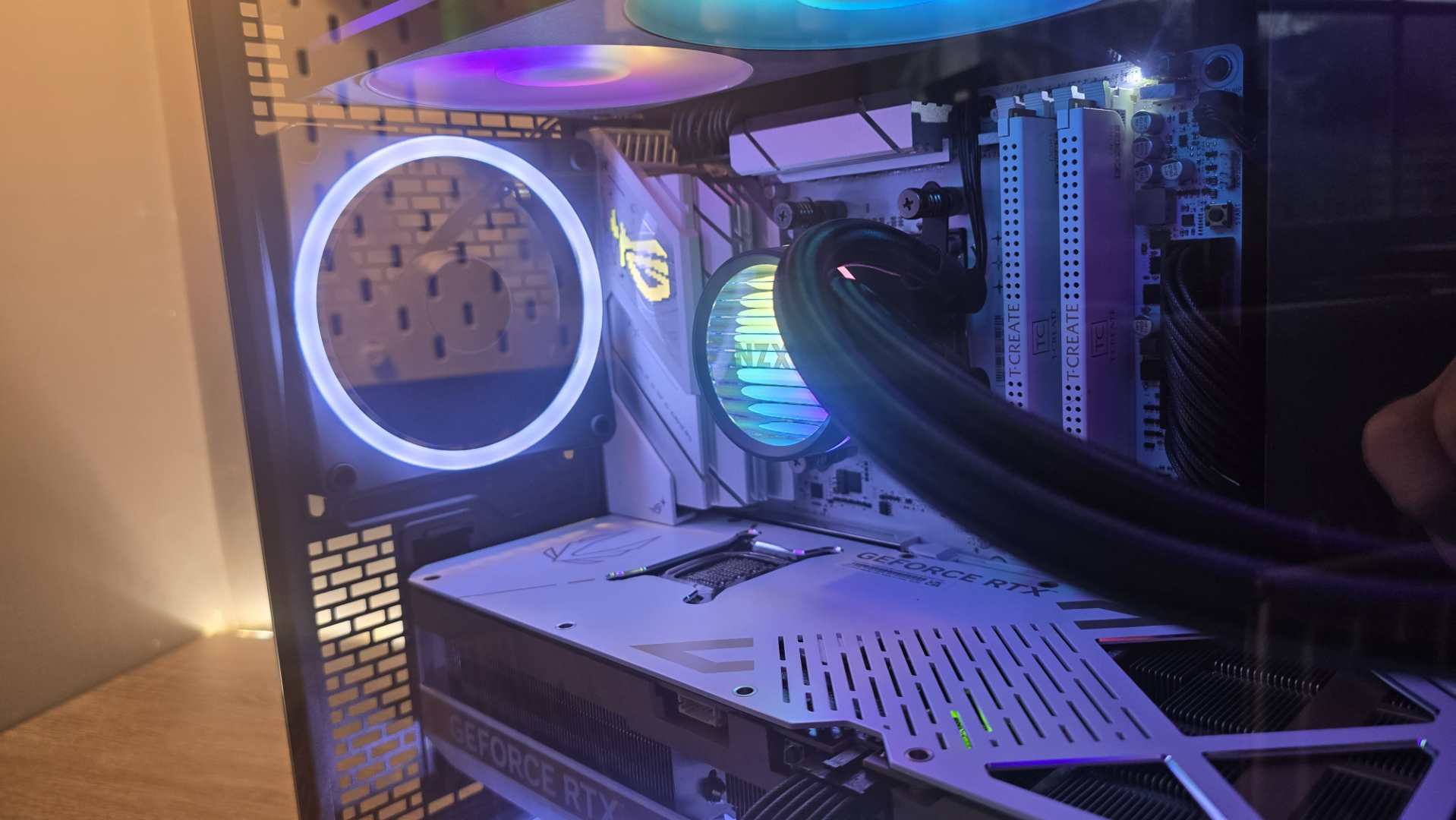
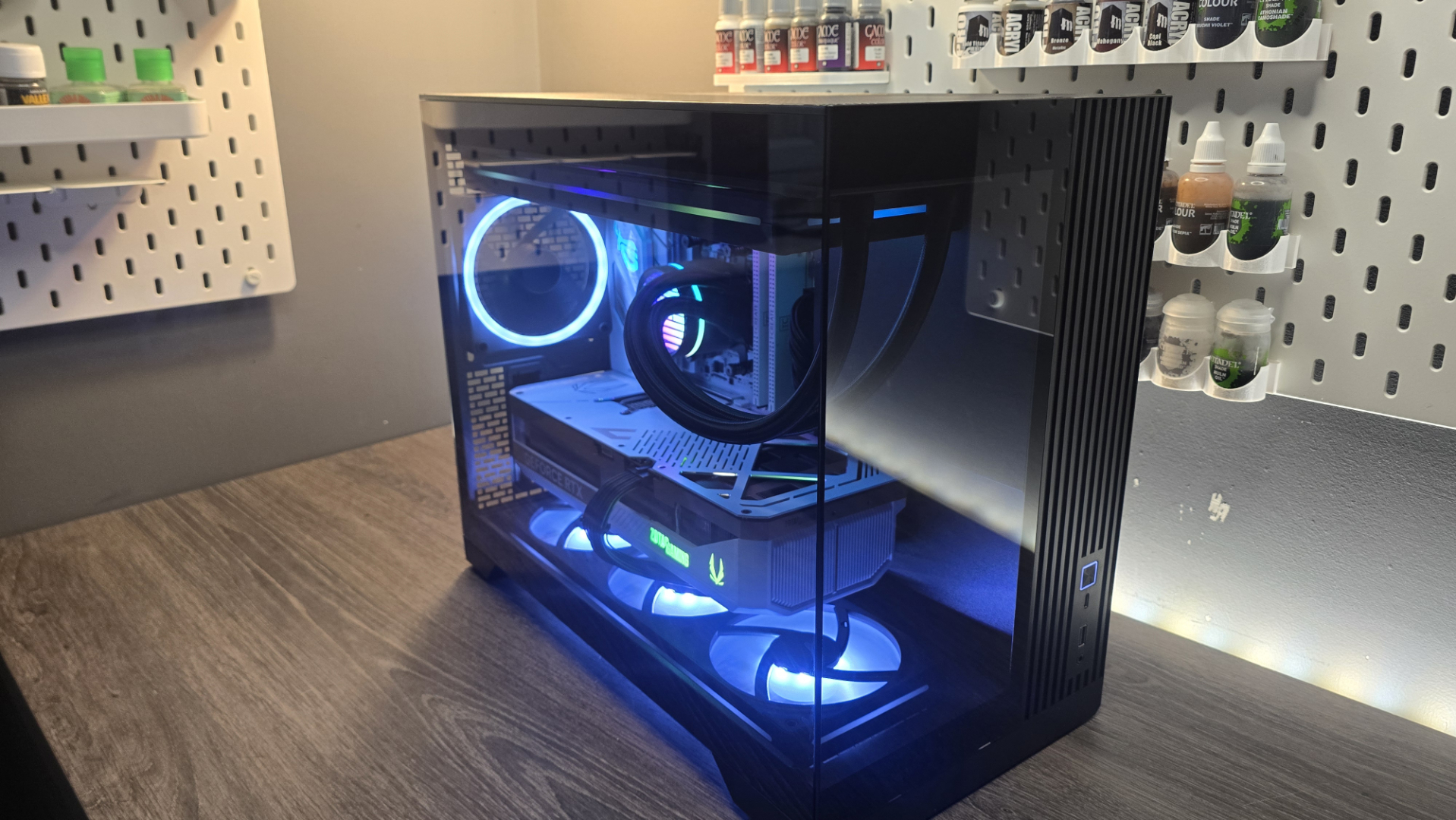
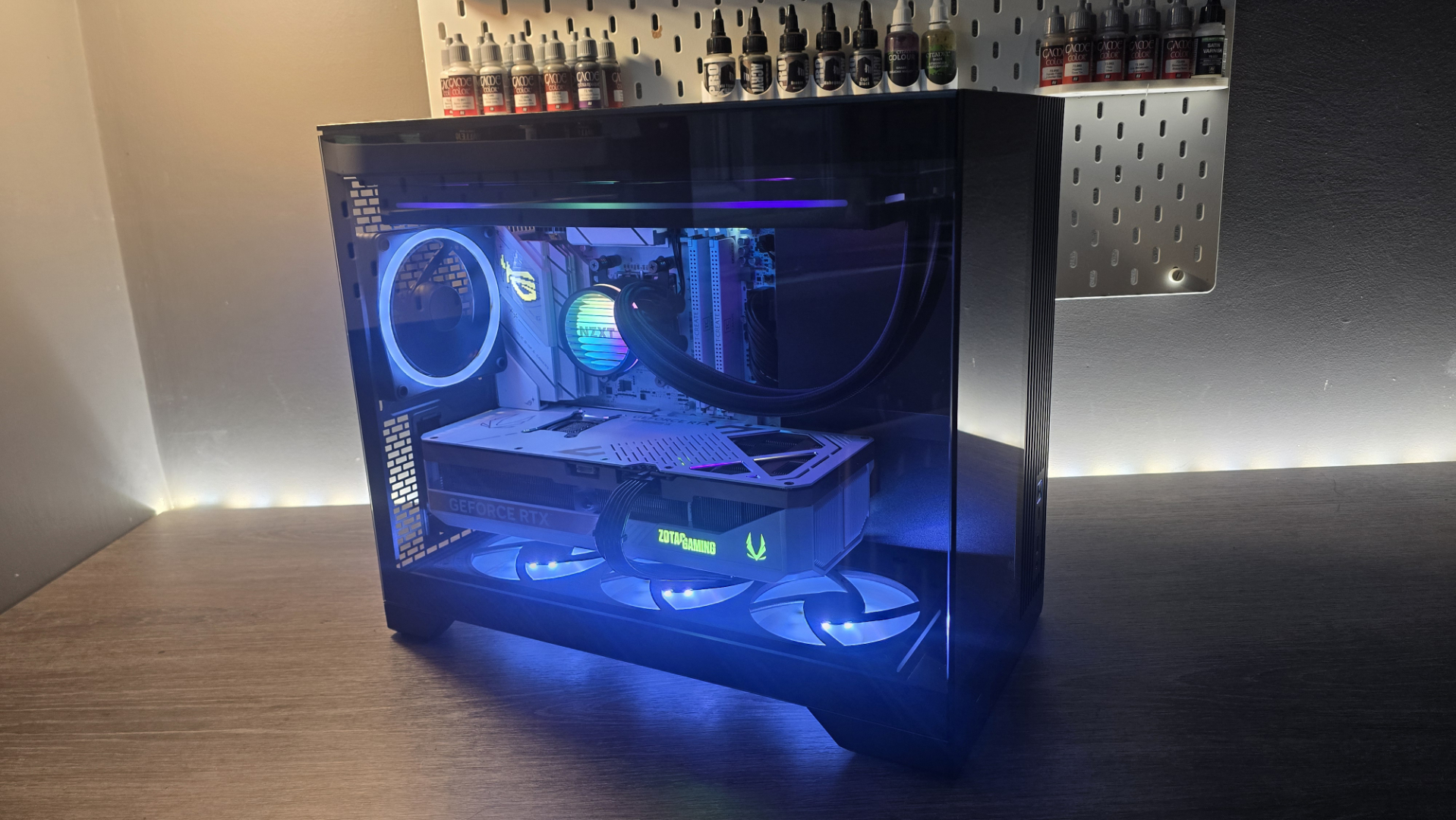
✅ You’re all about that Micro-ATX Life: It’s a bloody good bargain at its current pricing, with wild hardware support, and looks clean when you’ve built it too.
❌ You’re after ultra-premium quality: Phanteks has made some cutbacks to hit that pricing, and although there’s a lot of glass, some of the plastic elements and internal frame do feel on the cheap side.
It’s that convection that’s the real game change,r though. Install an AIO in the roof, and you’ll be exhausting hot air directly out of the case, pulling cool air in from the floor and the rear of the “very well ventilated” chassis. Despite not being an airflow-oriented case, the XT V3 absolutely nails it on this front.
The only other spin on that is that perhaps the case has too much ventilation. Particularly at the rear. Although those base intakes do feature a removable dust filter, there’s nothing on the rear of the case, just an abundance of rectangular perforations, so it’s likely you’ll need to blast this thing with an air blower a little more often than in other builds. But honestly, it’s such a minor point, particularly given that price, I’m happy to let it slide.
The fact that Micro-ATX is back and in such a big way is just awesome to see. The XT V3, similarly to NZXT’s H3 Flow, packs in so much value for such little outlay that there’s very little to dislike. You’ve got cooling, compatibility, and class, all wrapped up in a beautifully aesthetic design, with a price tag that gives you more than enough additional headroom to try and offset some of the other costing madness from the rest of our chaotic hobby space. Right now, it’s these kinds of blessings that are sorely needed, and the Phanteks XT V3 really is a light in the dark as a result.
1. Best overall: Havn HS 420
2. Best budget: Phanteks G400A
3. Best midrange: Lian Li O11 Vision Compact
4. Best budget compact: Thermaltake S100 TG Snow Edition
5. Best high-end: NZXT H9 Flow RGB+
6. Best Mini-ITX: Fractal Design Terra
7. Best Micro-ATX: NZXT H3 Flow
8. Best full-tower: NZXT H7 Flow
9. Best pink: Hyte Y70
10. Best looking: Phanteks Evolv X2
11. Best for beginners: Be Quiet! Shadow Base 800 FX
An outstandingly affordable classy chassis, with support for 360 mm AIOs, chunky GPUs, and Micro-ATX motherboards. You could make one of the world’s most powerful systems in here if you wanted. Build quality is solid, and the pricing to die for. Just remember to grab a blow duster.

You must confirm your public display name before commenting
Please logout and then login again, you will then be prompted to enter your display name.