Join The Club





Micron is making an early run for 2026's Most Tone-Deaf Tech Company award with a new blog post titled, "The new performance bottleneck: How more GPU memory unlocks next gen gaming and AI PCs." Uh-huh, and how are we mere PC gamers to unlock that bottleneck now that Micron has pivoted decisively in favour of making memory for AI servers?
Lest you have forgotten, it was Micron that announced in December "the difficult decision to exit the Crucial consumer business in order to improve supply and support for our larger, strategic customers in faster-growing segments."
Article continues belowIndeed, the point of the post is to big up Micron's "latest evolution of GDDR7." Micron even explains how "Micron’s new 24 GB density enables up to 96 GB of graphics memory, giving GPUs significantly more space for high-resolution textures, expansive worlds, and advanced visual effects."

For what it's worth, Micron's explanation of the need for more memory makes reasonable sense. "Two forces are accelerating this shift: the push toward cinematic quality gaming and the rapid emergence of AI powered PCs. As worlds grow larger, textures more detailed, and on device AI more integral to responsiveness and personalization, the demands placed on GPU memory have surged," Micron explains.
"Modern games are pushing GPU architectures harder than ever. Real time ray tracing demands continuous access to massive datasets, geometry, materials, lighting maps, shadows, while high refresh rate displays and ultra resolution textures multiply the data the GPU must process each frame. Add in sprawling open worlds and increasingly AI assisted rendering techniques, and the result is a workload that easily overwhelms traditional memory limits," the post goes on.
"The problem is that when GPU memory can’t hold all this data at once, the system is forced to constantly swap assets in and out. That leads to the issues gamers know too well: texture pop in, mid frame stutters, uneven frame times, and sudden drops during intense ray traced scenes," Micron concludes.
Yep, it all pretty much checks out. The problem is that Micron and the rest of the memory industry are busy prioritising their production for "faster-growing segments", which is surely a euphemism for AI.
So, it's all very well for a memory company to point out the benefits of more memory for gaming. Those are real enough. It just lands so very awkwardly when the same company has performed a dramatic pivot away from making memory products for, you know, gamers.
Okay, okay, Micron would no doubt retort that the whole 96 GB thing is forward-looking, enabling the future and all that jazz, rather than a recommendation for the specs of current GPUs. But, still, in the current context, it smarts a bit, doesn't it?
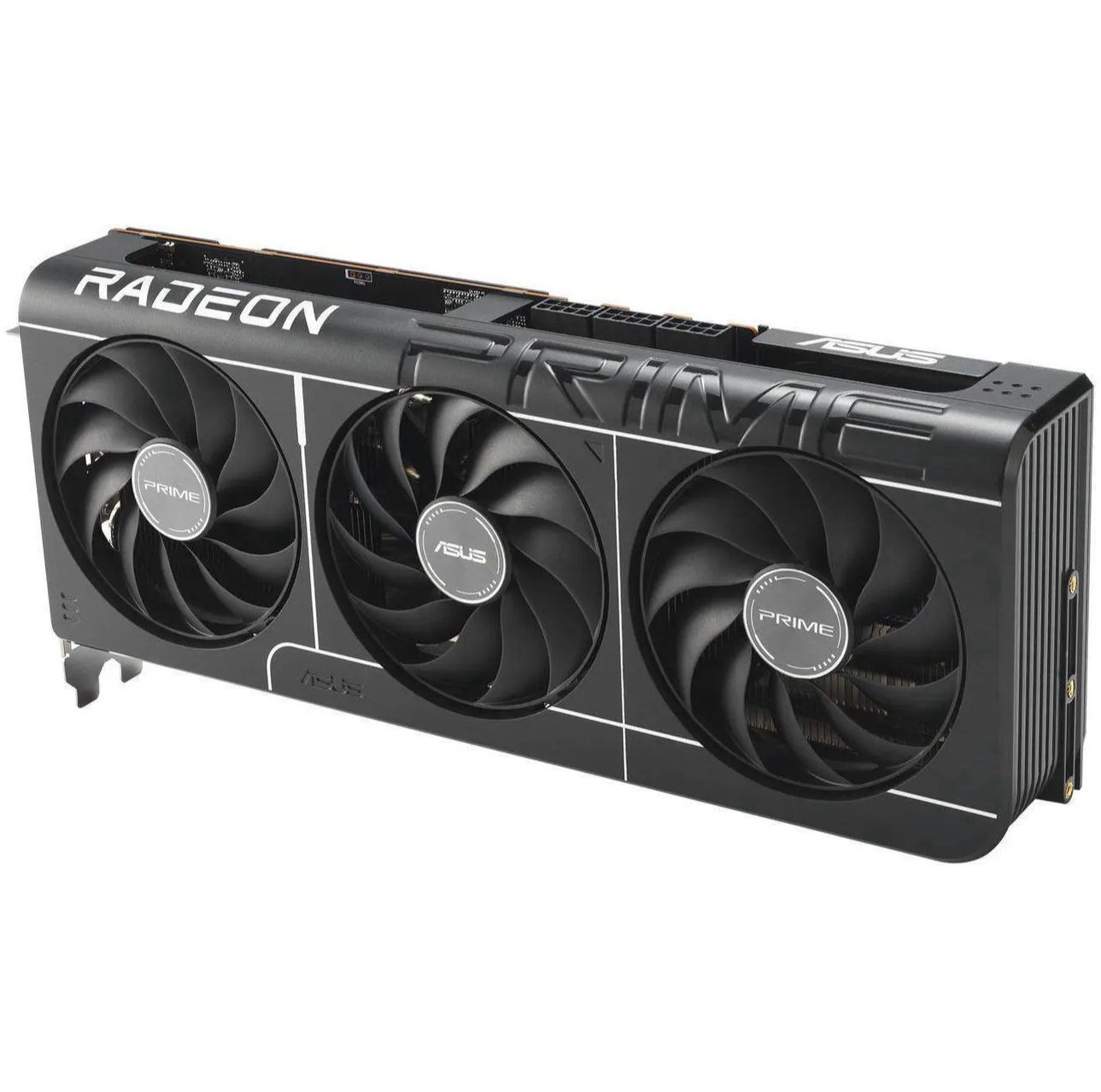
1. Best overall: AMD Radeon RX 9070
2. Best value: AMD Radeon RX 9060 XT 16 GB
3. Best budget: Intel Arc B570
4. Best mid-range: Nvidia GeForce RTX 5070 Ti
5. Best high-end: Nvidia GeForce RTX 5090

You must confirm your public display name before commenting
Please logout and then login again, you will then be prompted to enter your display name.