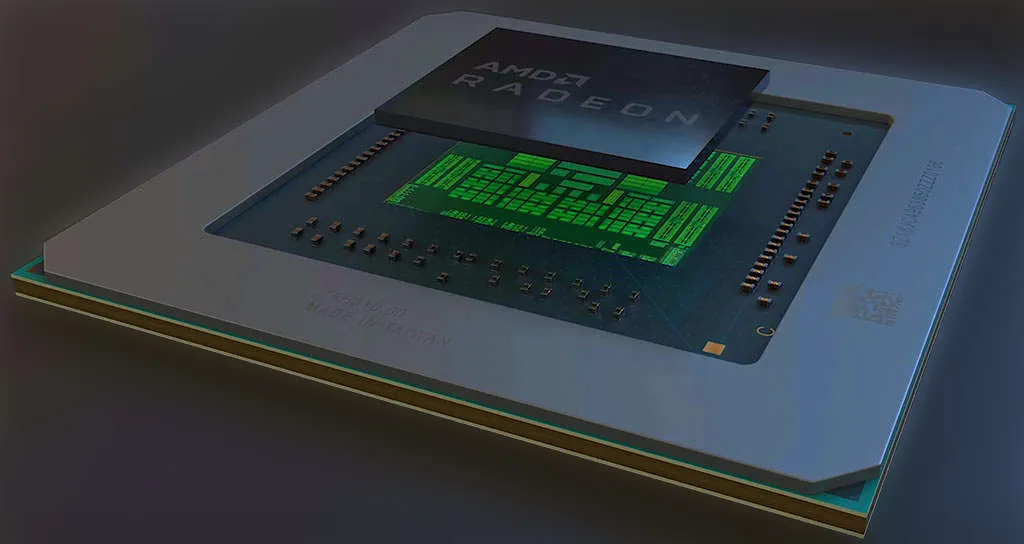
AMD has confirmed that the oft-rumoured Big Navi graphics card will be its first RDNA 2 based product. Also known as Navi 2x, or simply Navi 2, this will be an enthusiast graphics card, and AMD sounds like it's trying to deliver PC gamers the Radeon version of Nvidia's Titan or RTX 2080 Ti graphics cards.
And the fact that Big Navi is going to be based on the upcoming RDNA 2 architecture means that it's going to have support for whatever AMD's take on ray tracing is going to look like. I mean, it's surely going to look a lot like Nvidia's given that Microsoft's DirectX Raytracing is the API hook for PC games right now, but we still don't know the exact details.
"There's a lot of excitement for Navi 2, or what our fans have dubbed as the Big Navi" says Devinder Kumar, AMD's CFO, at the recent Bank of America Securities Global Technology Conference. "This will be our first RDNA 2 based product."
Enthusiasts love to buy the best, and we are certainly working on giving them the best.
Devinder Kumar, AMD
The fact that the enthusiast-class Radeon Navi 2 card is going to be the first slice of RDNA 2 graphics silicon would seem to indicate that it's coming out ahead of the next-gen consoles, which are also sporting RDNA 2 GPUs. Microsoft's Xbox Series X and Sony's PlayStation 5 are set for launch in the holiday period, which would indicate a November unveiling.
Kumar has reiterated that AMD remains "on track to launch our next-generation Zen 3 CPUs and RDNA 2 GPUs in late 2020," which suggests to me that we're looking at sometime around September/October for Big Navi if it is to beat the new games consoles to launch.
"Big Navi is a halo product," Kumar goes on to say, "enthusiasts love to buy the best, and we are certainly working on giving them the best."
That means this Navi 2 card is going to be big, it's going to be expensive, and it should genuinely deliver some competitive gaming performance compared with the top Nvidia GPUs. But whether that's compared with the top graphics cards of the Turing or upcoming Nvidia Ampere generation will be a question for the future. But hopefully the relatively imminent future.
But the RDNA 2 architecture isn't just going to stick around at the high end of the GPU stack; the entire Radeon range will be shot through with the Big Navi genetics.
"The RDNA 2 architecture goes through the entire stack," says Kumar, "it will go from mainstream GPUs all the way up to the enthusiasts and then the architecture also goes into the game console products... as well as our integrated APU products.
"This allows us to leverage the larger ecosystem, accelerate the development of exciting features like ray tracing and more."
With AMD and Nvidia set for a high-performance head-to-head at the end of the year, and then a full on GPU stack war in 2021, it's looking good for PC graphics cards. And with the big names in GPUs being seriously competitive again that can only mean good things for the consumer… so long as they don't just try and beat each other by making more and more expensive cards anyway.