Humans are obsessed with how big things are. Whether it's being impressed with blue whales, which can grow up to 100 feet long, or the tradition of commenting on how much a child has grown since you last saw it, it is extremely important for some inexplicable reason. And it is oddly prevalent in games, where boasting about how long it will take players to finish has become a weird marketing strategy.
The latest boast comes from Dying Light 2, appearing in the form of a Tweet touting the 500 hours needed to complete the open-world zombie romp. Nearly every open-world marketing strategy involves talking about length, but Dying Light 2 stands out because the number is so ludicrous for anything that isn't an MMO or other kind of live service game.
To fully complete Dying Light 2 Stay Human, you'll need at least 500 hours—almost as long as it would take to walk from Warsaw to Madrid!#DyingLight2 #stayhuman pic.twitter.com/Sk3KFpRJoAJanuary 8, 2022
There is absolutely nothing wrong with putting 500 hours or 5,000 hours into a game, but how did this become a selling point? When I finished The Witcher 3 and its DLC after around 200 hours, I felt it was time well-spent, but when I then recommended it to folk, I wasn't telling them to play it because it's massive. The quests, the writing, the characterisation of Geralt—that's what made the experience worthwhile. My playtime was meaningless. If anything, it's off-putting.
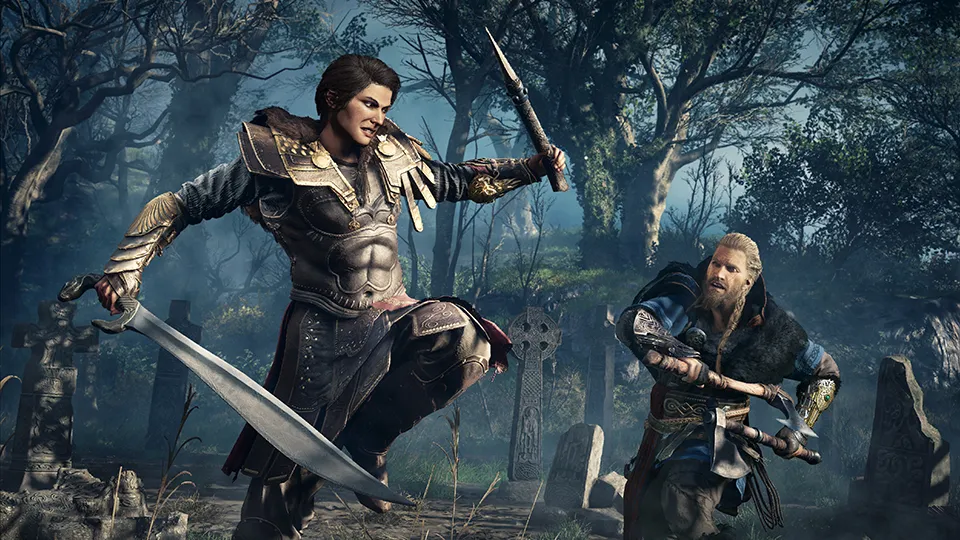
I adore the Assassin's Creed series, but I always run out of steam before the end. I've finished all the beefiest entries, but even my faves like Odyssey and Valhalla became chores long before. I put in the hours because I was invested in Kassandra and Eivor's journey, but I resent the 100+ hours it took to get closure because so much of it involved faffing around with dull one-note activities. And the more of these gargantuan games I play, the more I grimace when I see another game advertising its prodigious length. It makes me not want to even start them because I hate leaving things unfinished almost as much as I hate videogame fluff.
Obviously it won't take 500 hours to finish Dying Light 2's story. Completing the main and side quests will see you playing for 80 hours, according to a follow-up Tweet. It's hard to imagine that you'll be seeing anything new after 100 hours. So the next 400 are just mopping up the map. Busywork. All for, presumably, an achievement. But who's actually going to do that? Who's this marketing actually for? Certainly not most gamers, who struggle to finish a 20-hour game. Hell, even a 5-hour game is a stretch for a lot of us. Umurangi Generation only demands your attention for that long, and fewer than 30% of players have finished it.
So we might be obsessed with big things, but when it comes to games we rarely see them through. The larger the game, the more there is to miss—things developers had to spend time creating, possibly with bespoke art, models, writing and all the other bits and pieces that go into crafting even a single forgettable activity. Every month we seem to hear about developers being overworked or dealing with toxic work environments, including at Dying Light 2 developer Techland, where it's alleged that poor management left things in "total chaos". How many long days and delays could have been avoided if Dying Light 2 was not so pointlessly huge?

The last game I played in 2021 was The Forgotten City, a 10-hour time loop adventure based on a brilliant Skyrim mod. It's the team's first full game, and it's incredibly impressive. Whip-smart, intuitive despite the complexity of the premise, extremely detailed and lovingly crafted, and I was able to do everything in a single day. By the end, I was completely invested in the characters, I knew the titular city like the back of my hand and I couldn't have been more satisfied. Even a few more hours would have been totally unnecessary. It wasn't short; it was the perfect length.
Now, this is not to say that every game should be a 10-hour romp. There's no sweet spot that's right for every game. I'm willing to believe Techland needed 80 hours to tell its story as well. But every hour beyond that increases the likelihood that you're just playing through padding.
There's an argument that none of this matters because you can just play through the bits you like, but that's ignoring the work that goes into making these games so huge, which increases their development time and costs. And it encourages a way of thinking about games that seems extremely unhealthy. It has a knock-on effect, inspiring other developers to throw mountains of fluff into their projects because apparently that's what people want. But they don't—not really. They've just been infected by marketing.