Presenting its findings as "Unlocking the future of computing" Microsoft is edging ever closer to photon computing technology with the Analog Iterative Machine (AIM). Right now, the light-based machine is being licensed for use in financial institutions, to help navigate the endlessly complex data flowing through them.
According to the Microsoft Research Blog, "Microsoft researchers have been developing a new kind of analog optical computer that uses photons and electrons to process continuous value data, unlike today's digital computers that use transistors to crunch through binary data" (via Hardware Info).
In other words, AIM is not limited to the binary ones and zeros that your standard computer is relegated to. Instead it's been afforded the freedom of the entire light spectrum to work through continuous value data, and solve difficult optimization problems.
And all in time for Pride month, too.
Microsoft explains that normal computers struggle with the sheer volume of data some companies need to process daily, because "the number of possible combinations explodes exponentially as the problem size grows." Even with the impressive processing power of high-end CPUs under their belt, the hardware limitations make it nigh impossible to complete such complex work efficiently enough, and without it costing the world.

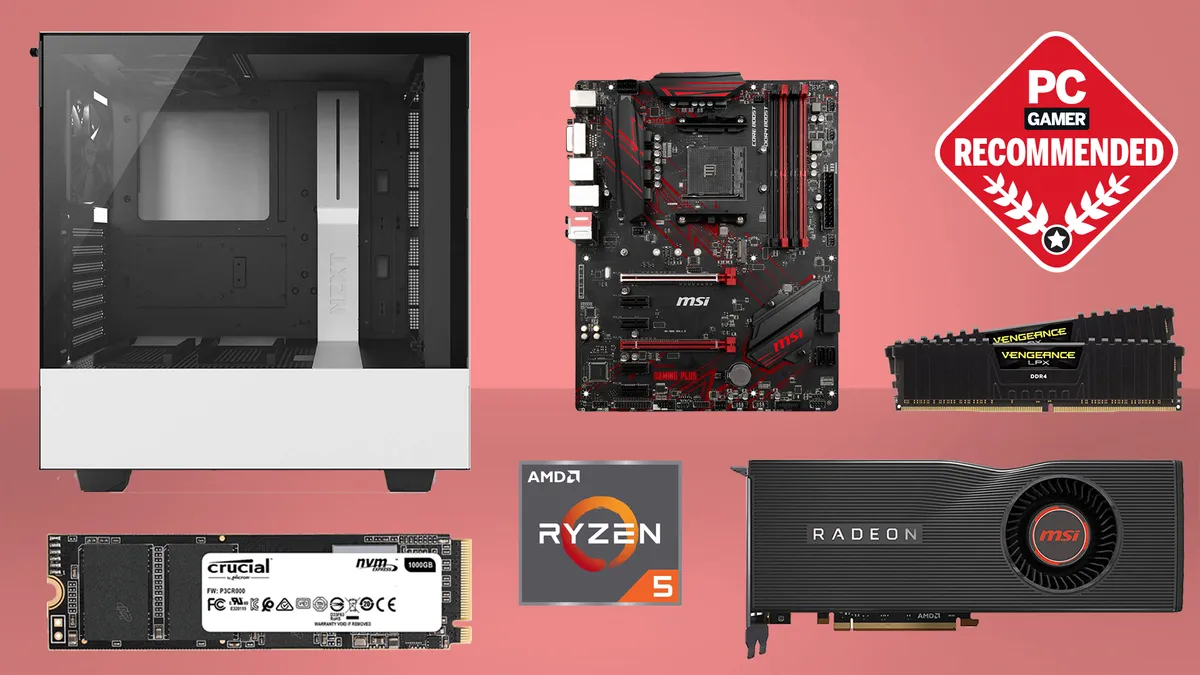
Best CPU for gaming: The top chips from Intel and AMD
Best gaming motherboard: The right boards
Best graphics card: Your perfect pixel-pusher awaits
Best SSD for gaming: Get into the game ahead of the rest
That's where AIM comes in. This "analog optical computer" can do more, much much faster… at the speed of light, in fact.
For a little context, photons don't interact with one another, but they do leave imprints on the matter through which they pass. AIM researchers have been able to use this fact to their advantage. It throws light, which passes through several layers, making impressions on each part of what's known as a "modular array". It's this process of projecting light through the array that replaces the function of a standard transistor.
Since light-based technologies can perform powerful linear operations, and electronic components can work on non-linear operations, the researchers have been able to combine both optical and electronic analog technologies, to form a computer that "sidesteps the diminishing growth of computing capacity per dollar in digital chips."
Essentially, AIM is making Moore's so-called law look more like guidelines.