The reviews you read on PC Gamer, and indeed across the family of Future sites and magazines that cover the PC, are meticulously crafted with the highest levels of professionalism. Our many seasoned experts, with their vast knowledge and many years of experience, share their thoughts and opinions with you here every day. Their talent for writing well and communicating complex topics with clarity and insight lets you know what’s really going on when a new product is released, or a new technology or feature is revealed for the first time.
We work hard every day, testing new PC products of every description, using rigorous methodology that has been refined and updated constantly, and is checked and verified before publication. We’re proud of what we do and how we do it, and we know it’s a service that’s genuinely helpful to you.
Article continues below 
Why the TechRadar Australian PC Awards matter
Thousands of new products that fall into the orbit of ‘the PC’ are released each year. We can't test them all, but we have tested several hundred. Some shone, some sunk. But overall the quality of engineering, manufacturing and innovation is as high as ever in the world of the PC, so it’s often difficult to separate the truly great from the very good. But that’s what we’ve done.
The team at TechRadar has joined forces with our fellow PC experts at PC Gamer, Tom’s Guide, Windows Central and APC magazine to shortlist the exceptional, then make the big call to determine the ultimate winners. All across 40 categories, covering everything that matters in and around the PC.
Now more than ever, it’s essential to choose what to buy carefully. We’re here, with these awards, to help you choose with confidence. Our winners are linked to our reviews, so you can quickly find out more.
Selecting these finalists and winners was a long and thorough process — one we believe is important. We want to acknowledge the hard work of the people behind the scenes at the companies that made great gear or delivered exceptional services, too. A lot of hard work by clever people brought you this gear, so well done to everyone involved and congratulations on being a TechRadar Australian PC Awards winner!
What are the Australian PC Awards?
Our awards cover all the main categories that affect a PC, as well as our special awards:
Excellence Award: Presented to the person, product or technology that advanced the PC more than any other in 2025.
Gold Award: For the best overall company operating in the PC space for 2025. This list includes every one of the finalists across all the other categories — and has been carefully considered by our expert panel of judges.
And of course there must be balance with all things, which leads us to this year’s Epic Fail Award. May the most dismal failure win!
TechRadar 2026 Australian PC Awards winners
Where possible, we've linked to the most relevant online coverage from across the Future network for each finalist, to help you find out more about why we like them so much.
And now, on to the show!
And the winners are...

The year in review: Motherboards
2025 was a year of maturing lineups for motherboards, with chips and offers that were launched in 2024, actually getting shipped in volume during 2025. Intel’s LGA1851 ecosystem broadened early thanks to the announcement of B860 and H810 at CES 2025, making Core Ultra 200S builds slightly more appealing.
AMD continued to flesh out AM5 for Ryzen 9000 with B850 and B840 boards. We especially liked that many midrange boards started offering the kind of connectivity that used to be reserved for flagships, like Wi-Fi 7, 5GbE and USB4.
Those putting together an Intel build got more choice, but certainly the worry over how long LGA1851 will be viable for is not reduced. AMD builders have a nicer upgrade path, but prices for the latest models kept older B650 boards surprisingly relevant in the budget end.
As always, manufacturers kept showcasing (admittedly awesome) ultra-high-end boards that most people would never buy, but the mid-range got some great focus.
One of 2025’s most visible trends was the increasing tendency towards cleaner builds with hidden-connector designs available from multiple brands and actually backed by rapidly improving case support.
Best motherboard maker

Highly Commended
All Finalists
Best AMD motherboard
Highly Commended
- Sapphire Nitro+ B850A WIFI 7: (Sapphire | Check Amazon)
- Asus ROG Crosshair X870E Apex: (Asus | Check Amazon)
All Finalists
- Asrock B850 Steel Legend Wi-Fi
- Asrock Phantom Gaming B850I Lightning Wi-Fi
- Asus ROG Crosshair X870E Apex
- Asus ROG Strix B850-A Gaming WiFi
- Gigabyte B850 Aorus Elite WIFI 7 Ice
- Gigabyte X870 Aorus Elite WiFi7 Ice
- Gigabyte X870E Aorus Pro
- MSI MEG X870E Godlike
- Sapphire Nitro+ B850A WIFI 7
Best Intel motherboard
Highly Commended
- Asus TUF Gaming B860M-Plus Wi-Fi: (Asus | Check Amazon)
- Nzxt N9 Z890: (Review | Check Amazon)
All Finalists
- Asrock B860 Steel Legend Wi-Fi
- Asrock Phantom Gaming B860I Lightning Wi-Fi
- Asrock Z890 Taichi OCF
- Asus TUF Gaming B860M-Plus Wi-Fi
- Gigabyte B860 Aorus Elite WIFI7 ICE
- MSI Z890 Godlike
- Nzxt N7 Z890
- Nzxt N9 Z890

The year in review: Graphics
2025 was a bumper year for new graphics cards, with both the main contenders, Nvidia and AMD, and a newcomer to the scene, Intel, releasing new products. Nvidia was the most prolific, with eight new entrants for desktop use and several more for laptops. AMD had a modest six desktop offerings, and Intel scraped in with just one.
While Intel provided another SKU of its previous Battlemage-based architecture, Nvidia and AMD introduced entirely new architectures that offered more performance and visual fidelity than before.
Nvidia brought the impressive DLSS 4.0 technology to market, making it a feature many would consider leaving on all the time because it’s so good at what it does. Multi-frame generation 2.0 also came along for the ride, keeping Nvidia’s feature set clearly out in the lead, much like its top-end GPUs, which AMD couldn’t match.
Not that AMD was sitting still. RDNA5 proved wildly popular largely because of its very good price-to-performance, increased ray-tracing performance to finally match its peers, and the introduction of FSR4, AMD’s much-needed upscaling technology to catch up to Nvidia’s DLSS.
Notably, across all camps, there were no entry-level offerings. With integrated graphics getting so good now, APU-style solutions are eating up entry-level GPU market share, making it financially unviable to launch products in that segment anymore.
Best graphics card maker

Highly Commended
All Finalists
Best budget graphics card
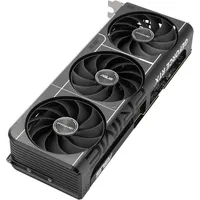
Highly Commended
- MSI RTX 5060 Ti 16G Gaming Trio OC: (Review | Buy now)
- Asrock Intel Arc B570 Challenger OC: (Asrock | Check Amazon)
All Finalists
- Asrock Intel Arc B570 Challenger OC
- Asus Prime Radeon RX 9070 XT 16GB OC
- Asus Prime RTX 5060 TI OC Edition
- Intel Arc B580
- MSI GeForce RTX 5060 Ti 16G Gaming Trio
- MSI RTX 5060 Ti 16G Gaming Trio OC
Best mid-range graphics card
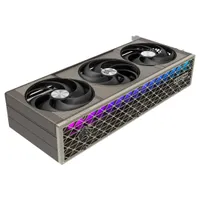
Highly Commended
- Asus TUF Gaming RTX 5070 Ti OC: (Review | Check Amazon)
- Asus TUF Gaming RTX 5070 OC: (Asus | Check Amazon)
All Finalists
- Sapphire Nitro+ AMD Radeon RX 9070 XT
- Asus TUF Gaming RTX 5070 Ti OC
- Asus TUF Gaming RTX 5070 OC
- XFX Swift Radeon RX 9070 OC
- Gigabyte GeForce RTX 5070 Ti Eagle OC Ice SFF
- MSI RTX 5070 Ti Gaming Trio OC Plus
- Asus Prime Radeon RX 9070 XT 16GB OC
Want to see more options? Take a look at our guide to the best mid-range graphics cards.
Best premium graphics card
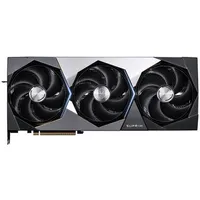
All Finalists
- Aorus RTX 5080 Master
- Asus ROG Astral GeForce RTX 5080 16GB GDDR7 OC
- MSI GeForce RTX 5080 Ventus 3X OC White
- MSI RTX 5080 16G Suprim SOC
- MSI RTX 5090 Suprim SOC

The year in review: CPU
The CPU front was vibrant in 2025, with both AMD and Intel releasing many new offerings across a broad spectrum of categories. AMD stuck to releasing newer SKUs of its Zen 5-based Ryzen 9000 series, whereas Intel ushered in a somewhat underwhelming new Arrow Lake-based Core Ultra 200 series.
AMD’s strategy of long-term platform support remains a strong suit, with a new processor launched for AM4, which was superseded some four years ago. Even the Ryzen 7000 series saw a new entry.
AMD also proved very popular in the laptop and thin-and-light space with its Strix Halo-based Ryzen AI Max 300 series, offering what AMD sought to do when it bought ATI all that time ago: make an APU with a large iGPU inside. And thus creating a new class of SoC that we previously could have only dreamed of.
Not that Intel is out of the fight by a long shot, with the majority of its offerings delivering substantial multithreading performance that AMD can’t match in most segments, giving us hope for a healthy fight and, hopefully, a resurgent Intel continuing into 2026.
Best budget CPU
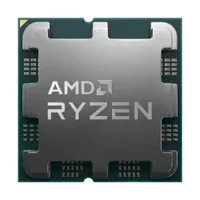
Highly Commended
- Intel Core Ultra 5 Processor 245: (Intel | Check Amazon)
- AMD Ryzen 5 9500F: (AMD | Check Amazon)
All Finalists
- AMD Ryzen 200 series
- AMD Ryzen 5 9600
- AMD Ryzen 5 9500F
- AMD Ryzen 5 7500X3D
- AMD Ryzen 5 5600F
- Intel Core Ultra 5 Processor 245
- Intel Core Ultra 5 Processor 235
- Intel Core Ultra 5 Processor 225
- Intel Core Ultra 5 Processor 225F
- Intel Core Ultra 5 Processor 235U
Best mid-range CPU
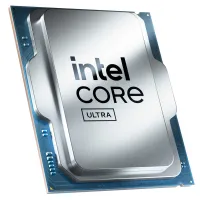
Highly Commended
- AMD Ryzen 7 9700F: (AMD | Check Amazon)
- AMD Ryzen AI Max 385: (AMD | Check Amazon)
All Finalists
- AMD Ryzen 7 9700F
- AMD Ryzen AI 7 350
- Intel Core Ultra 7 Processor 265
- Intel Core Ultra 7 Processor 265K
- Intel Core Ultra 7 Processor 265H
- AMD Ryzen AI Max 385
Best premium CPU
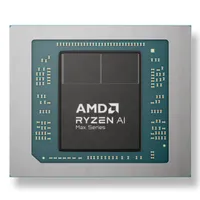
Highly Commended
- AMD Ryzen 9 9950X3D: (Review | Check Amazon)
- Intel Core Ultra 9 Processor 285H: (Review | Check Amazon)
All Finalists
- AMD Ryzen AI Max+ 395
- AMD Ryzen 9 9950X3D
- AMD Ryzen Threadripper PRO 9995WX
- AMD Ryzen 9 9955HX3D
- Intel Core Ultra 9 Processor 285H
- Intel Core Ultra 9 Processor 285HX

The year in review: Storage
How it was supposed to happen: speedy PCIe 5.0 SSDs would supercharge gaming, creator and productivity PCs, offering ridiculously quick 14,000 MB/s drives. What is actually happening: While many good PCIe 5.0 SSDs have been released, rising costs have kept PCIe 4.0 drives well in play, and in most cases those 4.0 drives are the smarter choice.
Longer upgrade cycles will slow the penetration of PCIe 5 SSDs, though for high performance needs the benefits are indisputable and if company money is being spent, it’s a no-brainer. For gamers and almost all productivity users this isn’t really a problem, as many users find that PCIe 4 speeds are still plenty quick for everything.
And for basic bulk data storage, there are always hard drives, right? Sadly, no. As you have probably heard, data centres have also snapped up the majority of HDD production, with WD recently reporting that most of its 2026 production has been allocated to data centre buyers.
For new PC builds today, the standard is usually 2TB for most off the shelf PCs, with 1TB now reserved for budget systems.
Best internal storage maker

Highly Commended
All Finalists
Best external storage maker

Highly Commended
All Finalists
Want the best drives? Check out our storage Buyers Guides.
- The best SSD for PS5
- Best NAS hard drives
- Best external hard drive
- The fastest external SSDs
- Best large SSDs and hard drives
Best NAS
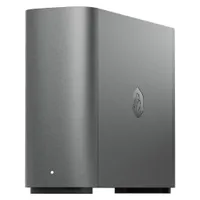
Highly Commended
- Synology DiskStation DS925+: (Review | Check Amazon)
- TerraMaster F4-424 Max NAS: (Review | Check Amazon)
All Finalists
- Asustor Flashstor 6 Gen2 FS6806X
- Asustor Lockerstor 4 Gen 3 AS6804T
- Synology BeeStation Plus NAS
- Synology DiskStation DS925+
- TerraMaster F2-425 NAS
- TerraMaster F4 NAS SSD
- TerraMaster F4-424 Max NAS
- TerraMaster F4-425 Plus NAS

The year in review: Laptops
2025 was a fun ride for laptops. Intel’s Core Ultra (Series 2) spread beyond a handful of premium models into more mainstream machines and showed us Intel could still make good CPUs. AMD’s mobile Ryzen chips also saw some great new additions, like the higher-end Ryzen AI Max designs that offered genuinely impressive performance in thinner laptops.
Qualcomm’s Snapdragon X Plus CPUs helped bring solid performance and excellent battery life to more affordable machines. Windows on Arm continued to improve as well, despite Microsoft's best efforts to annoy everyone in other ways, and updated Surface laptops are great options with few downsides.
The M4 MacBook Air launched early in the year, with small but welcome improvements on the classic design, and at times, discounted prices that made it very affordable.
OLED screens got increasingly common, Wi-Fi solidified as the baseline spec and options like Thunderbolt 5 were increasingly available on premium machines.
RAM pricing shenanigans started to hit laptops by the end of 2025, but even before that upgradeable memory was getting rare, and soldered had become the default.
Gaming laptops finally had a proper update cycle, with RTX 50-series GPUs arriving in new and existing models that offered quite decent boosts, though also slightly steeper prices.
Want even more laptops? Check out the best in our Buyers Guides.
Best budget laptop or 2-in-1
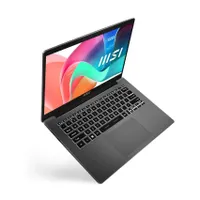
Highly Commended
- Asus CX34 Chromebook Plus: (Asus | Check Amazon)
- Dell 14 Plus: (Review | Buy now)
All Finalists
- Acer Swift 14 AI
- Apple MacBook Air 13-inch M4
- Asus CX34 Chromebook Plus
- Asus Zenbook A14
- Dell 14 Plus
- Dell 14 Plus 2-in-1
- Lenovo Chromebook Plus 14 Gen 10
- Lenovo IdeaPad Slim 3x
- Lenovo ThinkBook 16 Gen 7
- MSI Modern 14 F13MG
Best premium laptop or 2-in-1
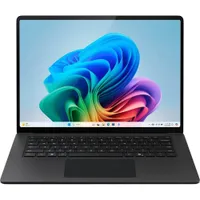
Highly Commended
- Apple MacBook Pro M5: (Review | Check Amazon)
- HP OmniBook Ultra Flip: (Review | Buy now)
All Finalists
- Apple MacBook Air 15-inch M4
- Apple MacBook Pro M5
- Asus ProArt P16
- Asus Zenbook S 16
- Dell 16 Premium
- HP OmniBook Ultra Flip
- HP ZBook Ultra G1a 14 mobile workstation
- Lenovo Yoga Slim 7i Aura Edition
- Microsoft Surface Laptop
- MSI Prestige A16 AI
Best gaming laptop
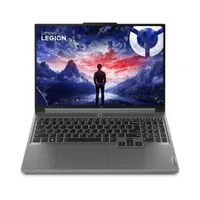
Highly Commended
- Acer Nitro V 15: (Review | Check Amazon)
- HP Omen Max 16: (Review | Buy now)
All Finalists
- Acer Nitro V 15
- Asus ROG Flow Z13 2025
- Asus ROG Strix G16 2025 AMD
- Asus TUF A14 2025
- Gigabyte Gaming A16 Pro
- HP Omen Max 16
- Lenovo Legion 5i Gen 10
- Lenovo LOQ 15 Gen10
- MSI Vector 16 HX AI
- Razer Blade 16 2025

The year in review: Systems
From the graphics card shortages at the start to the RAM shortages at the end of 2025, PC retailers endured a lot last year. They needed to adapt to an unusually volatile market in order to survive and as a result, we saw several examples of both good and bad decisions around pre-built systems, all seeking an edge or a niche in which to sell them.
Many were coming up with inventive ways to shoehorn the ever-more-expensive graphics cards into previously stable price tiers. Companies like Mwave impressed us with the quality and balance of their builds while also retaining a wide range of products. Photech did well here, too, with some admirably good system offerings that had great value for money while being well thought out and not cutting back in certain areas when others were.
The biggest improvement we saw was from MSY, which, after a website overhaul, went from a terrible online shopping experience to a great one overnight. The breadth of retailer options and their offerings, along with their willingness to adapt to market conditions, gives us hope that our PC retailers will soldier on as the 2026 RAM apocalypse deepens.
Want more PCs? Check out the best in our Buyers Guides.
Best desktop PC
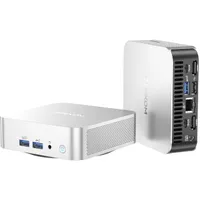
Highly Commended
All Finalists
- Alienware Aurora ACT1250
- Apple Mac Mini M4
- Apple Mac Studio M3 Ultra
- Asus NUC 14 Pro
- Asus ROG NUC 2025
- Geekom A5 2025 Edition
- Geekom A8 AI
- Lenovo Legion Tower 5 2025
- Lenovo ThinkCentre M70q Gen 4 Tiny
- Minisforum MS-S1 Max Mini PC
- MSI Cubi Z AI 8M
Best handheld

Highly Commended
- MSI Claw 8 AI+: (Review | Check Amazon)
- ROG Xbox Ally X: (Review | Check Amazon)
All Finalists
- Asus ROG Xbox Ally
- Lenovo Legion Go 2
- Lenovo Legion Go S
- Lenovo Legion Go S SteamOS
- MSI Claw 8 AI+
- ROG Xbox Ally X
Want more gaming goodness? Check out our guide to the best handheld consoles.
Best tablet
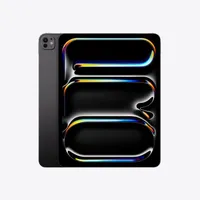
Highly Commended
- Lenovo Idea Tab Pro: (Review | Check Amazon)
- Samsung Galaxy Tab S11 Ultra: (Review | Check Amazon)
All Finalists
- Apple iPad (A16) 11in
- Apple iPad Mini A17 Pro
- Apple iPad Pro 11in (M5)
- iPad Air M3
- Lenovo Idea Tab Pro
- Samsung Galaxy Tab S11
- Samsung Galaxy Tab S11 Ultra
Want more of the best tablets? Check out the full range in our buyers guides.
Best retailer for PC enthusiasts

Highly Commended
All Finalists

The year in review: Components
First the important news — PC style is trending strongly towards white, with matching white graphics cards and motherboards being a strong fashion statement in 2026.
In less significant news, the RAMpocalypse continues to play havoc with every corner of the PC industry. It’s quite possible that rising component costs will eliminate the budget sub-$500 (USD) segment almost entirely by the end of the year (according to a forecast published by research firm Gartner on February 26). Component costs will also slow the growth of AI PCs, being those that require more memory to run local inference workloads. AI is one area where components have an especially vulnerable victim, and one that just happens to be the poster-child of the PC marketing scene over the last year or more. Ironically, consumer AI PCs will suffer due to AI data centre expansion.
Higher-end components will give systems integrators the margins they need to survive, meaning premium PC builds outfitted with hard to find and expensive memory and storage will become the norm and the budget segment will be pushed aside.
Want more memory? Check out our guide to the best DDR5 RAM
Best memory maker

Highly Commended
All Finalists
Best air cooling product
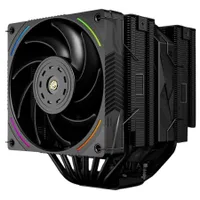
Highly Commended
- Arctic Freezer 36: (Review | Check Amazon)
- Cooler Master Hyper 212 3DHP: (Review | Check Amazon)
All Finalists
- Thermalright Royal Pretor 130
- Arctic Freezer 36
- Cooler Master Hyper 212 3DHP
- Noctua NH-L12S
- DeepCool Assassin VC Elite
- Cooler Master Hyper 612 Apex
Best AIO cooling product
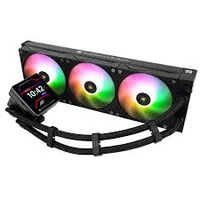
Highly Commended
- Arctic Liquid Freezer III Pro 360 ARGB: (Review | Check Amazon)
- Asus ROG Ryuo IV SLC 360 ARGB: (Asus | Check Amazon)
All Finalists
- Arctic Liquid Freezer III Pro 360 ARGB
- Asus ROG Ryujin III 360 ARGB Extreme AIO
- Asus ROG Ryuo IV SLC 360 ARGB
- Cooler Master MasterLiquid 360 Core II
- Corsair Nautilus 360 rs
- Nzxt Kraken Elite 360 RGB 2024 Cooler
- Nzxt Kraken Plus 360 RGB Cooler
- Thermalright Grand Vision 360
- Tryx Panorama SE ARGB 360

The year in review: Monitors
The relentless march of OLED continues, and with good reason. These panels are a gift to PC gamers, with vivid colours and perfect-black contrast. Any game experience is enhanced with an OLED. It’s just undeniably superior. Improvements in panel tech have gradually led to OLEDs being a viable replacement for LCD for productivity, though some tweaking is still needed to get a simple black font looking good against a white background. Those who don’t game are still better off with LCD.
In LCD, IPS still dominates, with almost half of all monitor sales using that panel tech. VA is now almost exclusively reserved for insanely-high refresh rate displays. Those days are numbered, though, as refresh rates keep getting better for OLED.
1440p is still the sweet spot resolution, and we expect it to remain that way for a few more years, as the slowing release of better new GPUs and general graphics card market scarcity will mean people will hold onto the card they have and upgrade less frequently, slowing the move to high resolution panels. That said, ultrawides keep getting cheaper, and interesting new resolutions keep emerging, like LG’s wondrous 5K2K screen.
We also have loads more of the best monitors in our comprehensive buying guides.
- The best monitor
- Best portable monitor
- Best business monitor
- The best ultrawide monitors
- The best monitors for PS5 and PS5 Pro
- Best monitors for working from home
Best monitor maker
Highly Commended
All Finalists
Best productivity monitor
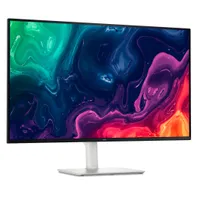
Highly Commended
- BenQ GW2490: (Review | Check Amazon)
- MSI Modern MD342CQPW: (MSI | Check Amazon)
All Finalists
- Alogic Clarity Touch 5K
- BenQ GW2490
- Dell 32 Plus S3225QS
- Dell Pro 32 Plus
- Dell Pro P2725QE Plus 4K
- Dell S3225QC
- Lenovo ThinkVision P49w-30
- LG UltraFine evo 6K
- MSI Modern MD342CQPW
Best gaming monitor
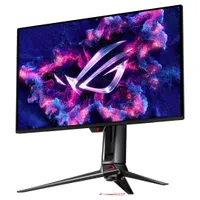
Highly Commended
- LG UltraGear 45GX950A: (Review | Buy now)
- MSI MPG 321CURX QD-OLED: (MSI | Check Amazon)
All Finalists
- Asus ROG Strix XG27ACDNG
- Samsung Odyssey OLED G81SF
- Alienware AW3425DW
- MSI MPG 271QR X50
- Lenovo Legion R27fc-30
- Alienware AW2525HM
- Alienware AW2725Q
- LG UltraGear 45GX950A
- MSI MPG 321CURX QD-OLED
- Asus ROG Swift PG27UCDM
Best creator/pro monitor
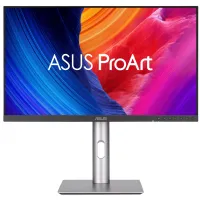
Highly Commended
- BenQ PD2730S: (Review | Check Amazon)
- Asus ProArt PA32UCDM: (Review | Buy now)
All Finalists
- BenQ PD3226G
- Asus ProArt PA32UCDM
- Dell UltraSharp U2724DE
- Dell UltraSharp 274K Thunderbolt Hub Monitor U2725QE
- BenQ MA320U
- Asus ProArt PA27JCV
- BenQ PD2730S
- Asus ProArt Display 6K PA32QCV

The year in review: Peripherals
The winds of change are blowing across the world of keyboards, and we love it. Gone are the days when all the top rated keyboards came exclusively from the traditional players. While the likes of Corsair and Logitech are still pumping out great gear, the ascendancy of ‘niche’ keyboard companies like Keychron, NuPhy, McHose and Wobkey has been most welcome. The market is now awash with beautiful colours and designs, and the range and customisation options are glorious.
The reverse is true with mice, where it’s still very much the domain of the likes of Razer, Logitech, Corsair, Asus and SteelSeries. Sensors are pushing into polling rates up to and even beyond 8000Hz, which is the realm of only elite esports players. Small and light is the trend, which we appreciate, and so is having fewer buttons, which we don’t like at all.
Gaming headphones are seeing a few planar driver models sneak into play, which is a trend we hope continues, as the crystal clear fidelity is very well suited to gaming.
Fish tank-style cases remain in vogue, with attractive examples from many of the top case brands.
Best keyboard
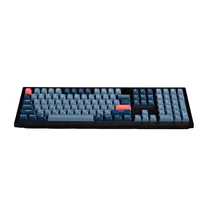
Highly Commended
- Be Quiet Light Mount: (Review | Check Amazon)
- NuPhy Air60 HE: (Review | Check Amazon)
All Finalists
- 8BitDo Retro
- Asus ROG Falchion Ace HFX
- Be Quiet Light Mount
- Keychron C1 Pro 8K
- Keychron K8 HE
- Keychron V6 Max
- McHose Unbox Therapy UT98
- NuPhy Air60 HE
- Wobkey Rainy 75 Pro
Best mouse

Highly Commended
- Corsair Sabre V2 Pro: (Review | Check Amazon)
- Glorious Model O Eternal: (Review | Check Amazon)
All Finalists
- Asus ROG Harpe Ace Mini
- Corsair Sabre V2 Pro
- Corsair Scimitar Elite Wireless SE
- Glorious Model O Eternal
- Logitech MX Master 4
- Razer Cobra HyperSpeed
- Razer DeathAdder V4 Pro
It’s also worth checking out our guide to the best mice in Australia.
Best gaming headset
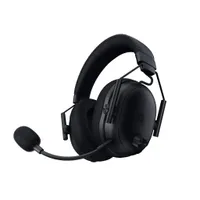
Highly Commended
- Corsair VOID Wireless V2: (Review | Check Amazon)
- SteelSeries Arctis Nova Elite: (Review | Buy now)
All Finalists
- Asus ROG Pelta
- Corsair Void V2 MAX
- Corsair VOID Wireless V2
- Logitech Astro A50 Gen 5
- Logitech G522
- Razer BlackShark V3 Pro
- SteelSeries Arctis Nova Elite
- Turtle Beach Atlas 200
Best case
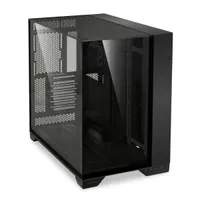
Highly Commended
- Fractal Design Terra: (Review | Check Amazon)
- Asus AP202: (Asus | Check Amazon)
All Finalists
- Be Quiet Shadow Base 800 FX
- Phanteks Eclipse G400A
- Hyte Y40
- Asus AP202
- Lian Li O11 Vision
- Fractal Design Terra
- Nzxt H9 Flow RGB case
Best router

Highly Commended
- Asus ZenWiFi BT10: (Review | Check Amazon)
- TP-Link Deco XE75 Pro: (Review | Check Amazon)
All Finalists
- Acer Predator Connect W6x
- Asus ZenWiFi BT10
- DrayTek Vigor2865Lax-5G
- MSI Roamii BE Lite Wi-Fi 7
- Netgear Nighthawk RS100
- Netgear Orbi 370
- TP-Link Deco BE68 BE14000
- TP-Link Deco XE75 Pro
It’s also worth checking out our guide to the best mesh Wi-Fi systems.

The year in review: Internet
The NBN received a major shake up towards the end of 2025 with the arrival of its “Accelerate Great” initiative, which saw much faster download and upload speeds being delivered to customers with eligible connection types. These speed upgrades arrived at no extra cost too, resulting in some great value for Australians wanting to improve their home internet.
That sentiment is especially true when you consider official speed reporting data compiled by the Australian Competition & Consumer Commission (ACCC), which found that the new 500Mbps tier, in particular, is actually overdelivering on speed promises, while the similarly new NBN 750 speed tier is exceptionally close to hitting 100%.
Aussie-owned internet service provider, Exetel, beat everyone else to the punch with an NBN 500 plan launch in July 2025, ahead of the wider September rollout. The telco also made the surprising move to eradicate all its other NBN plans, leaving it with just one. We had wondered if other providers would follow suit but, so far, Exetel maintains its unique position.
Elsewhere, prices for very-high speed NBN plans continued to drop, with the average monthly cost of an NBN 1000 plan being around $5 less year on year. At the other end of the spectrum, slower NBN plans — such as NBN 25 and NBN 50 — continued to increase in price, highlighting the improved value of faster plans. With the number of connected devices only expected to increase over the coming years, getting yourself connected to a superior NBN plan is practically a necessity.
It’s also worth taking a look at our buyers guides for all the best NBN and internet options.
Best NBN Provider: Overall

Highly Commended
All Finalists
Best NBN Provider: Budget

Highly Commended
All Finalists
Best NBN Provider: High-speed

Highly Commended
All Finalists
Best NBN Provider: Gaming
Highly Commended
All Finalists
Best Security Suite

Highly Commended
All Finalists
- Avast Ultimate
- Avira Prime
- Bitdefender Total Security
- Eset Home Security Ultimate
- McAfee+ Premium
- Norton 360

For the person, product or technology that advanced the PC more than any other in 2025.
Excellence Award

Highly Commended
All Finalists
- Gabe Newell: Not selling out
- AI everywhere: For better or worse...
- Intel Arc B-series (Battlemage): An actually competitive GPU alternative to Nvidia and AMD
- AMD Radeon RX 9000 series: Made mid-range GPUs interesting again
- Valve: SteamOS is advancing Linux gaming in huge strides. Microsoft is worried
- AMD Strix Halo: One of the best mobile chips in years
- MSI: Project Zero made cable-hiding stealth boards a success
- Nvidia: Never gave up on CUDA, now it drives most AI
- ARM: Slowly but surely taking on every kind of processing
- QD OLED: High refresh rate, high PPI, falling cost

The company that impressed us the most, overall, over the past year
Gold Award
Highly Commended
All Finalists
PC Builders
Finalist brands (in order of appearance)
- Asus
- Asrock
- Gigabyte
- MSI
- Nzxt
- Sapphire
- Intel
- XFX
- AMD
- Corsair
- Kingston
- Samsung
- SanDisk
- Seagate
- Silicon Power
- TeamGroup
- WD
- Adata
- Crucial
- LaCie
- Orico
- Asustor
- Synology
- TerraMaster
- Acer
- Apple
- Dell
- Lenovo
- HP
- Microsoft
- Razer
- Alienware
- Geekom
- Minisforum
- Biwin
- G.Skill
- Thermalright
- Arctic
- Cooler Master
- Noctua
- DeepCool
- Tryx
- Alogic
- BenQ
- LG
- 8BitDo
- Be Quiet
- Keychron
- McHose
- NuPhy
- Wobkey
- Glorious
- Logitech
- SteelSeries
- Turtle Beach
- Phanteks
- Hyte
- Lian Li
- Fractal Design
- DrayTek
- Netgear
- TP-Link
Internet providers
Security suites

Epic Fail Award

Highly Commended
All Finalists
- Apple: Apple Intelligence is the gift that keeps on not giving
- AI: Overpromising and under-delivering for the consumer, causing the RAM apocalypse. AI slop. Grok deepfakes. And more...
- Borderlands 4: Game runs poorly but Gearbox CEO Randy Pitchford said it's "pretty damn optimised", "Use DLSS. It's great".
- Cloudflare outage: Wiped many websites and services offline. Too much of the internet is dependent on it!
- Intel: Still hasn't properly dealt with Raptor Lake issues
- Memory shortage and price surge: AI driven insanity
- Meta AI stage fail: Zuck's glasses failed to work live on stage
- Micron/Crucial: Abandoning consumers at their time of need
- Microsoft: Multiple Windows update fails, Agentic AI integration, efforts to kill Windows 10, including updates that brick your SSD!
- Nvidia: RTX 5000 series launch, melty connectors 2.0, crappy drivers, outrageous pricing
- Optus 000 outages: People died, nuff said
You must confirm your public display name before commenting
Please logout and then login again, you will then be prompted to enter your display name.