Microsoft says its glass-based storage project now works with 'the same material found in kitchen cookware and oven doors' and can hold data for 10,000 years
Served on a platter.
Keep up to date with the most important stories and the best deals, as picked by the PC Gamer team.
You are now subscribed
Your newsletter sign-up was successful
Want to add more newsletters?
Every Friday
GamesRadar+
Your weekly update on everything you could ever want to know about the games you already love, games we know you're going to love in the near future, and tales from the communities that surround them.
Every Thursday
GTA 6 O'clock
Our special GTA 6 newsletter, with breaking news, insider info, and rumor analysis from the award-winning GTA 6 O'clock experts.
Every Friday
Knowledge
From the creators of Edge: A weekly videogame industry newsletter with analysis from expert writers, guidance from professionals, and insight into what's on the horizon.
Every Thursday
The Setup
Hardware nerds unite, sign up to our free tech newsletter for a weekly digest of the hottest new tech, the latest gadgets on the test bench, and much more.
Every Wednesday
Switch 2 Spotlight
Sign up to our new Switch 2 newsletter, where we bring you the latest talking points on Nintendo's new console each week, bring you up to date on the news, and recommend what games to play.
Every Saturday
The Watchlist
Subscribe for a weekly digest of the movie and TV news that matters, direct to your inbox. From first-look trailers, interviews, reviews and explainers, we've got you covered.
Once a month
SFX
Get sneak previews, exclusive competitions and details of special events each month!
Long-term data storage is a tricky one. As I look at my personal hard drives, full of photos, screenshots, and ancient drafts of teenage poetry I hope never see the light of day, I can't help but wonder how long I really have until I encounter the dread spectre of disk failure.
SSDs may sound like the obvious solution, but have you seen SSD prices lately? Besides, even storage giant SanDisk says, "most SSDs will last anywhere from 5 to 10 years." That's hardly archival-quality. However, a fresh study from Microsoft has found an unlikely medium that can potentially store high-density data for up to 10,000 years—namely, laser-etched glass.
Now, obviously, the claim that etching glass with femtosecond laser pulses actually achieves data storage for 10,000 years is not really provable. Additionally, this isn't even the first time Microsoft has explored glass-based data storage. The real headline here is that the research team has made glass-based storage way less expensive—and therefore way more likely to become a widespread reality.
According to a blog post from partner research manager Richard Black, the new Project Silica technique "stores hundreds of layers of data in glass only 2 mm thin, as with previous methods, but with important improvements." Firstly, the project has shifted away from using "expensive fused silica to ordinary borosilicate glass found in kitchen cookware." That's right: the future of long-term data storage might actually be Pyrex.
That's not the only way Project Silica manages to keep costs down, though. "The reader for the glass now needs only one camera, not three or four, reducing cost and size," Black goes on to write, "In addition, the writing devices require fewer parts, making them easier to manufacture and calibrate, and enabling them to encode data more quickly."
It's a properly sci-fi development that, unlike much of real-world AI, genuinely inspires. Just picture it: museums of glass, translucent server rooms, and libraries full of gently twinkling tomes.
Anyway, I'll stop pitching my debut novel for a beat—the future of Project Silica is not a done deal, either. The research phase has concluded, but there's no guarantee you'll ever hold something like an SSD with thin glass innards in your hands. All Black says of the future is: "We are continuing to consider learnings from Project Silica as we explore the ongoing need for sustainable, long-term preservation of digital information."
Keep up to date with the most important stories and the best deals, as picked by the PC Gamer team.

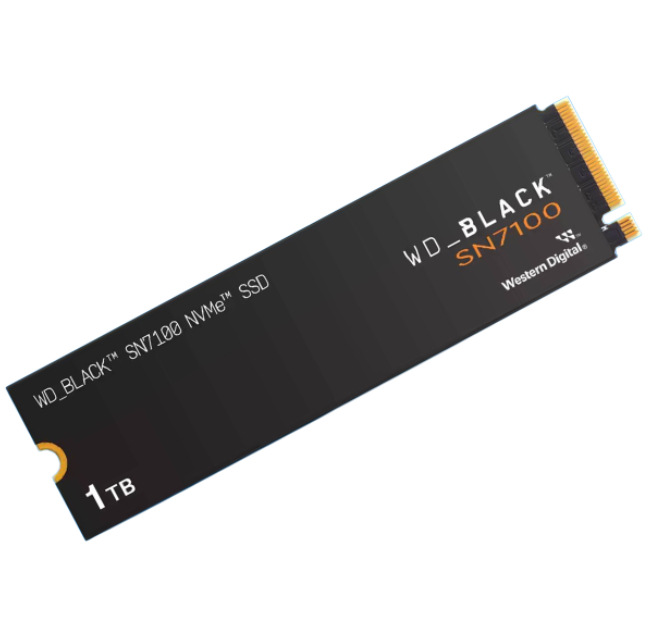
1. Best overall:
WD_Black SN7100
2. Best budget:
Biwin Black Opal NV7400
3. Best PCIe 5.0:
WD_Black SN8100
4. Best budget PCIe 5.0:
Crucial P510
5. Best 4 TB:
TeamGroup MP44
6. Best 8 TB:
WD_Black SN850X
7. Best M.2 2230:
Lexar Play 2230
8. Best for PS5:
Silicon Power XS70

Jess has been writing about games for over ten years, spending the last seven working on print publications PLAY and Official PlayStation Magazine. When she’s not writing about all things hardware here, she’s getting cosy with a horror classic, ranting about a cult hit to a captive audience, or tinkering with some tabletop nonsense.
You must confirm your public display name before commenting
Please logout and then login again, you will then be prompted to enter your display name.