When it comes to the latest CPUs and GPUs, we all know that they need to be made on the most complex and expensive process nodes, in order to pack in billions of transistors into the die. However, not all chips need to be fabricated this way, which is why Intel is only just making the transition to 8 nm for its motherboard chipsets. More importantly, though, it seems that it won't be the US chip giant that will be making them, but Samsung instead.
That's according to a news report by The Korean Economic Daily, aka Hankyung (via Tom's Hardware). Sources within the industry have told the publication that Samsung is "on the verge of securing an order for Intel's 8 nm chips." It's not talking about the company's CPUs or GPUs, though, but rather its PCHs or platform controller hubs.
Article continues below 
The obvious question to ask here is which PCHs Intel plans on being made at Samsung? It's unlikely to be anything current, and given that the forthcoming Panther Lake and Wildcat Lake mobile processors don't require a PCH (as that stuff is integrated into the chip itself), it all points to Intel's next generation of desktop CPUs: Nova Lake.
All the rumours for that processor point to it being huge, with many more PCIe lanes than in Arrow Lake, so a more capable PCH is certainly going to be needed. With Nova Lake expected to appear at some point in 2026, Samsung will obviously need to have production of the PCHs in full swing well before the processors arrive.
The Korean Economic Daily claims that this is already well in hand, so at least that side of the chip package should be sorted, even if the rest isn't up to speed just yet. Mind you, if you're an Intel fan right to the very marrow of your bones, with an Intel CPU, GPU, and motherboard, you might be slightly disappointed that one tiny part of the whole caboodle won't be pure Team Blue.
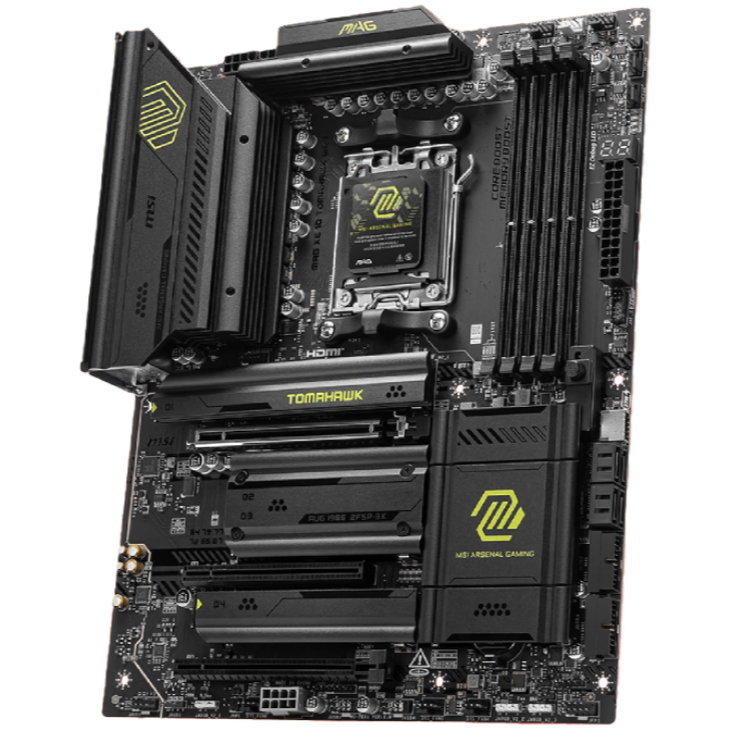
1. Best AM5 - AMD Ryzen 9000/7000:
MSI MAG X870 Tomahawk WiFi
2. Best budget AM5 - AMD Ryzen 9000/7000:
Asus TUF Gaming B650-Plus WiFi
3. Best midrange AM5 - AMD Ryzen 9000/7000:
ASRock B850 Steel Legend WiFi
4. Best AM4 - AMD Ryzen 5000/3000:
Asus ROG Strix B550-E Gaming
5. Best LGA1851 - Intel Core Ultra 200S:
Asus ROG Maximus Z890 Hero
6. Best budget LGA1851 - Intel Core Ultra 200S
ASRock B860 Steel Legend Wi-Fi
7. Best LGA1700 - Intel 14/13th Gen:
MSI MAG Z790 Tomahawk WiFi
8. Best budget LGA1700 - Intel 14/13th Gen:
Asrock B760M PG Sonic WiFi

You must confirm your public display name before commenting
Please logout and then login again, you will then be prompted to enter your display name.