Unless you've been living on Mars for the past year, it can't have escaped your notice that memory sticks and SSDs are painfully expensive right now, having risen fourfold in price in less than six months. With the AI market showing no signs of slowing its rampant consumption of DRAM and storage, you'd expect things to be getting worse every week. However, some reports are suggesting that this isn't the case, or at the very least, we're experiencing a moment of respite.
First up is an analysis of memory and storage prices by 3DCenter, covering DDR4 and DDR5, desktop and mobile DIMMs, and all kinds of internal SSDs. It suggests that while DDR5 prices are just over 400% higher than they were in July 2025, they've not changed at all in the past month, though it does depend on what capacity and speed of DRAM you're looking at.
Article continues below 
So this plateau may indeed be the whole market reaching a point where there's just about enough supply to keep things ticking along, and it's unable or unwilling to support spending even more on memory.
A report by IT Home confirms that there seems to have been a small 'crash' in the price of DDR4—a fall of 10 to 20% from its 2025 peak—because "spot memory prices have seen a slight correction, and speculative sentiment in the market has subsided."
Does that mean we can breathe a sigh of relief, even though we're still having to sell an organ or two just for a couple of DRAM sticks? I'm certainly no expert in market analysis, but this just feels like we've passed into the eye of a hurricane, and that the raging storm will come crashing back into us soon enough.
Micron, the third-largest manufacturer of DRAM, warned us in December that memory shortages will persist beyond 2026, and Phison's CEO recently claimed that it may run all the way through to 2030 or beyond.
Even if Samsung, SK Hynix, and Micron could somehow magically double their memory output overnight, there would still not be enough DRAM being made to sate the hunger of AI. That's because enormous AI processors, like Nvidia's latest Vera-Rubin 'superchip', boasts 576 GB of HBM4 memory, with a full NV72 rack housing an enormous 20.7 TB of the stuff. And your average AI data center will have thousands of them.

The same is true for NAND flash memory, the stuff that goes inside SSDs. AI machines are devouring all of that, too, and there's absolutely no sign whatsoever that this market plans on putting the brakes on with its orders for chips of every kind. Too much money is being spent on AI right now for that to be even remotely considered, simply because the risk of it all going pear-shaped is too much for the industry to bear right now.
So, by all means, breathe a sigh of relief that memory prices have plateaued. Cheer that they've even fallen in some cases. But don't think for one moment that the RAMpocalpyse is almost over. Because it isn't and not by a long way.
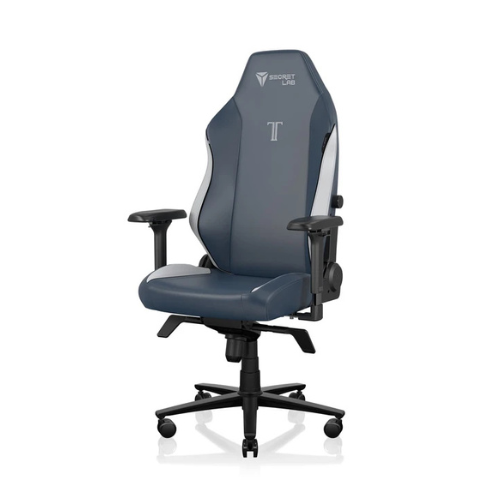
1. Best gaming chair: Secretlab Titan Evo
2. Best gaming desk: Secretlab Magnus Pro XL
3. Best gaming headset: Razer BlackShark V3
4. Best gaming keyboard: Asus ROG Strix Scope II 96 Wireless
5. Best gaming mouse: Razer DeathAdder V4 Pro
6. Best PC controller: GameSir G7 Pro
7. Best steering wheel: Logitech G Pro Racing Wheel
8. Best microphone: Shure MV6 USB Gaming Microphone
9. Best webcam: Elgato Facecam MK.2

You must confirm your public display name before commenting
Please logout and then login again, you will then be prompted to enter your display name.