Join The Club





If there's a single throughline for the PC gaming year that was 2025, it's finally accepting that the pursuit of fancy graphics just doesn't make sense anymore.
Tech has hit a hard graphics plateau: raw generational updates are now nuanced upgrades measured in single-digit frame gains rather than evolutions anyone with eyes can appreciate, and the subsequent pivot to AI-generated frames and experimental hair follicles aren't really revving anyone's engines when those upgrades cost a month's rent. Even if the latest hardware really was all that, the precarious AI bubble is locking normal humans out of it anyway.
Article continues belowPeak and REPO were the big hits this calendar year, but they're of a kind with Phasmophobia and Lethal Company—all were among the best-selling Steam games of their release years, and it's no coincidence that they'll all run on a budget PC from nine years ago.

Though it looks like it's sticking, friendslop is a terrible name for these games, because it (perhaps unintentionally) lumps them in with a growing pile of low-effort games cranked out by anonymous Steam grifters every day, and of course, actual AI slop. The well-intentioned use of "slop" probably refers to the subgenre's deliberate use of janky physics and ragdolls to conjure comedy. In REPO, navigating a valuable and fragile vase down narrow hallways is uncomfortable, awkward, and intense—much like actually moving a cherished piece of furniture from one house to another.
But there's nothing sloppy about games with a simple premise, instantly learnable controls, and crucially, with an art direction that accommodates whatever hardware you have to play them on. To have all of that at once and still end up with a fun game is anything but low-effort.

There's nothing sloppy about games with a simple premise, instantly learnable controls, and crucially, with an art direction that accommodates whatever hardware you have to play them on.
For how much people talked about REPO and Peak this year, their beautiful 3D environments despite modest system requirements are underrated. Peak's mountains are just a series of primitive overlapping shapes, but excellent sound work, lighting, and the tangible effects of harsh weather on your scout really sells the idea that you're in a dangerous place. REPO's aggressive use of VHS noise camouflages the simplicity of its geometry and enhances the effect of darkness. These graphics aren't just cheaper and accessible, they're thoughtful and effective: In many ways, more so than games that cost 100x more to make.
We see this trend beyond the bounds of cooperative horror and precarious climbing. Abiotic Factor, my favorite survival game ever that hit 1.0 in 2025, commits to a wonderfully '90s chunkiness that evokes Half-Life while leveraging Unreal Engine 5 for modern lighting. It's gotta be one of the only UE5 games that will comfortably run on a budget Nvidia card from six years ago.

Schedule 1, perhaps the ugliest game discussed today, still manages to cultivate an Adult Swim-like charm from its cast of weirdos with unique features and expressive eyes. It's a look that gets the job done well enough to support its deep, open-world drug empire simulation.
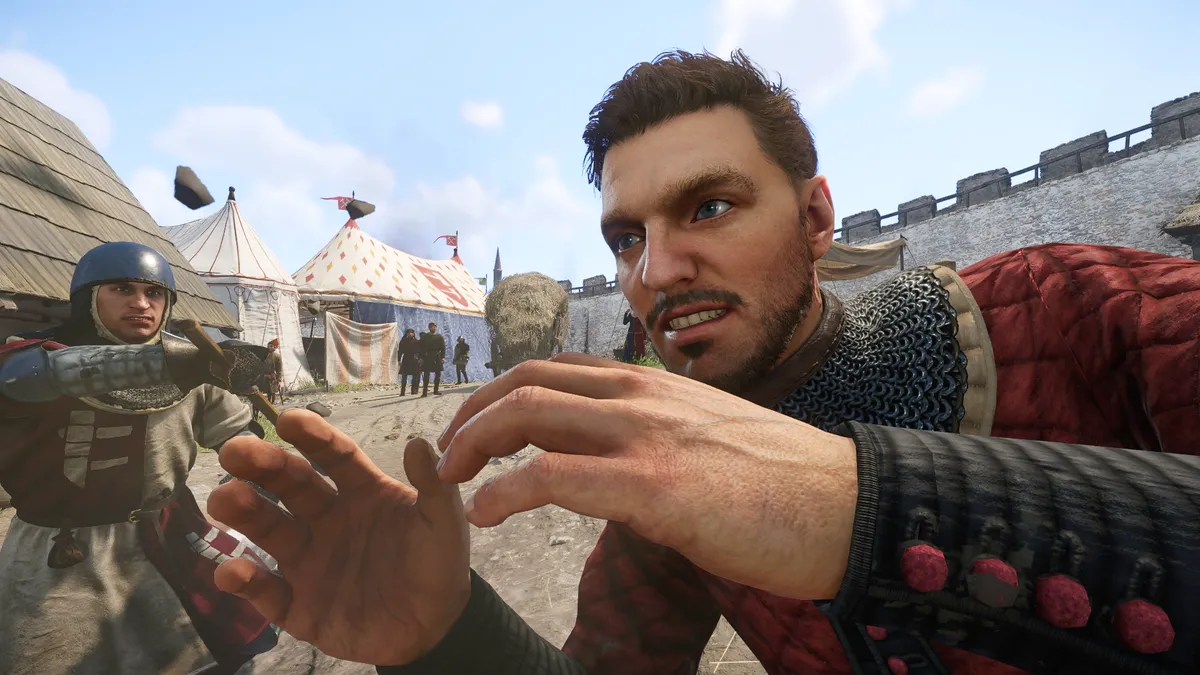
Even big-budget games saw the benefit of a performance-over-graphics mindset this year. Kingdom Come: Deliverance 2, PC Gamer's game of the year, will happily run on a GTX 1060, Nvidia's mid-range card from 2016. It's also Steam Deck verified, and among the top-played games on the handheld platform.
Battlefield 6, our best FPS of 2025, earned brownie points with fans by committing to a high performance standard on minimum-spec PCs and leaving expensive technologies like raytracing behind. The result was a gorgeous, top-selling shooter that runs at high framerates on any modern machine. Everybody talked about Battlefield 6's optimization and nobody cared that shadows and reflections weren't top of the line.
What every single one of these games have in common is something that we all fundamentally understand, but maybe don't say out loud often enough: Gameplay is everything. Fancy graphics are just nice to have. I think it's true of most of us that we'd sooner sink a dozen hours into an ugly game with an incredible hook than, say, a gorgeous one that bores us to tears.
I hope friendslop's dominance in 2025, as well as the success of KCD2 and Battlefield 6 and the rippling consequences of Monster Hunter Wild's terrible optimization, represent a tipping point for big-budget development. The push for increasingly photoreal graphics isn't just boring and alienating, but increasingly a risky business decision, too.

You must confirm your public display name before commenting
Please logout and then login again, you will then be prompted to enter your display name.