

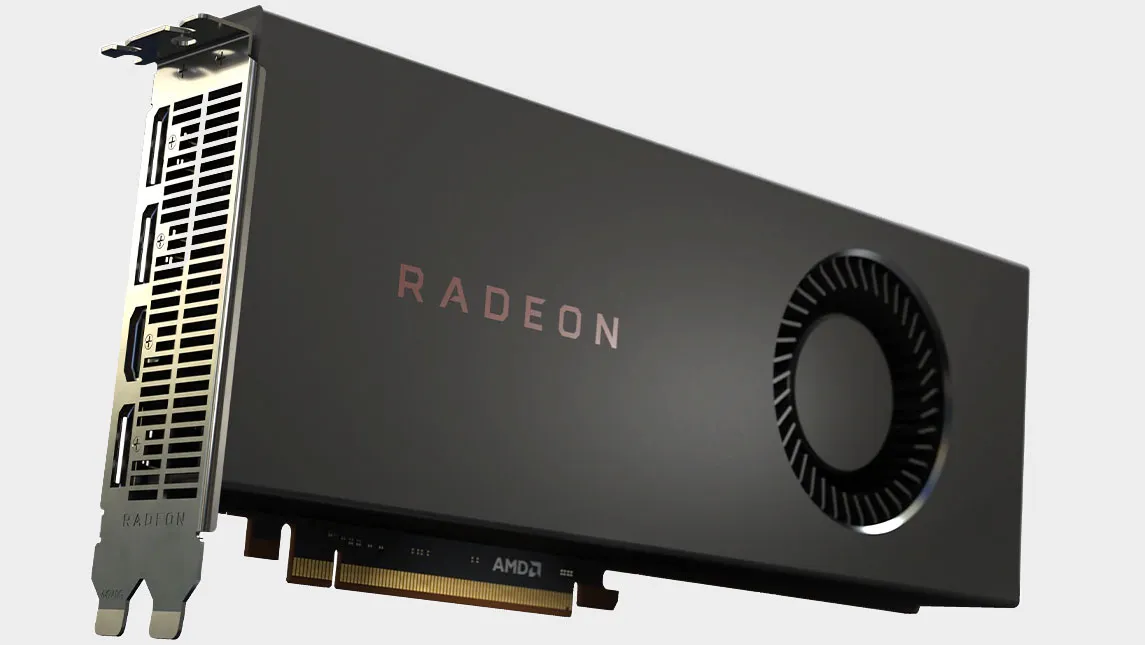
Fretting over high GPU temps? AMD says 110C is 'expected and within spec' on Navi
The Radeon RX 5700 series use an array of sensors to record temps from various parts of the GPU.
Keep up to date with the most important stories and the best deals, as picked by the PC Gamer team.
You are now subscribed
Your newsletter sign-up was successful
Want to add more newsletters?
Every Friday
GamesRadar+
Your weekly update on everything you could ever want to know about the games you already love, games we know you're going to love in the near future, and tales from the communities that surround them.
Every Thursday
GTA 6 O'clock
Our special GTA 6 newsletter, with breaking news, insider info, and rumor analysis from the award-winning GTA 6 O'clock experts.
Every Friday
Knowledge
From the creators of Edge: A weekly videogame industry newsletter with analysis from expert writers, guidance from professionals, and insight into what's on the horizon.
Every Thursday
The Setup
Hardware nerds unite, sign up to our free tech newsletter for a weekly digest of the hottest new tech, the latest gadgets on the test bench, and much more.
Every Wednesday
Switch 2 Spotlight
Sign up to our new Switch 2 newsletter, where we bring you the latest talking points on Nintendo's new console each week, bring you up to date on the news, and recommend what games to play.
Every Saturday
The Watchlist
Subscribe for a weekly digest of the movie and TV news that matters, direct to your inbox. From first-look trailers, interviews, reviews and explainers, we've got you covered.
Once a month
SFX
Get sneak previews, exclusive competitions and details of special events each month!
AMD is seeking to ease concerns over what appear to be high temps on its Radeon RX 5700 series graphics cards. In a recent blog post, AMD said a temperature reading of 110C during a "typical gaming" session is both "expected and within spec."
This might be higher than what you are used to seeing. According to AMD, it's not that Navi cards necessarily run hotter. Instead, triple-digit temp readings could simply be the result of the new cards utilizing a bunch of sensors spread out over the entire GPU die.
"Paired with this array of sensors is the ability to identify the 'hotspot' across the GPU die. Instead of setting a conservative, 'worst case' throttling temperature for the entire die, the Radeon RX 5700 series GPUs will continue to opportunistically and aggressively ramp clocks until any one of the many available sensors hits the 'hotspot' or 'Junction' temperature of 110-degrees Celsius. Operating at up to 110C Junction Temperature during typical gaming usage is expected and within spec," AMD explains.
In essence, the Junction reading represents the hottest part of the GPU. Where exactly that is at any given moment can vary, based on what you are doing and what part of the GPU is hit the hardest.
Using an array of sensors in this manner ultimately enables Navi cards to offer "much higher performance and clocks out of the box," and do it at reasonable noise levels, AMD says. Meanwhile, Navi cards also still provide average GPU temp readings, in addition to the Juncture temp.
The blog post goes into more detail and is worth checking out when you have the time. That said, the upcoming crop of custom 5700 XT and 5700 cards by AMD's hardware partners will undoubtedly result in lower temps, by way of burlier axial cooling solutions.
In my experience, third-party GPU cooling solutions also tend to run quieter than blower-style coolers. Just be sure your case has adequate airflow if going that route, or else you end up circulating hot air inside your PC.
Keep up to date with the most important stories and the best deals, as picked by the PC Gamer team.
Paul has been playing PC games and raking his knuckles on computer hardware since the Commodore 64. He does not have any tattoos, but thinks it would be cool to get one that reads LOAD"*",8,1. In his off time, he rides motorcycles and wrestles alligators (only one of those is true).


