Join The Club





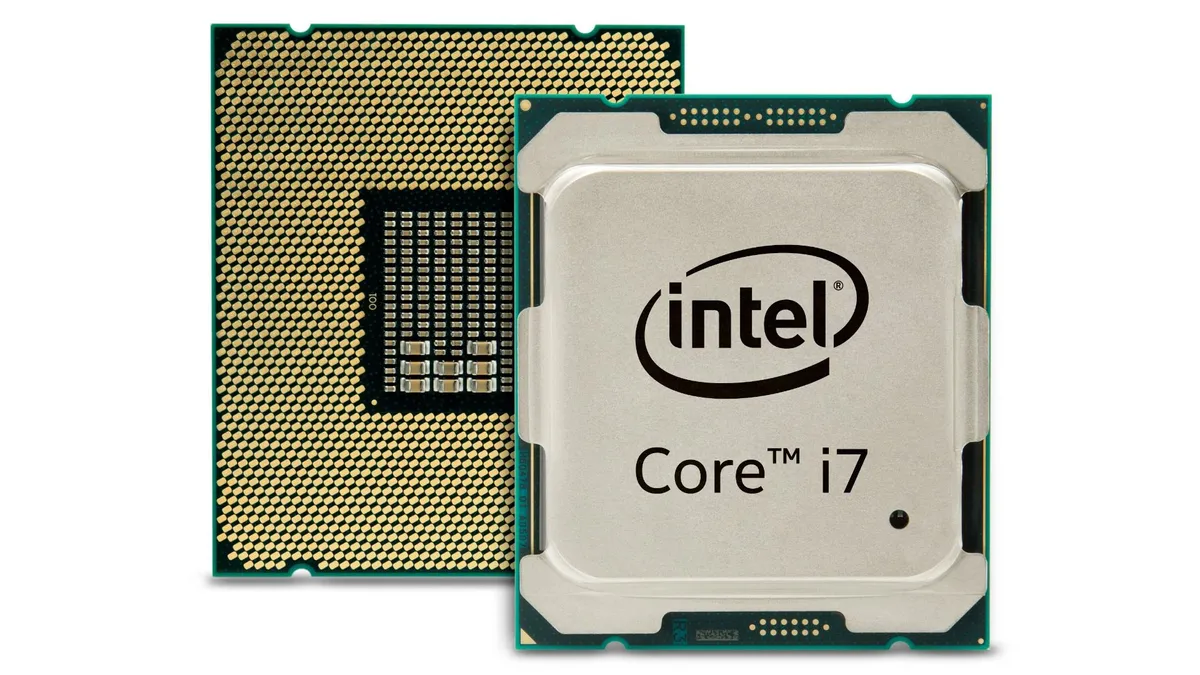
Both Microsoft and Intel have had some time to perform internal benchmarks after applying the latest Meltdown and Spectre updates, and both report seeing slowdowns to varying degrees. The extent depends on your specific hardware, with older systems being the hardest hit.
"Based on our most recent PC benchmarking, we continue to expect that the performance impact should not be significant for average computer users. This means the typical home and business PC user should not see significant slowdowns in common tasks such as reading email, writing a document or accessing digital photos," Intel said in an updated statement.
Article continues belowMore specifically, Intel said that systems outfitted with an 8th generation Core processor and solid state drive should see a performance impact of 6 percent or less. That's based on Sysmark 2014 SE results, with individual tests showing a performance hit of 2-14 percent. Intel performed the benchmark on two systems, one with a Core i7-8650U (Kaby Lake-R) and one with a Core i7-8700K (Coffee Lake).
"Ultimately, overall impact will depend on the specific workload, platform configuration and mitigation technique. In some cases there are multiple mitigation options available, each with different performance implications and implementation specifics," Intel added.
What about older processors? That's a question Microsoft addressed. Like Intel, the company saw a small performance hit on newer processors, and specifically Skylake and up. But on Haswell and older systems, Microsoft said some benchmarks showed "more significant slowdowns" in Windows 10.
Here is the summary that Microsoft laid out:
- With Windows 10 on newer silicon (2016-era PCs with Skylake, Kabylake or newer CPU), benchmarks show single-digit slowdowns, but we don’t expect most users to notice a change because these percentages are reflected in milliseconds.
- With Windows 10 on older silicon (2015-era PCs with Haswell or older CPU), some benchmarks show more significant slowdowns, and we expect that some users will notice a decrease in system performance.
- With Windows 8 and Windows 7 on older silicon (2015-era PCs with Haswell or older CPU), we expect most users to notice a decrease in system performance.
- Windows Server on any silicon, especially in any IO-intensive application, shows a more significant performance impact when you enable the mitigations to isolate untrusted code within a Windows Server instance. This is why you want to be careful to evaluate the risk of untrusted code for each Windows Server instance, and balance the security versus performance tradeoff for your environment.
Microsoft cautioned against reading too much into some of the early benchmark findings, as many of the ones published so far do not include both OS and silicon updates. To that end, Microsoft is still in the process of compiling a larger set of numbers. It's also working to further refine its updates, with a focus on minimizing the performance impact.
"In general, our experience is that Variant 1 and Variant 3 mitigations have minimal performance impact, while Variant 2 remediation, including OS and microcode, has a performance impact," Microsoft added.
Variants 1 and 3 refer to Spectre and Meltdown vulnerabilities, respectively, while Variant 2 is also Spectre. With that being the case, we suspect there will be a performance penalty on AMD systems too, since AMD is affected by Spectre.
We will continue to monitor the situation closely. In the meantime, we put together an FAQ on Meltdown and Spectre. There are also videos that show Meltdown in action, which are pretty interesting to watch.