Running an AI company isn't a cheap thing to do, especially if you're at the forefront of developing new models. You need to buy or rent hundreds of thousands of GPUs, pay huge energy and water bills, and hire lots of highly skilled and qualified staff. So, where does one find a handy source of money for all of this? In the case of Anthropic, it's turned to the military as the pot of bountiful cash, but according to one report, it's now discovering that all that glitters isn't gold.
The agreement between Anthropic and the then-named Department of Defense to "prototype frontier AI capabilities that advance U.S. national security" was announced last July, and while it was only given a capped $200 million budget—a fraction of the money it's received from Microsoft and Nvidia—the makers of Claude were looking "look forward to deepening our collaboration across the Department to solve critical mission challenges".

So if all the above is an accurate description of the current state of affairs between the AI firm and the US military, I find it hard to believe that Anthropic wouldn't expect these demands from the Department of War.
Naturally, we have no idea as to precisely what has been discussed between the two parties. It might be a matter of money, for example, with Anthropic effectively saying, 'Sure, we can switch all that off, but that's a whole pile of extra work, which is another contract entirely.' That said, Anthropic already has a special version of Claude for "US national security customers", so why would the DoW not be using that one?
Whatever the situation may truly be, I suspect that Anthropic is beginning to learn that while it's all well and good have a set of universal usage standards, the moment you make exceptions to some of these for specific customers, others will want the same. And if that customer just so happens to be the military, with its enormous cake of money, if you don't like the slice that's been given to you, other AI companies will surely rush in to pick up the crumbs.
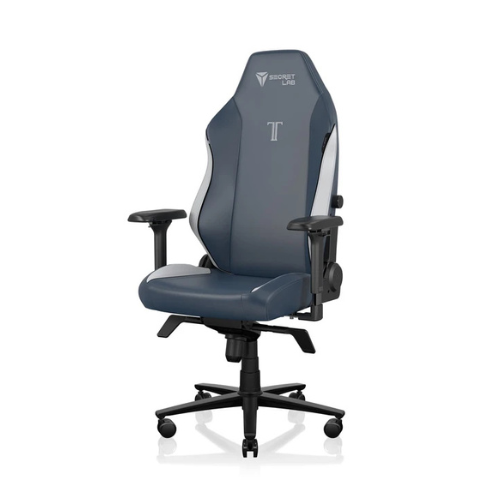
1. Best gaming chair: Secretlab Titan Evo
2. Best gaming desk: Secretlab Magnus Pro XL
3. Best gaming headset: Razer BlackShark V3
4. Best gaming keyboard: Asus ROG Strix Scope II 96 Wireless
5. Best gaming mouse: Razer DeathAdder V4 Pro
6. Best PC controller: GameSir G7 Pro
7. Best steering wheel: Logitech G Pro Racing Wheel
8. Best microphone: Shure MV6 USB Gaming Microphone
9. Best webcam: Elgato Facecam MK.2

You must confirm your public display name before commenting
Please logout and then login again, you will then be prompted to enter your display name.