What with all the controversy surrounding Nvidia's new DLSS 5 tech, the company's new Vera CPU has gone somewhat unnoticed among the more meme-worthy announcements at the GTC event. But the Vera chip—or perhaps more specifically the Olympus cores it contains—looks like a beast. So, will it ever come to the PC?
We already knew of the existence of the Nvidia Vera CPU and some basic details, including the 88-core structure, the fact that its Arm-based and is a custom Nvidia design. Oh, and of course that it's designed for AI servers, at least at first.
Article continues below
Oh, and Nvidia has its own take on multi-threading or SMT in the form of "Spatial Multithreading." Unlike AMD and Intel's SMT, Nvidia's Spatial Multithreading is not time-spliced, and so does not rely on "time-shared resources and frequent context switching between threads", which Nvidia says can introduce performance variation.
The overall result, Nvidia claims, is that an Olympus CPU core is 50% faster than any single x86 core in compilation, scripting, and compression in an "agentic sandbox container." Oh and it's 90% more efficient.
Another interesting detail is that Vera uses plain old LPDDR5X memory, essentially the same stuff used in laptop PCs, but thanks to a monster memory bus has 1.2 TB/s of raw bandwidth. Speaking of bandwidth, there's also a 16-lane PCIe Gen 6 interface. Yup, Nvidia has got to PCIe Gen 6 before AMD or Intel.
The specifics of the Vera CPU die also include the 88 cores with support for 176 threads, plus 162MB of L3 Cache. But if what we're interested in is how the Olympus core might apply to the PC, the specific configuration of Vera probably isn't hugely relevant.
The bottom line here is that Nvidia has said nothing about this Vera chip and its Olympus cores outside of the AI server context into which the chip is being launched. Vera is all about AI factories and supporting agentic AI. But it certainly looks like a very powerful CPU core.
If you trawl around online, you'll find reference to rumour and speculation that Nvidia could be lining up Olympus for the second generation of its upcoming PC processor, supposedly codenamed N2.
The first-gen N1 or N1X Nvidia CPU for the PC has been rumoured for some time and latterly confirmed by CEO Jensen Huang to be based on the GB10 Superchip as found in the DGX Spark box.

GB10 is also an Arm-based CPU, but uses off-the-shelf Arm Cortex cores rather than an in-house architecture from Nvidia. So, in this narrative, Nvidia's second-gen PC processor would make the switch from bought-in Arm cores to Nvidia's own design and that design would essentially be the Olympus cores in the new Vera chip.
For what it's worth, Nvidia also revealed that it has something of a forward roadmap of custom Arm-based CPUs. Vera will be followed by a CPU codenamed "Rosa" that will be paired with the upcoming Feynman generation of GPUs. That's two generations out and follows Nvidia's next-gen Rubin GPUs.
Realistically, then, we're a long way off seeing an Olympus Nvidia CPU core, or at least something derived from Olympus, in the PC. Nvidia hasn't even released the first-gen N1 PC processor with its Arm-designed cores yet.
But Nvidia does seem to be laying the ground work for a whole series of potential future PC processors based on its own in-house CPU cores. And that is pretty exciting, even if it's all pretty theoretical for now, never mind the fact that running PC games on any Arm CPU is currently quite problematic.
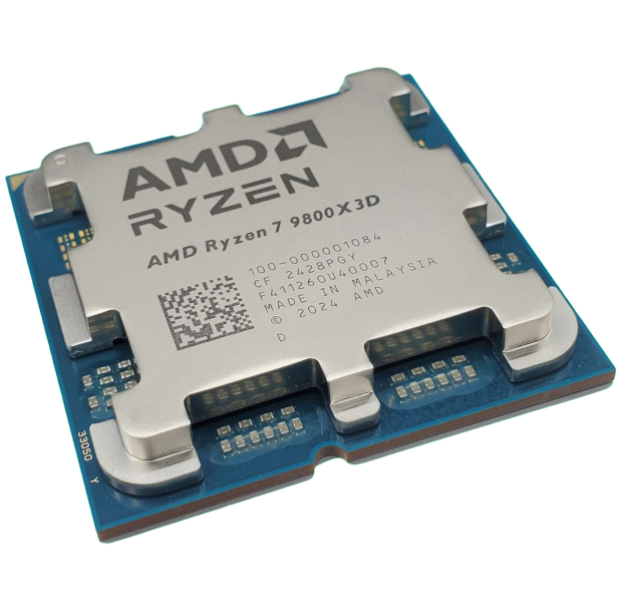
1. Best overall:
AMD Ryzen 7 9800X3D
2. Best budget:
AMD Ryzen 5 7600X
3. Best mid-range:
AMD Ryzen 7 9700X
4. Best high-end:
AMD Ryzen 9 9950X3D
5. Best AM4 upgrade:
AMD Ryzen 7 5700X3D
6. Best CPU graphics:
AMD Ryzen 7 8700G

You must confirm your public display name before commenting
Please logout and then login again, you will then be prompted to enter your display name.