When I saw that Elgato's Wave Link audio mixing software now supports non-Elgato microphones, I got quite excited. I don't have an Elgato microphone, but I do care about my audio quality on my PC for a range of uses. So let's see whether it's worth an install.
The Wave Link is a mixer for microphones and output devices that can add effects and adjust sound on the fly from any source. Where you'd previously need a Wave microphone or XLR unit, it now accepts any input that your Windows or Mac device recognises.

If you think the fluctuation in the dynamics between Spotify or Chrome is too jarring, throw a compressor and limiter on there to fix it yourself. This is neat, and swapping between different presets merely requires clicking on whichever mix you want to use.
There is a downside here, though. Effects are added at the beginning of a mixer stack, which means you can't set a de-esser on Chrome for just your personal mix and leave sound untreated in your stream mix. You can't even get around this limitation by adding two versions of Chrome to your stack. You can apply and unapply effects with the quickness of a button, though, so it's not a huge problem in my book
The eight total inputs are a small limitation, and you can add multiple outputs to the same track, but not multiple inputs. This means that a mixer stack can affect a wide variety of sounds, but those in the same section have to be treated the same way.
I had a slight 'why aren't more people doing this?' moment as I used it
It's not just output that you can adjust with the Wave Link. You can add effects to microphone input, which you can then add to your output stack. With my Shure MV6, I can adjust some settings in Shure's Motiv app, or add them after the fact in Audacity, or skip both and do it all straight from the Wave Link.
As someone who spends a lot of time adjusting sound after recording when I make videos, I could see this majorly cutting down on recording time.
Again, though, it is held back somewhat by the fact that you can't add different effects for different mixes. I'd personally love the ability to up the bass in a streaming setup, and then flatten it for when I'm gaming with my pals. I don't necessarily want to hit the Discord group with a radio voice at 10 PM on a Friday.

What struck me in my time with Wave Link is that it being free, intuitive, and coming with pretty powerful stock effects makes it feel different to much of what is currently out there. I had a slight 'why aren't more people doing this?' moment as I used it. Rode's Unify is a solid mixer, with very limited output control that works with Rode's own devices.
Logitech's Mixline allows some mixing with non-Logitech devices, but it's not as intuitive and doesn't come with easy effects integration. The VB-Audio VoiceMeeter mixer is a tad dated, though still pretty powerful (and it will cost you after 30 days). The Wave Link works almost unencumbered with any device, is easy to use, and I think it would be a boon to any setup, regardless of whether you own a Corsair or Elgato device.
There's room for the app to grow in the future, too. There's one free voice changer effect in the Elgato marketplace, which could serve as a decent replacement for the likes of VoiceMod, but it will only get better as the marketplace does.
It could still benefit from some fine-tuning and a greater number of effects in the Elgato marketplace, but I'm sold on the app and could find myself using it from here on out. The fact that I can hook it up to my Stream Deck for quick mix swapping is just an extra cherry on top.
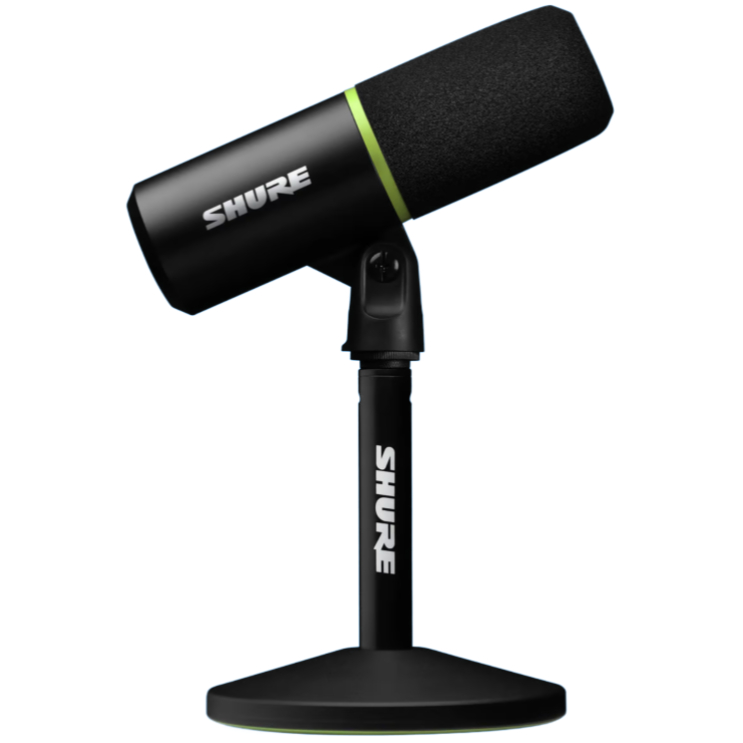
1. Best overall:
Shure MV6 USB Gaming Microphone
2. Best budget:
Amazon Basics USB Condenser Microphone
3. Best mid-range:
NZXT Capsule Elite
4. Best USB bundle:
Sennheiser Profile Streaming Set
5. Best looking:
HyperX Quadcast S
6. Best podcasting:
Shure MV7+
7. Best streaming:
SteelSeries Alias Pro
8. Best headset mic:
Audio-Technica ATH-M50xSTS StreamSet

You must confirm your public display name before commenting
Please logout and then login again, you will then be prompted to enter your display name.