You are now subscribed
Your newsletter sign-up was successful
Want to add more newsletters?

Every Friday
GamesRadar+
Your weekly update on everything you could ever want to know about the games you already love, games we know you're going to love in the near future, and tales from the communities that surround them.

Every Thursday
GTA 6 O'clock
Our special GTA 6 newsletter, with breaking news, insider info, and rumor analysis from the award-winning GTA 6 O'clock experts.

Every Friday
Knowledge
From the creators of Edge: A weekly videogame industry newsletter with analysis from expert writers, guidance from professionals, and insight into what's on the horizon.

Every Thursday
The Setup
Hardware nerds unite, sign up to our free tech newsletter for a weekly digest of the hottest new tech, the latest gadgets on the test bench, and much more.

Every Wednesday
Switch 2 Spotlight
Sign up to our new Switch 2 newsletter, where we bring you the latest talking points on Nintendo's new console each week, bring you up to date on the news, and recommend what games to play.

Every Saturday
The Watchlist
Subscribe for a weekly digest of the movie and TV news that matters, direct to your inbox. From first-look trailers, interviews, reviews and explainers, we've got you covered.

Once a month
SFX
Get sneak previews, exclusive competitions and details of special events each month!
Amid a memory supply crisis, in small part fueled by a shortage of NAND flash, it's perhaps unsurprising that talk of a successor would now appear. Enter ReRAM, or 'resistive random access memory.' The tech has been in development for some time, though startup Weebit Nano Limited has just signed a licensing deal with semiconductor manufacturer Texas Instruments to finally bring it to a broader audience.
According to Weebit Nano, this agreement will see its ReRAM tech "integrated into [Texas Instruments] advanced process nodes for embedded processing semiconductors." Despite what the name suggests, ReRAM isn't actually Random Access Memory, but a Non-Volatile Memory (think NAND, but not—I'll elaborate shortly).
To elaborate, ReRAM is non-volatile, so it's more like NAND in that it can retain data after being powered off—it's persistent memory. That's different to DRAM, which loses everything and requires something permanent, like NAND, alongside it. So, in theory, a system with ReRAM wouldn't require NAND, as it could act as both or either—provided it offers a high enough capacity—but that reality may still be a long way away.

Those with long memories will recall this isn't the first time we've written about ReRAM, as we reported all the way back in 2012 that SanDisk was looking to bring the technology that could 'replace both system RAM and hard drives in PCs of the future' to market. It's been in development ever since, and all this time later, we may actually be closer to that ReRAM reality than ever before—especially as Weebit has also signed deals with SkyWater, DB HiTek, and Onsemi as production partners.
This 'next step up' may be especially appealing to manufacturers. As Weebit's ReRAM is implemented as a back-end-of-line memory module, its integration avoids the need to modify front-end transistor structures. This then minimises process disruption, and could also reduce added wafer cost by almost 15% compared to the expense incurred by embedded flash.
Furthermore, ReRAM can be used as part of smaller and smaller process nodes, such as—you guessed it—some AI devices now being built at 22 nm and below. More traditional flash often has to be contained in a device external to the logic die, with data copied into SRAM at boot. It is definitely not the most efficient or secure structure for handling data.
Hanoch recently explained to All About Circuits, "Replace the SRAM with ReRAM, and now you have a one-chip solution. You boot instantly, you eliminate a security exposure, and you save power because the memory is non-volatile.”
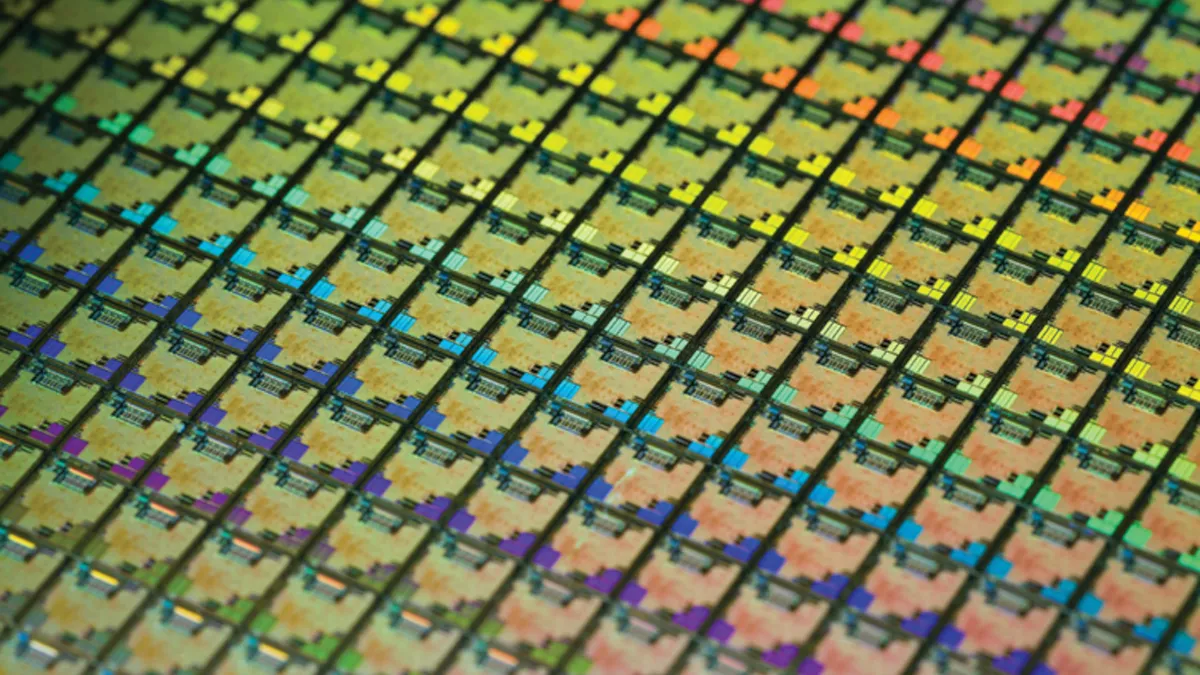
On the subject of AI applications, Hanoch also claimed, "The ReRAM bit behaves like a synapse. That makes it a natural fit for neuromorphic concepts.”
Without further elaboration on this latter point, I can only be sceptical of this AGI alluding claim. Seems I'll have to keep my eyebrow raised for the foreseeable future, though, as full ReRAM production remains a way off. Besides that, the universal memory format crown is not yet won, with both ULTRARAM and superlattice semiconductor projects also jostling for that throne. For the time being, we still have flash memory…and by extension, the memory supply crisis.
And all of that is to say nothing of how tough it is to launch new products and have them last in this space—just look at Intel/Micron's 3D XPoint.

1. Best gaming laptop: Razer Blade 16
2. Best gaming PC: HP Omen 35L
3. Best handheld gaming PC: Lenovo Legion Go S SteamOS ed.
4. Best mini PC: Minisforum AtomMan G7 PT
5. Best VR headset: Meta Quest 3

You must confirm your public display name before commenting
Please logout and then login again, you will then be prompted to enter your display name.