The GPU in the hot new PlayStation 5 Pro is mostly pretty old tech. But it does preview the ray-tracing upgrades that are coming with AMD's new RDNA 4 graphics chips for PC gamers.
That's the low down from the same PS5 Pro deep dive that also revealed Sony went its own way with AI hardware in the console rather than using AMD technology.
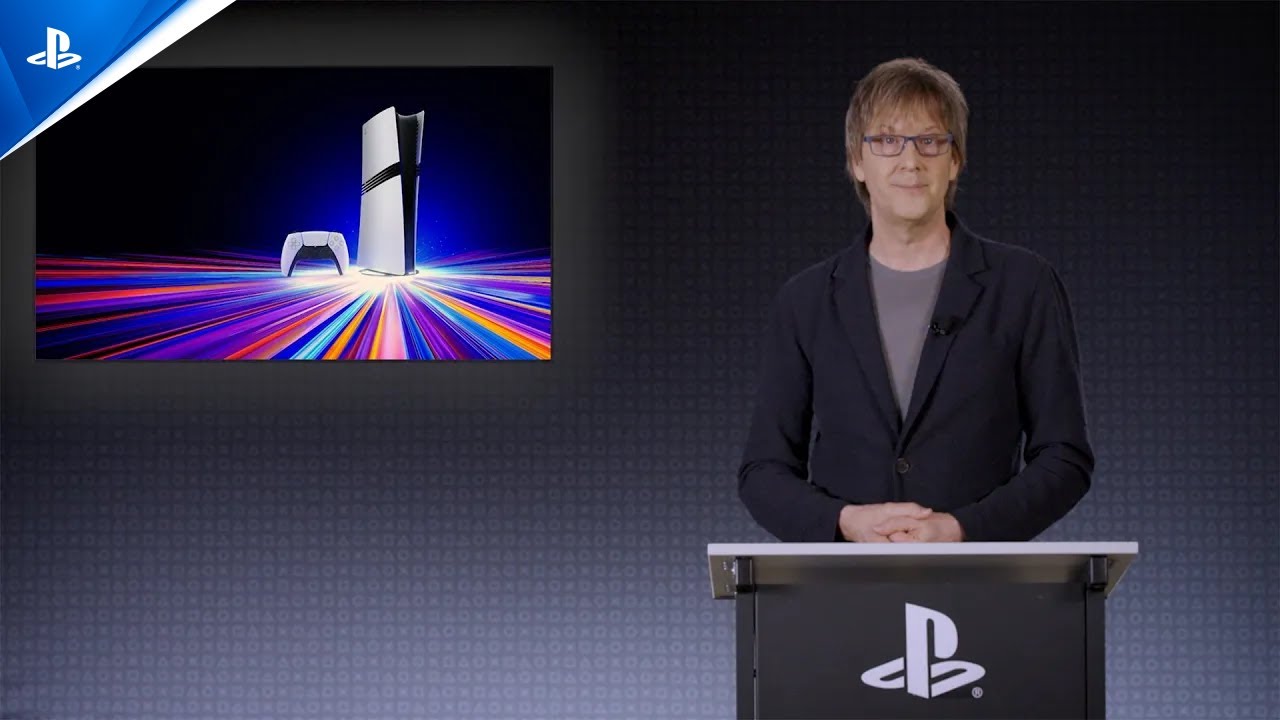
Sony's lead architect for its PlayStation consoles, Mark Cerny, has explained that the GPU in the PS5 Pro is still RDNA 2-based at its core, just like the original PS5. The reason for that is straightforward, compatibility.
By largely carrying over RDNA 2 technology for the shaders in the PS5 Pro's GPU, game developers can compile a single code path and have it run on both the PS5 and the PS5 Pro.
However, the PS5 Pro is not identical. "The base technology for PS5 Pro is somewhere between RDNA 2 and RDNA 3," Cerny says. For starters, while the shaders are RDNA 2, parts of the geometry pipeline are from RDNA 3.
Those geometry pipeline elements are faster but essentially invisible to a game engine. You can use the same code on both consoles, it will simply run better on the PS5 Pro.
However, had Sony gone for, say, the doubled-up floating point math capability from RDNA 3, that would require two code paths to be compiled, one for PS5 and one for PS5 Pro. That wasn't a burden Sony wanted to put onto game devs for what is a mid-life refresh rather than a properly new console generation.

But from a PC gaming perspective, easily the most intriguing aspect of the PS5 Pro's GPU involves ray tracing. Cerny says the upgraded ray-tracing hardware is sourced from a "future RDNA" generation.
Cerny is non-specific, but he is clear that this technology is "showing up first" in the PS5 Pro and is not currently available in any other AMD chip. Given we're expecting RDNA 4 to be replaced by an architecture-branded CDNA, that really only leaves RDNA 4.
Whatever, Cerny goes into some detail regarding the upgrades. You can watch the video for the full details. But the short version involves doubling up the BVH performance and adding new stack management hardware.
The BVH performance boost gives broad-based improvements in ray-tracing performance, while the new stack management engine particularly helps with complex reflections.
So what impact does that have on performance? "It's difficult to quote an exact speed up because it's very dependent on specifics of usage. But we commonly see the calculation of the rays occurring at double or triple the speed of Playstation 5," Cerny says.
However, that performance boost includes the simple impact of having a 67% larger and more complex GPU in PS5 Pro versus PS5. Cerny reckons that alone tends to translate into a real-world performance boost of around 45%.

So, bearing in mind Sony is claiming ray tracing is typically around 100% to 200% faster on the PS5 Pro, it's clear that the bulk of that improvement is architectural rather than simply a consequence of adding 67% more functional units.
That bodes pretty well for RDNA 4 GPUs. Currently, AMD has comfortably the weakest Ray-tracing performance of the three main GPU vendors for the PC.
Intel's new B580 GPU has pretty decent ray tracing throughput, but it's Nvidia that's in the lead. Based on the improved ray tracing in the PS5 Pro, we'd expect AMD to close most if perhaps not all of the gap to Nvidia.
Of course, Nvidia will have its own new GPU architecture arriving early in the new year alongside AMD's RDNA 4. Known as Blackwell and likely to be branded RTX 50 series, it will no doubt bring its own ray tracing boost. Odds are, then, that AMD will remain at a clear disadvantage.
But hopefully, RDNA 4's ray tracing will have improved sufficiently to make it more usable than that of existing RDNA 2 and RDNA graphics cards for the PC, where enabling high-quality ray tracing in games like Cyberpunk 2077 can really hammer frame rates. Watch this space...