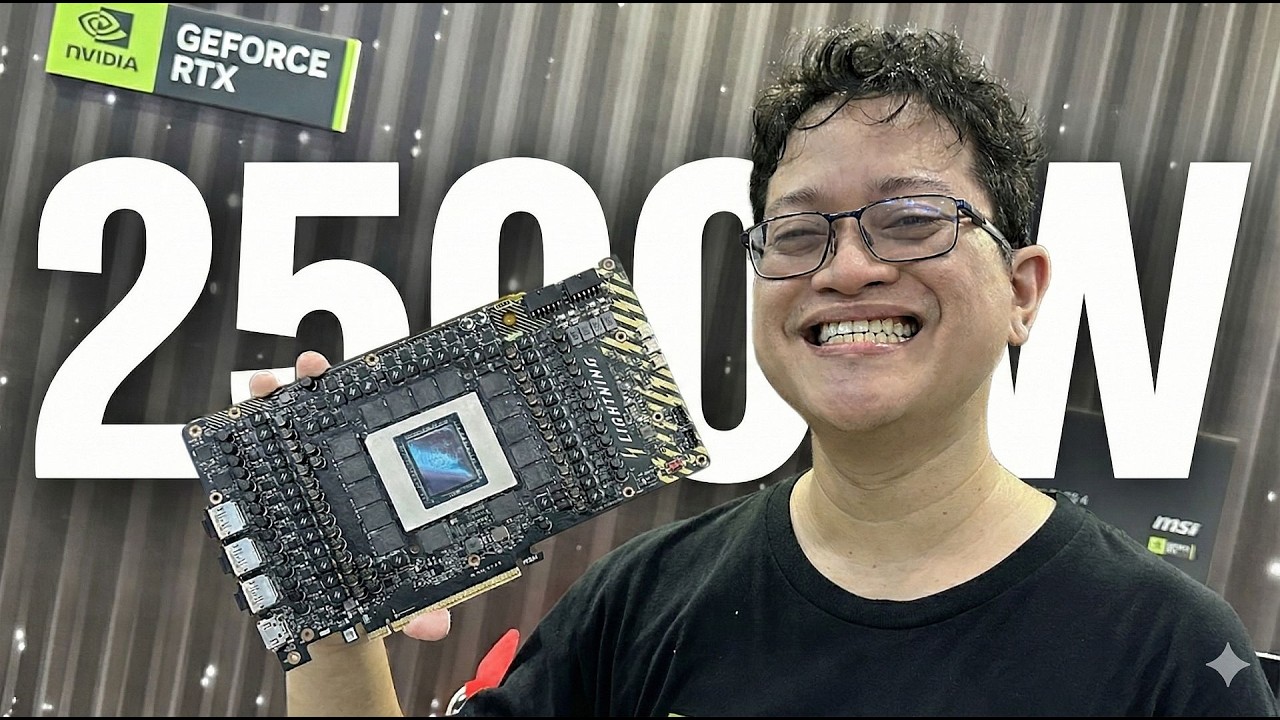
Top-level overclocking pushes PC hardware into scenarios that it's never expected to experience on a day-to-day basis. One exception is MSI's new $5000 RTX 5090 Lightning Z graphics card, sporting two 600 W 12V-2x6 connectors, 40-phase VRMs, and even an option to use a special BIOS that pushes the card's limit to a dizzy 2,500 W. Sounds like it can cope with anything, yes? Well, if it's 1.2 volts, then the answer is no.
In a recent YouTube video, Jonathan shared their latest ventures with an RTX 5090 Lighting Z graphics card, specifically multiple early samples that were sent over by MSI to see just how far the boards could be pushed. Where a standard GeForce RTX 5090 has a power limit of 575 W, MSI's new model has two further modes of operation: 800 W (OC) and 1,000 W (Extreme).
Article continues belowThis is why it's water-cooled as standard, with a hulking 360 mm radiator doing its best to shift all that heat. Jonathan's samples arrived without said cooler, because no serious overclocker is ever going to use such a thing: for them, it's liquid nitrogen or nothing.
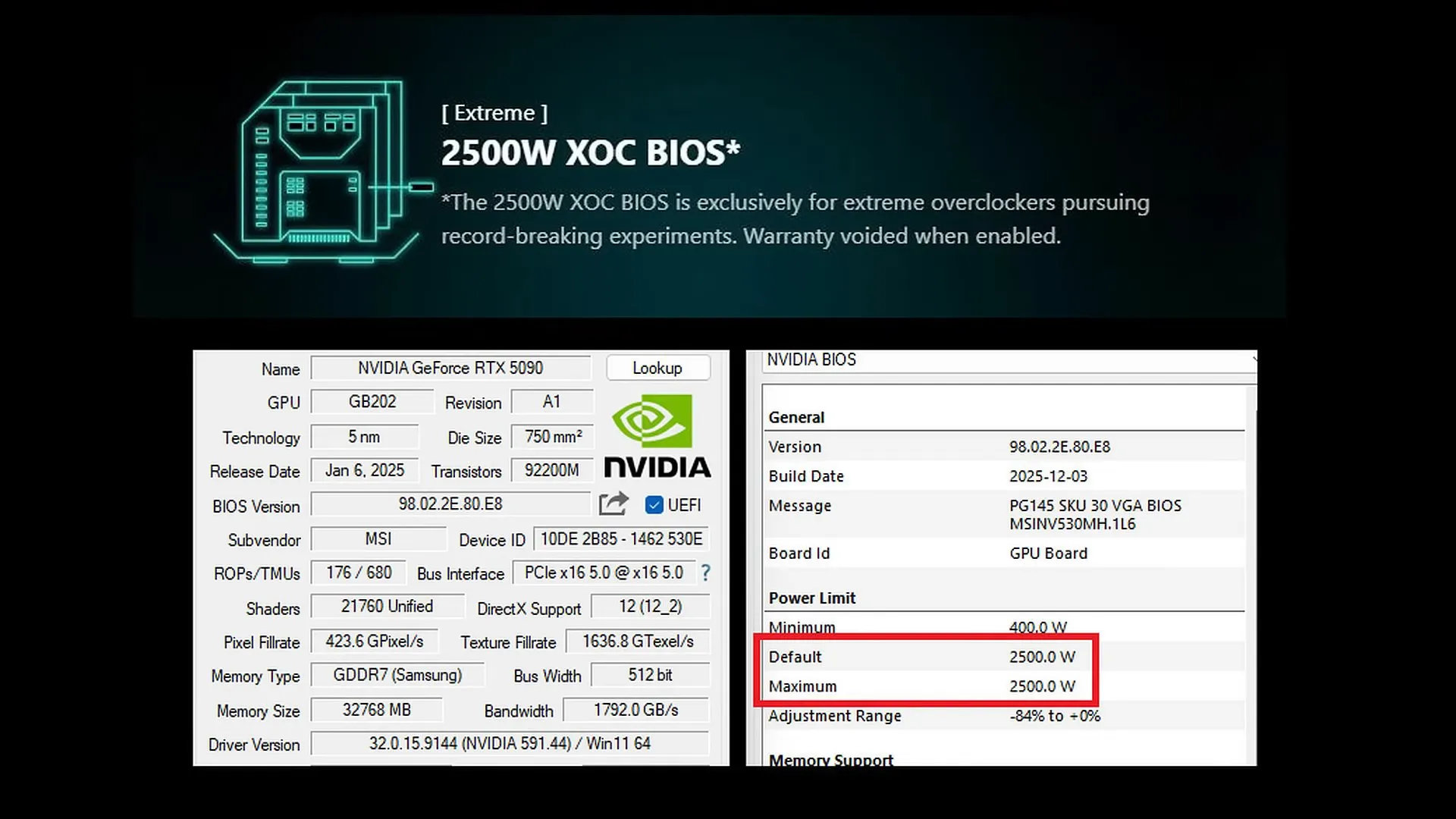
The first attempts at overclocking were pretty successful, topping the HWBot charts with a score of 683,433 in the Geekbench 5 GPU Compute test. However, MSI also has a 2,500 W XOC BIOS for the card, and when Jonathan and his colleagues switched to that, in the hope of claiming an even-higher record, things went instantly awry.
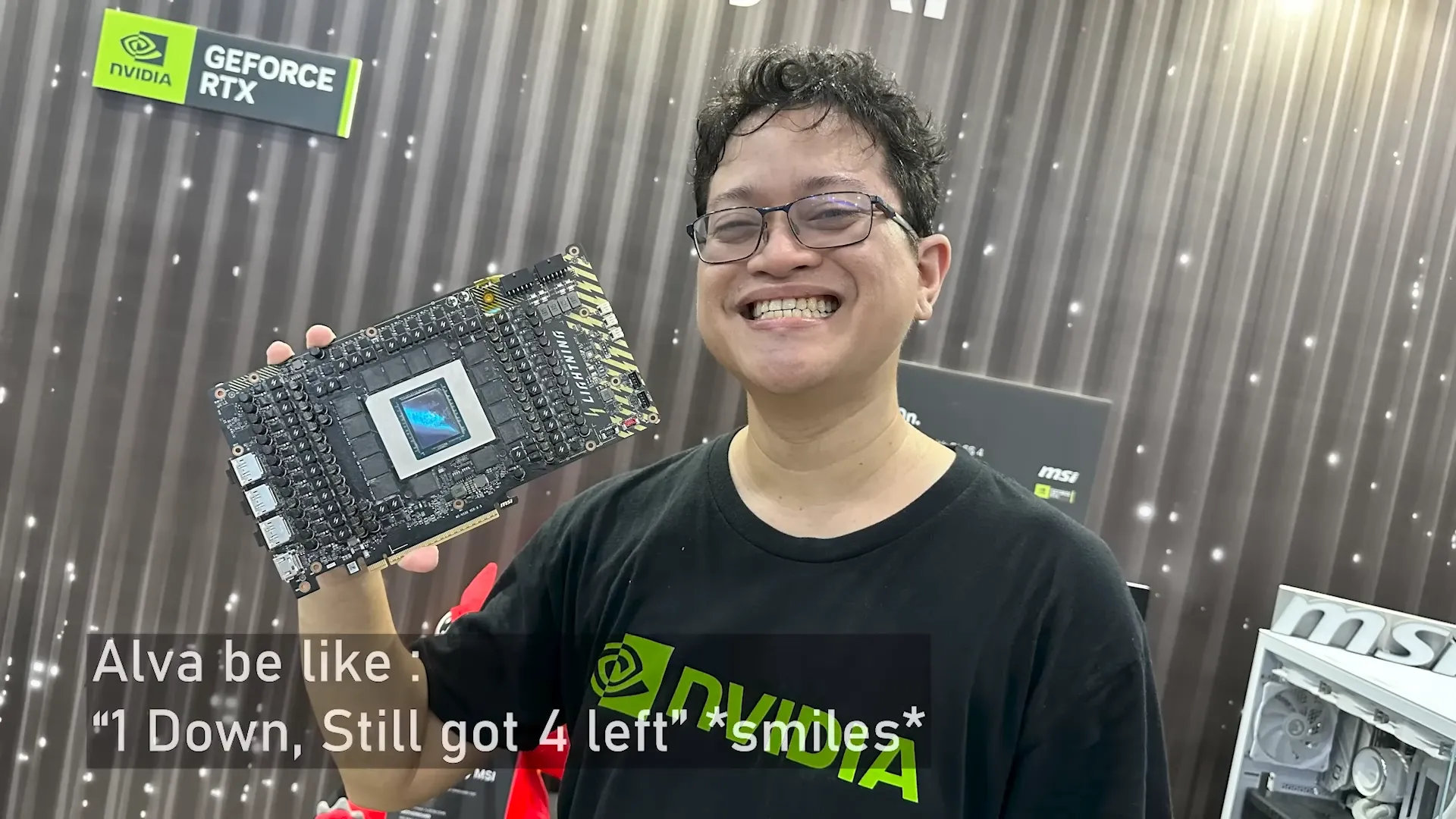
And by awry, I mean the GPU itself cracked apart like it had been struck by a hammer. Even though processors have many layers of metal in them, they're mostly comprised of silicon, which is quite a brittle material. The one thing it doesn't handle particularly well is thermal shock: rapid changes in temperature, causing the material to expand too quickly.
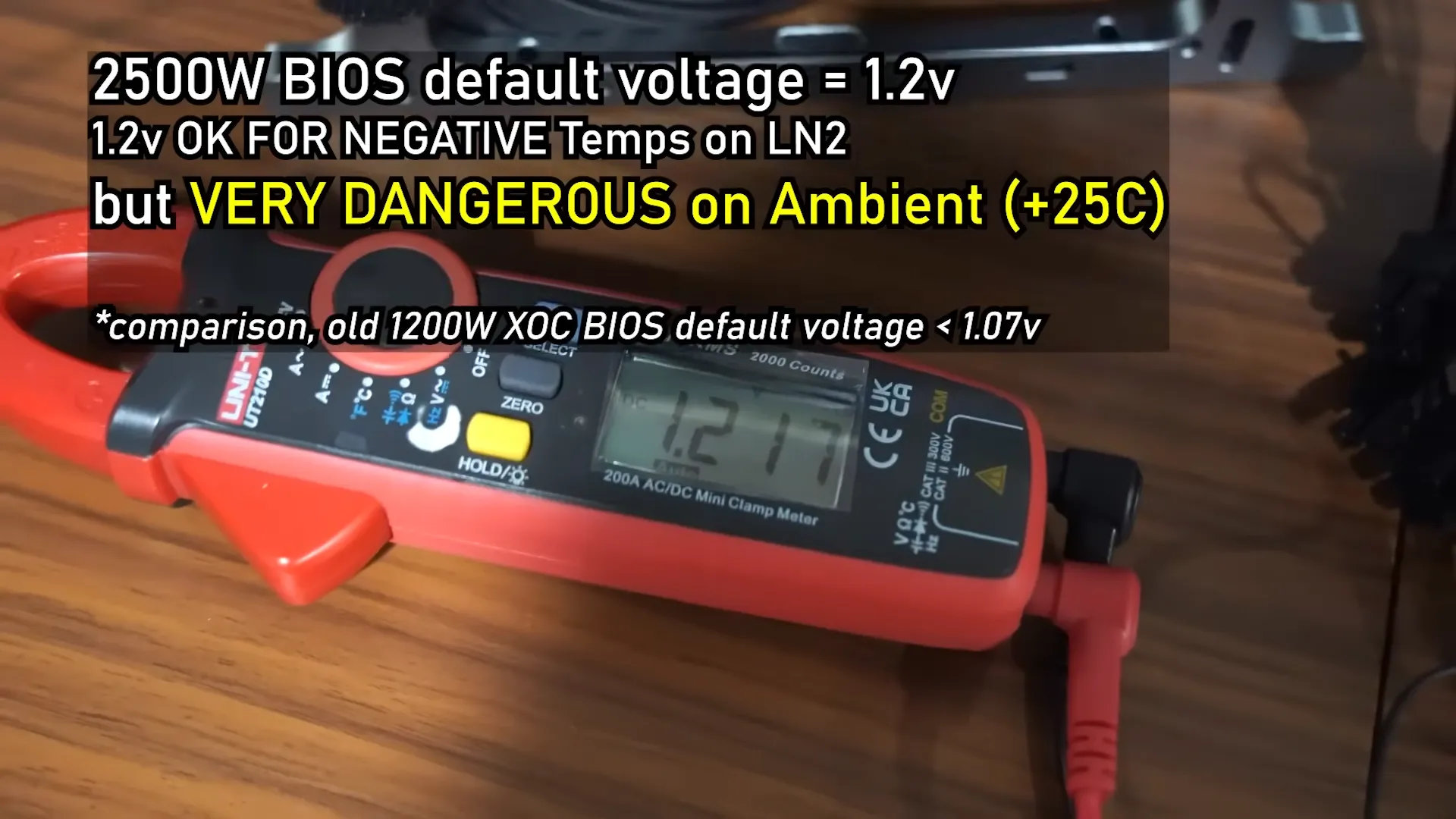
But it didn't split apart because it was running at full pelt. In fact, it was just starting up at room temperature. The issue was that the 2,500 W XOC BIOS uses a default voltage of 1.2 volts, which is well over what the chip normally deals with. As Jonathan explains in the video, "1.2 V [is] OK for negatives temps on LN2 (liquid nitrogen) but very dangerous on ambient (+25C)."
That level of operating voltage will produce significant current spikes in some parts of the die, rapidly heating them. Too rapid, it would seem. Cue insta-death for one $5,000 GPU.

Admittedly, it's not like Jonathan paid that much money for the card, because it was a free sample from MSI, and when you're at the very cutting-edge of overclocking, mechanical failures aren't exactly a rare occurrence (which is probably why MSI shipped five samples in total). Still, it just goes to show that no matter what kind of limits a graphics card might boast, there's always a way to surpass them.
Is there a moral to this story? No. Does it provide any helpful advice or guidance for your average PC gamer on how best to get a bit more performance from their rigs? Absolutely not. Is an image of an Nvidia GB202 cracked to pieces, because it was accidentally zapped, kind of impressive and even a little bit funny to see? Hell, yeah.
1. Best overall: AMD Radeon RX 9070
2. Best value: AMD Radeon RX 9060 XT 16 GB
3. Best budget: Intel Arc B570
4. Best mid-range: Nvidia GeForce RTX 5070 Ti
5. Best high-end: Nvidia GeForce RTX 5090

You must confirm your public display name before commenting
Please logout and then login again, you will then be prompted to enter your display name.