Join The Club





If you've ever struggled to get your hand steady enough to scan a QR code while on the go, you should try catching one made by the research team at TU Wien in Vienna, Austria. They have recently managed to create one that "covers an area of just 1.98 square micrometers—smaller than most bacteria."
In TU Wien's most recent blog, it shares the world record it was recently awarded from Guiness, whilst going over its methodology (via TechSpot). To achieve this result, the team etched the QR code into a thin ceramic layer, with individual pixels being just 49 nanometers in size. The record was carried out in conjunction with Cerabyte, a company working on ceramic-based data storage.
As pointed out in the post, that's "roughly ten times smaller than the wavelength of visible light". Given this size, it's completely invisible to the human eye, "much like it is fundamentally impossible to feel Braille letters with the thick sole of an elephant’s foot."
Article continues belowThe report notes that storing the code on a thin ceramic film opens the door to storing further data on it in the future. “For high-performance tools, it is essential that materials remain stable and durable even under extreme conditions. And that is exactly what makes these materials ideal for data storage as well.”

Alexander Kirnbaure of the Thin Film Materials Science Division at TU Wien claims, “With ceramic storage media, we are pursuing a similar approach to that of ancient cultures, whose inscriptions we can still read today.” He adds, “We write information into stable, inert materials that can withstand the passage of time and remain fully accessible to future generations.”
This way of storing information means it can have a longer shelf life than typical, too. It stays stable for a long time and doesn't require energy input or cooling, which the report notes "contribute significantly to global CO₂ emissions."
Just don't expect phones to be advanced enough to scan nanoscale QR codes until, well, ever. Unless Samsung or Apple decide to get really into microscopes for some reason.
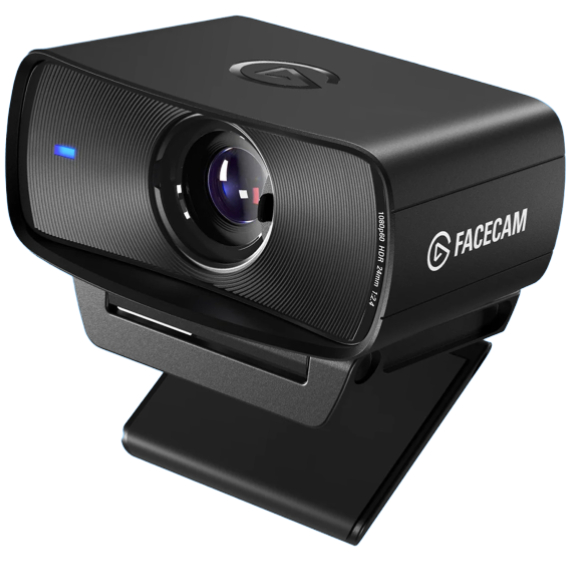
1. Best overall:
Elgato Facecam MK.2
2. Best budget:
Logitech C920
3. Best for streamers:
Streamplify Cam
4. Best 4K:
Obsbot Meet 2
5. Best high-end:
Obsbot Tiny 2 Lite
6. Best low light:
Razer Kiyo Pro

You must confirm your public display name before commenting
Please logout and then login again, you will then be prompted to enter your display name.