Last month, I acknowledged that turn-based tactics can be seen as an intimidating genre. But it can also be seen as a boring one—full of dry, fiddly battles and endless sheets of numbers.
Sometimes that's true. But in its best examples, the turn-based tactics genre is the true home of drama and excitement in gaming.
That's exactly why Mewgenics has been such a huge smash hit this month (and scored a 92% in our review). On paper, it's a weird, niche little project—how popular do you think "cat breeding" is as a category of game under normal circumstances? But it's broken out in a big way because it's such an amazing font of one of the best things gaming has to offer: emergent storytelling.
Article continues below
The writing delivered in Mewgenics' cutscenes and NPC dialogue is a goofy mishmash of early 2000s-era internet humour, but that's not really where it tells its stories. What makes the game incredible are the very serious bones under that skin—the interactive systems that combine, collide, and clash over the course of an adventure.
From the moment you select which carefully-bred cats (or random local strays, or inbred nightmares) you're taking with you on a run, you're throwing variables into the mix. Birth defects, diseases, inherited abilities—a sprinkling of seasoning before the real cooking begins.

Once they start travelling and fighting in earnest, the world imposes personality on your cats, whether they like it or not. Harsh fights leave them with memorable injuries. Random events mutate or curse them. Limited choices at level up send them down surprising paths in their build.
Throw the resulting franken-felines into fights with weird and surprising enemies, on battlefields full of interactive environmental effects like fire, ice, and toxic goop, and a special kind of chaos ensues.

It's an engine for anecdotes. When I think about Mewgenics, I don't think about stats and strategies, I think about the first cat I lost because I didn't realise a shark can eat its prey whole in one bite. I think about the time I built up one of my cats into the ultimate killer, only for him to contract Blood Frenzy, murder all his teammates, and cannibalise them. I think about the time I got stuck in a vicious circle of endlessly triggering an enemy's duplication ability, filling the battlefield with copies of them… until suddenly an unexpected combination of abilities clicked my fighter into an infinite loop of his own that allowed him to do 50 charge attacks in a row and clear the screen.

There are all sorts of ways that Mewgenics cleverly puts its thumb on the scales, driving as much drama as it can. When cats are killed, for example, they're usually downed—put into an unconscious state that prevents them fighting any further that battle, but allows them to rejoin the party with an injury afterwards as long as the rest of your cats prevail.
But while a cat is downed, its body can still be damaged and destroyed, killing it for good. And while enemies won't usually target it, on these claustrophobic battlefields there are all sorts of ways it can end up as collateral damage.

The first time one of your downed cats is eaten by a zombie, or crushed when another cat is knocked back into it, or accidentally blown up by one of your own poorly targeted AoE spells, it's a grim shock. From then on, every downed cat is a source of brilliant tension in a fight—a strange sort of obstacle you want to avoid yet protect, and the moments they're unceremoniously gibbed despite your efforts stick with you all the more.
The silliness of the game's theme lets it push these kinds of mechanics and moments way beyond what you would expect in more outwardly serious genre entries. Effects can be more unfair, more extreme, more ridiculous, because what other kind of life should four odd little cartoon cats be accustomed to?
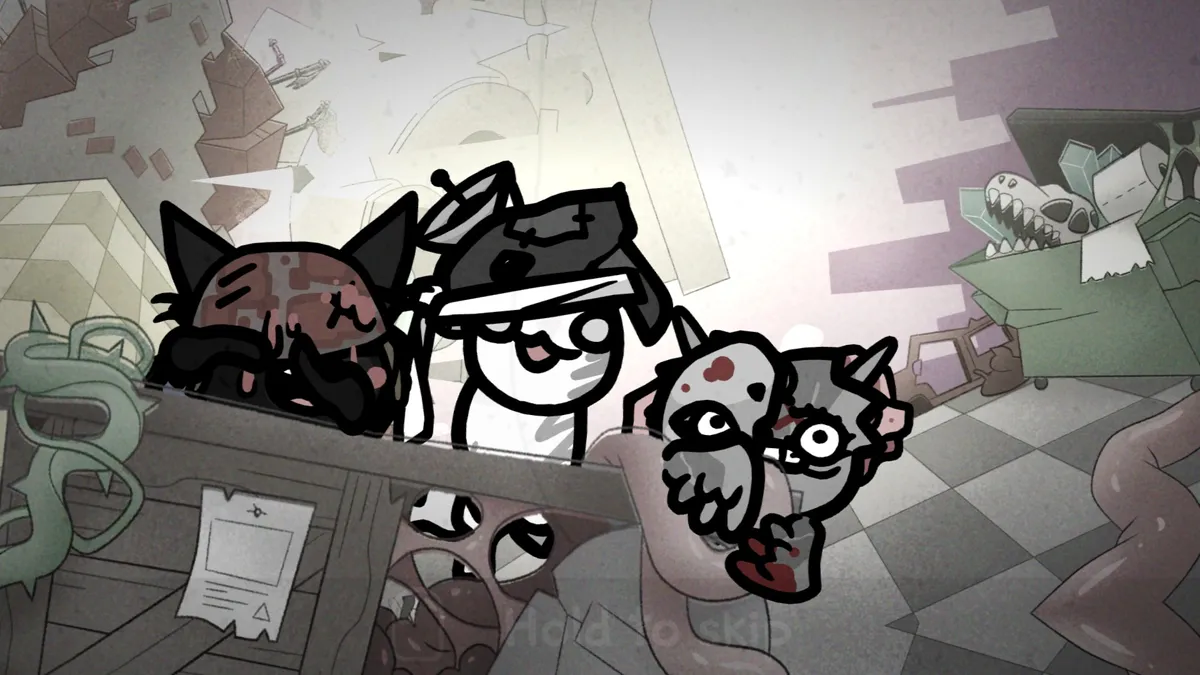
In XCOM, it's a moment of emotional anguish just to miss a 95% shot, and the worst that can happen is simply that a soldier gets taken out by a high damage enemy attack. In Mewgenics, you're expected to just roll with demons that can swallow your entire party in one bite, or a rat that can turn your best healer into a werewolf, or an amoeba that can permanently take over a cat's brain just because you let it get too close.
In return, you're given all the tools you need to give the game a taste of its own cruel medicine. When you lose a cat, you still get the same amount of level ups, now just spread among fewer warriors, accelerating your remaining builds and enabling dramatic and satisfying comebacks. Diseases and disorders can make a cat seem worthless, but often have unexpected upsides or strange combinations with items you find along the way—have I introduced you to my Druid, who's weaponised his own IBS with a hat that brings poops to life?
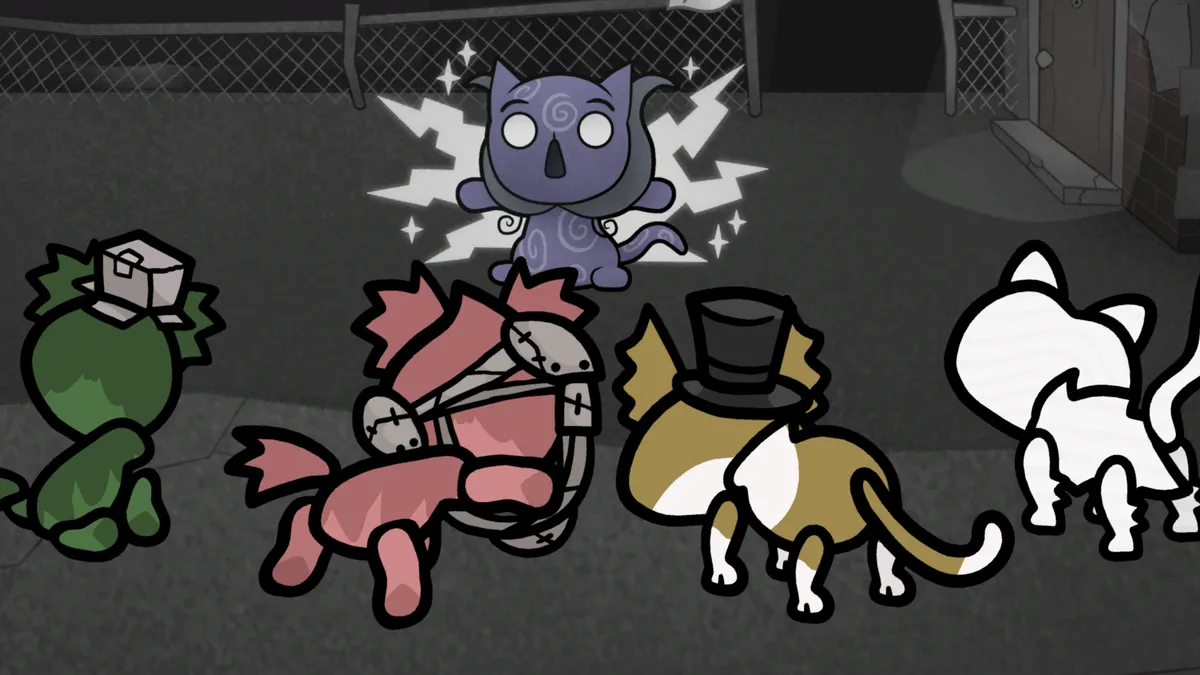
The stories are silly, and often juvenile, but they're full of genuinely big, exciting moments that were never scripted or carefully placed in your path—they just happened, because of your choices and the whims of chance, and now you've got to live in the aftermath. They turn fights from simple exchanges of resources for victory into chaotic scrambles for survival, always terrified of the unexpected or your own poor choices blowing up in your face.
This is where the turn-based tactics genre thrives most for me, its focus turned away from perfect strategy and towards emergent narrative. It's that soup of brutal battles, desperate decision-making and surprising simulation that kicks out stories only an interactive medium could ever generate, and those stick with me far longer than the kind that win awards at the BAFTAs.
So remember: the next time one of your cats accidentally electrifies the water it's standing in with its lightning spell, stuns itself, and then gets possessed by a ghost… it may be a full party wipe, but it's also peak PC gaming.

You must confirm your public display name before commenting
Please logout and then login again, you will then be prompted to enter your display name.