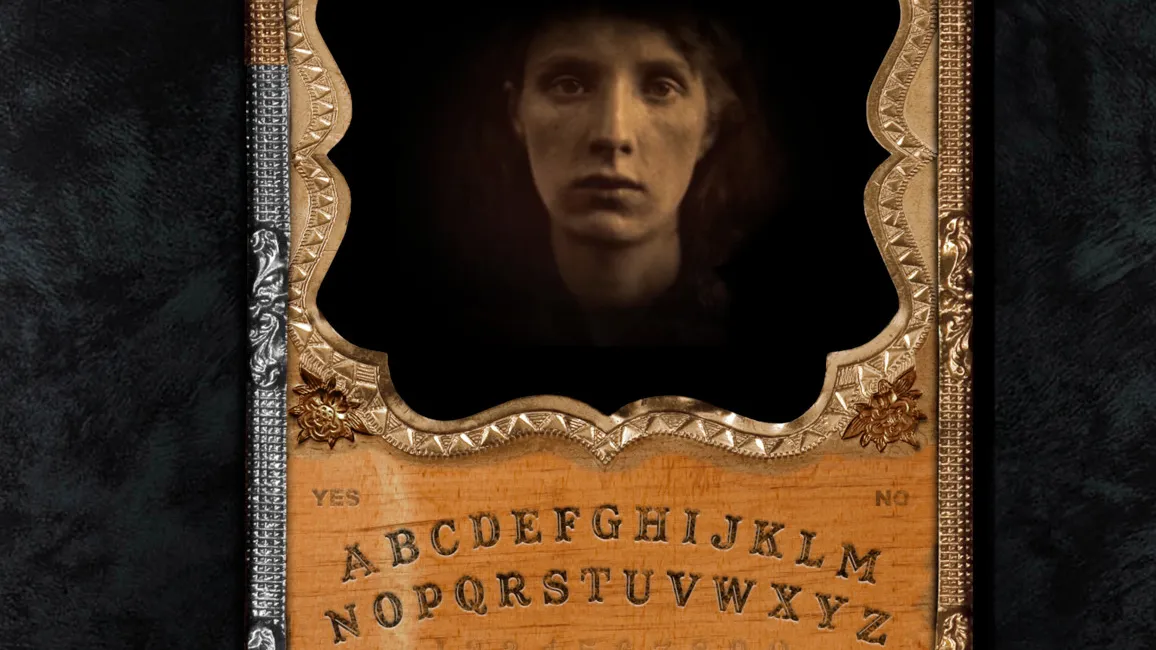
While not nearly as deep or engaging as Her Story, if you like listening to someone speak and then using keywords from what they've said to unlock more of the story, The Black Widow could be one for you to try. In the game from developer Flux, released on Steam today, you use a Ouija Board to communicate with a woman who was accused, tried, convicted, and executed for murder.
The interesting, or perhaps deeply unsettling thing here is that this woman actually existed. This isn't her face or her voice (that's provided by an actress) but her words are real. They are taken from transcripts of letters and court records, word for word. She was accused, tried (in a long series of several criminal trials) and eventually convicted and executed for murder, and these words are hers, even though the voice is not. In The Black Widow, in a way, you're speaking to the dead.

Your part works a bit like Her Story. Listen to this woman, Louisa Collins, speak, and when she's done, try using the Ouija board (you don't have to click on each letter, you can type) to get her to reveal more. If she mentions, say, her daughter, or the name of a doctor, or some other specific bit of information, type in that keyword on the board and see if she tells you more about it.
The more spoken passages you unlock, the more you'll learn about the crime, the events surrounding it, her family and friends, and her life. Certain keywords may result in more than one spoken passage, so if the numbers on the Ouija board light up, you can click on them to hear the rest of her messages pertaining to that word. You can click the flowers below the portrait to bring up a list of keywords you've uncovered and re-listen to their related passages. If you get stuck, you can also turn on hints to help you out.
I played a bit yesterday, and I also read up on the actual, real story, and it's all terribly gruesome and tragic. The Black Widow is an interesting way to experience that story through Louisa's words: coaxing out information a few sentences at a time, and listening carefully for a new direction to explore. Like I said, it's not as deep an experience as Her Story, but the fact that these are the real words of a human being executed for murder lends it a certain grim fascination.