Crucial SSDs, from memory manufacturer Micron, are among the first to receive chips featuring a brand new 176-layer 3D NAND technology. And that's interesting if you're into the specifics of memory performance, such as read and write latency, die size, and die density. Who isn't, right?
In all seriousness, Micron's new 3D NAND tech is interesting for all of us, for a number of reasons. For one, it features significantly faster read and write times than previous 128- and 96-layer 3D NAND, Micron says, 25% and 35% respectively. 176-layer dies are also 30% smaller than 'industry's best-in-class' today, meaning you can fit more of it into a smaller package and Micron more gigabytes onto a chip.
With solid state storage seeing a sort of second coming with the release of the new Xbox Series X and PlayStation 5 consoles, higher performance NAND could end up making a huge difference in PC games. Especially if Microsoft is able to port its impressive Quick Resume feature over to Windows and our speedy SSDs.
This is Micron's fifth generation 3D NAND, and it's another big departure for the company. Micron, like Intel, used to be reliant on floating-gate technology, but switched to replacement-gate technology with its fourth generation 3D NAND and hasn't looked back since. Its fifth generation 3D NAND continues the trend by using a blend of charge trap (the most common approach industry-wide) cells with CMOS-under-array (CuA) design, and that's what's helping it gain the upper hand.
If you really want to get into the specifics, you can read the 3D NAND whitepaper here [PDF warning].
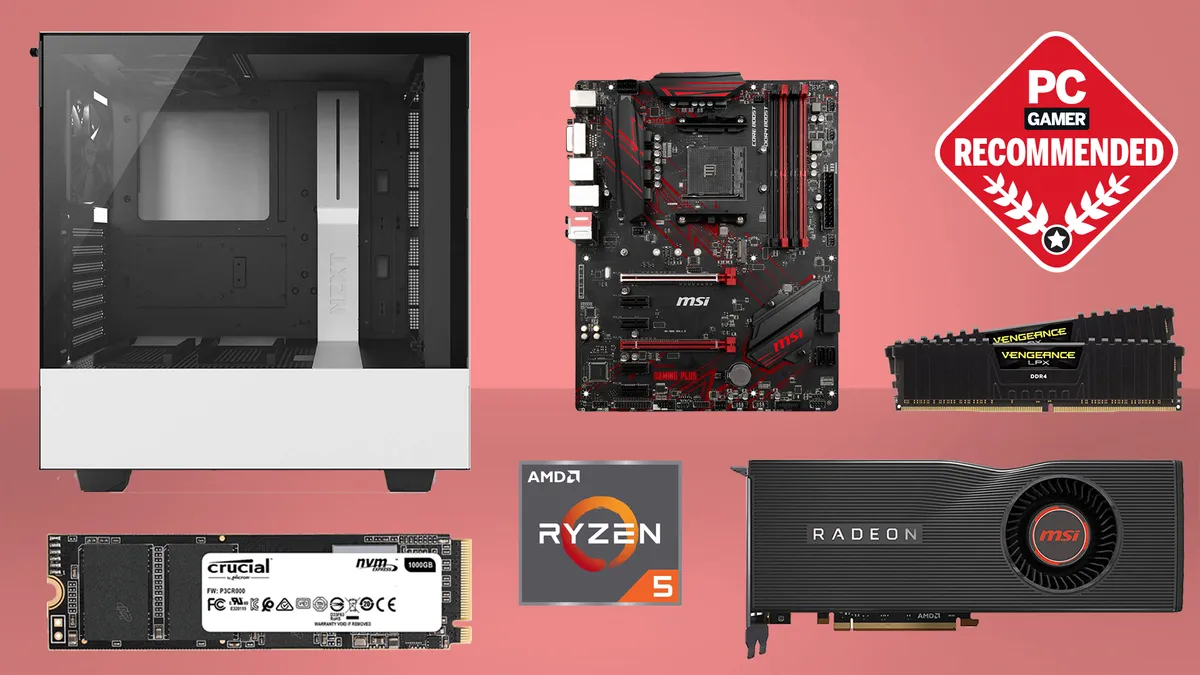
Best CPU for gaming: the top chips from Intel and AMD
Best graphics card: your perfect pixel-pusher awaits
Best SSD for gaming: get into the game ahead of the rest
So what can you expect from the new memory? Initially you'll find 176-layer NAND within client Crucial drives, for the likes of you and me, although Crucial hasn't specified which drives exactly, so these products are unlikely to be using the new memory to its full capabilities.
However, there's definitely scope for faster and more capacious drives under the Crucial Px NVMe M.2 range, as currently the top drive on offer is the PCIe 3.0 P5, built from Micron's own in-house controller and using its 96-layer 3D NAND.
With Micron's 128-layer 3D NAND receiving only a handful of applications in the field, it's likely that 176-layer NAND will actually take the torch from many 96-layer NAND products. Yet, even so, it's unlikely we'll see movement towards 176-layer 3D NAND adoption in the immediate future, it's probably going to be some time before that process is up to par and ready to ship at high volume.