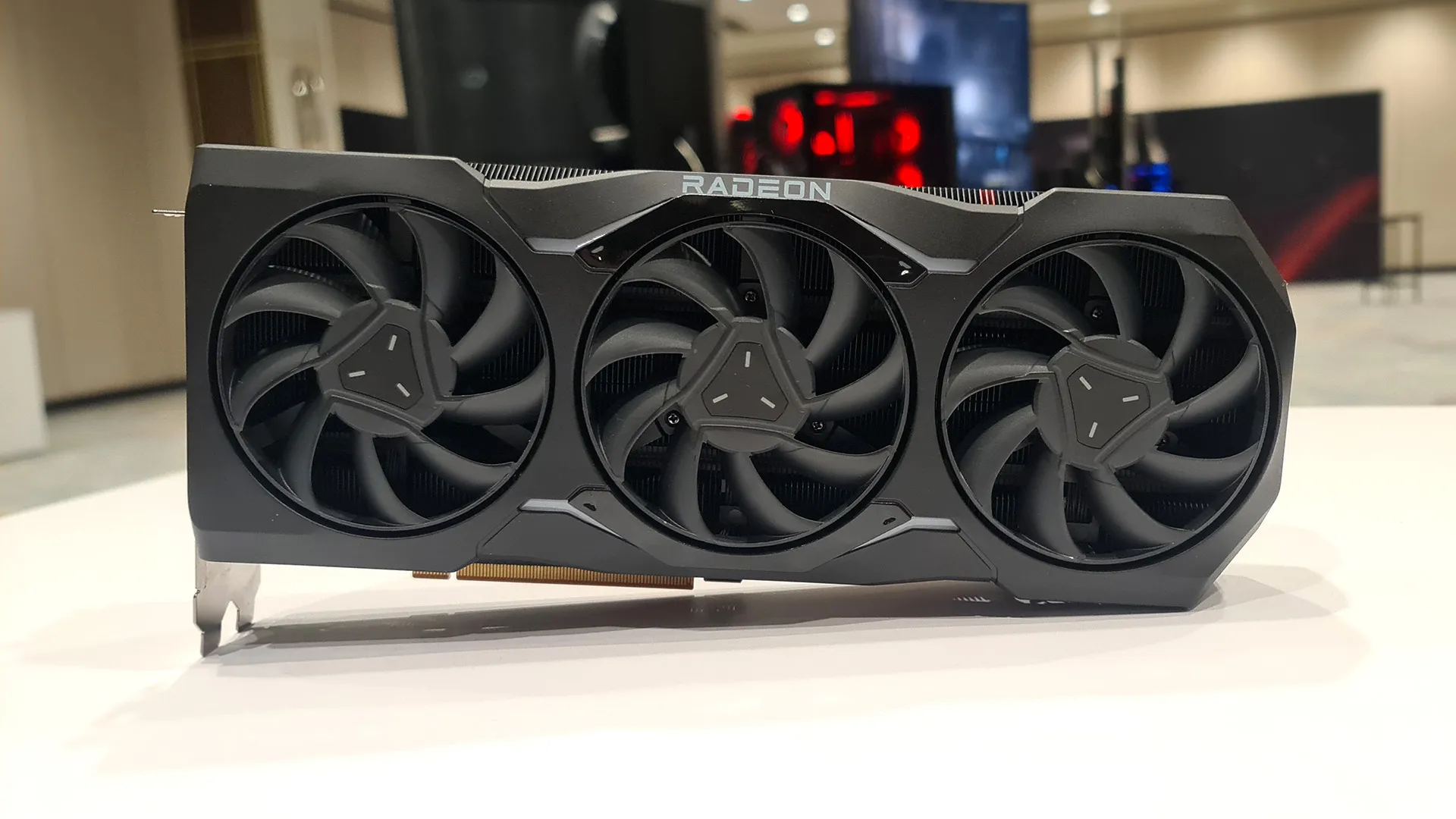
Give it up for the AMD Radeon RX 7900 XTX. Nearly nine months since the new RDNA 3 graphics architecture was announced, the RX 7900 XTX is the first example of GPU based on AMD's latest graphics tech to appear in Valve's survey of Steam users.
If that's the good news for AMD, the bad is that its graphics cards make up just 8.68% of Steam gamers. Ouch. Of course, some caveats apply. For starters, that's AMD discrete GPUs excluding integrated GPUs such as that found in the Steam Deck and AMD's APUs.
Moreover, fully 10.69% of all GPUs, including discrete and integrated, fall into a generic "Other" category. Likely, that's a mixed bag of unidentified graphics cards and iGPUs, plus those with such tiny market share, Valve doesn't bother to list them.
But assuming AMD's share of that 10-ish percent "Other" category is similar to its share of specified GPUs, AMD's overall footprint will still be only 10% at best. Nvidia, meanwhile has a roughly 75% slice of Steam-registered graphics cards, while integrated GPUs from both Intel and AMD make up the remainder.
And, yes, that means Intel's Arc graphics cards do not appear at all in the survey and presumably fall into that too-small-to-be-listed "Other" catch-all category.
Incidentally, the Van Gogh GPU, otherwise known as the built-in AMD graphics in Valve's Steam Deck is now the third most popular AMD GPU in the list, behind a generic "AMD Radeon Graphics" entry at the top, which is likely integrated GPUs, and the Radeon RX 580 in at number two.
Best CPU for gaming: The top chips from Intel and AMD
Best gaming motherboard: The right boards
Best graphics card: Your perfect pixel-pusher awaits
Best SSD for gaming: Get into the game ahead of the rest
For the record, the Steam Deck makes up 0.82% of Steam gamers. That doesn't sound like a lot superficially, but it actually implies a decent number of Decks when you consider that Steam has somewhere between 100 and 150 million monthly users.
Of course, the Steam survey has never been a fully adjusted and controlled survey. It relies on Steam gamers opting in and hardware being correctly identified. For sure, the survey has suffered from some fairly obvious anomalies in the past, such as the RTX 3060 suddenly jumping up to 10% of users in April before returning to a more plausible 4.66% in May.
But provided you understand its limitations and the context around the numbers, it's still a very useful guide to what hardware gamers use. And it does not make for good reading for AMD.