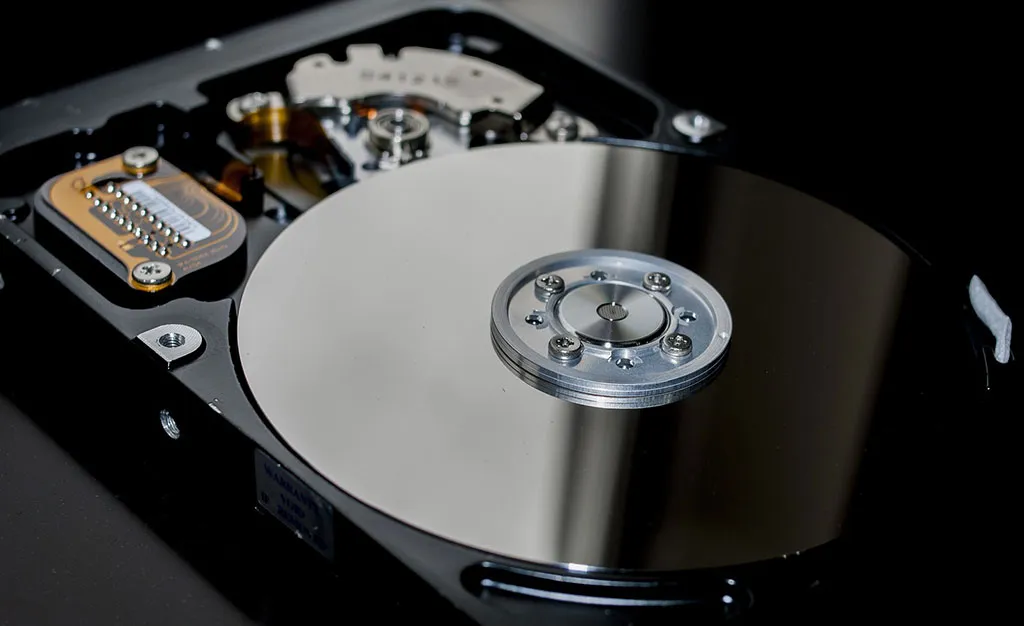
You read that right. The NVMe protocols that allow for super-fast SSD read and write speeds will soon support 'rotational media', i.e. HDDs, hard drives. That won't make your HDD faster in any way—that's still limited by the speed at which the arm inside the drive can actuate—but it does mean there's less reason for SATA to stick around in the future.
Best CPU for gaming: the top chips from Intel and AMD
Best graphics card: your perfect pixel-pusher awaits
Best SSD for gaming: get into the game ahead of the rest
HDD support is arriving alongside the new NVMe 2.0 specification (thanks, Anandtech), which includes heaps of updates for more effective use and storage using an SSD alongside the spinning platter stuff. NVMe, or Non-volatile Memory Express, is the bridge between an SSD and its host—most often a PC for us lot. It's the most popular interface for modern SSDs found in gaming PCs, and is essentially a way for your SSD to tap into the speeds on offer over the high-bandwidth PCIe bus.
Now you might be wondering why make that available to a spinning platter hard drive that can't hold a candle to PCIe SSD speeds? Realistically, we won't see HDDs suddenly ditching SATA III connectors for some lumbering M.2 slot contraption, it's more for enterprise-grade set-ups chasing simplicity and uniformity.
As per the NVM Express website, NVMe is targeting a "life after SATA", where one day NVMe wholly replaces the ageing standard. Spinning platters aren't choice storage for gaming machine anymore, but they're not going anywhere for cheap, high capacity storage. A modern alternative for the SATA standard, even for HDDs, is prerequisite if NVMe hopes to replace it.
And HDDs are still getting quicker, even by today's SSD standards.
"Since SATA 3.0 was ratified many years ago, CPU and NAND flash memory technology has advanced by leaps and bounds, and the SATA interface has become a bottleneck," a blog post on the NVMe website reads.
"While SATA was great for getting SSDs adopted in the data center, data center PCIe 4.0 NVMe SSDs deliver significantly higher performance, lower latency and relieve the bottleneck between the CPU and flash storage. As future generations of performance driven applications require organizations to rethink their enterprise and data center strategies, SATA will become a thing of the past."

The rest of the NVMe 2.0 specification just released largely pertains to SSDs directly, and some might even affect those favoured for gaming. The most exciting is a new zoned storage device interface that allows the SSD and host to co-decide on data placement for better performance and higher capacity.
All the features included with the NVMe 2.0 specification will maintain backwards compatibility with previous generations too, so don't worry about getting left in the dust if you've only just made the upgrade to one of the best NVMe SSDs.