AMD launched its first X3D CPU with 3D V-Cache back in April 2022 in the Ryzen 7 5800X3D. Since then, AMD's X3D chips have pretty much been the weapon of choice for well-funded gamers. Where, you might ask, for art thou, Intel? According to the latest rumour, it might finally have an answer to X3D when it launches its next-gen Nova Lake CPUs in 2026, or perhaps early 2027.
X user Haze2K1 has posted some specifications of purported Nova Lake CPU models and one detail stands out (via Club386). Along with listing core counts and TDP, both CPU models allegedly get something called "bLLC".
8p, 16e8p, 12eBoth 4lpe, bLLC, 125w https://t.co/EQo4MiaGpqJune 17, 2025
That, supposedly, refers to something known as big Last Line Cache. And it's very much analogous to AMD's 3D V-Cache. Indeed, we know for sure Intel has such a technology, because it's incorporated in the new Clearwater Forest generation of Xeon server CPUs. But Intel has previously said it has no immediate plans to bring that technology to the desktop.
Article continues belowThe specifics of bLLC, at least as it pertains to that Xeon chip, entails what Intel calls Local Cache integrated into the base tile. The base tile is a chiplet in a modern Intel CPU package that sits beneath the active tiles, largely serving as an interconnect. At least, that's it's job in multi-die CPUs available today from Intel such as Lunar Lake and Arrow Lake.
By adding cache to the base tile, Intel would end up with a similar broad approach to AMD's latest X3D CPUs. AMD's first two generations of X3D chips had the V-Cache attached to the top of the CPU dies, which was not optimal for thermal performance and therefore clock speed.
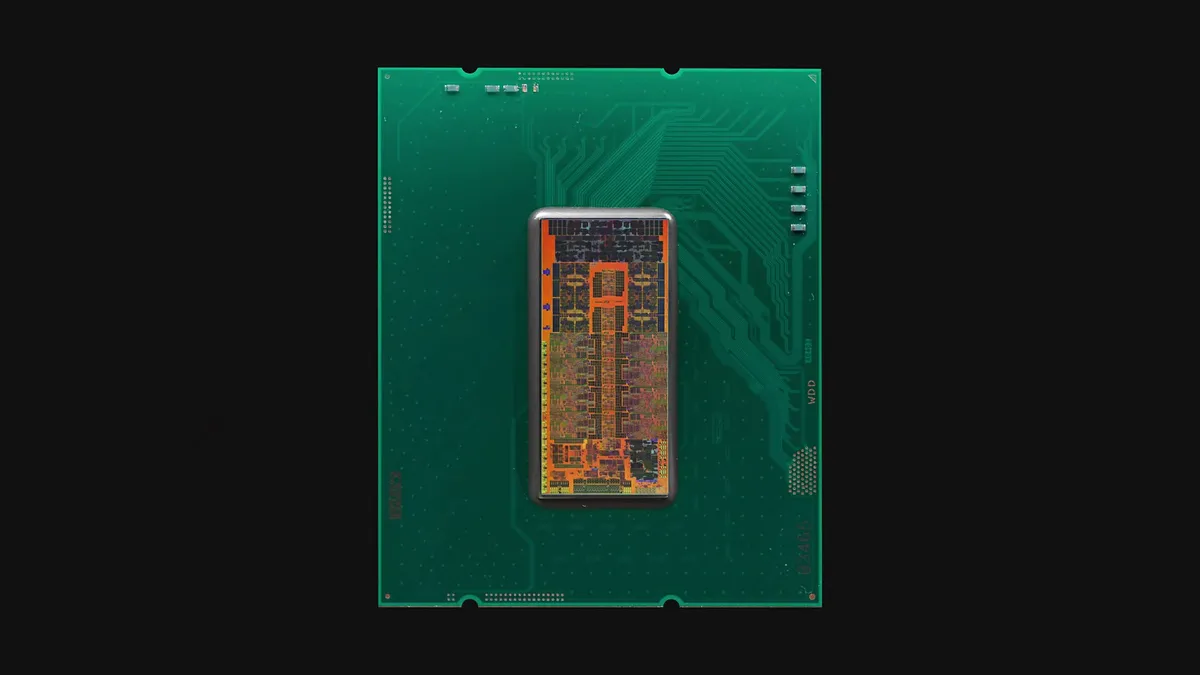
However, for its third generation X3D CPUs, including the Ryzen 7 9800X3D, the V-Cache was moved below the CPU chiplets, essentially banishing the clock speed disadvantage of previous X3D CPU models and turning the latest generation into absolute gaming beasts.
But before we all assume Intel's Nova Lake CPUs will therefore be killer for gaming, simply adding cache memory isn't a guarantee of better frame rates. The whole point of cache memory is to improve memory latency by reducing the need to go out over the main memory bus to the system RAM. And that, in turn, improves performance, especially in games.
But for that cache to be really effective, it has to offer very low latency itself, which isn't a given. AMD's memory bus and cache architecture is highly optimised for low latency, but it's yet to be seen if Nova Lake will match AMD by that measure.
AMD's has a super fast point-to-point internal interconnect for its CPUs, while Intel currently uses a ring bus to connect cores, graphics and higer-level cache memory. That ring interconnect is generally slower and suffers higher latency.
By some measures, that gives Intel's Arrow Lake 512 GB/s of internal bandwidth to the 2.5 TB/s of AMD's equivalent technology. Anyway, the point is that Intel will need to do more than merely stuff some cache into the base tile to match the impact of AMD's 3D V-Cache in games. In other words, watch this space.
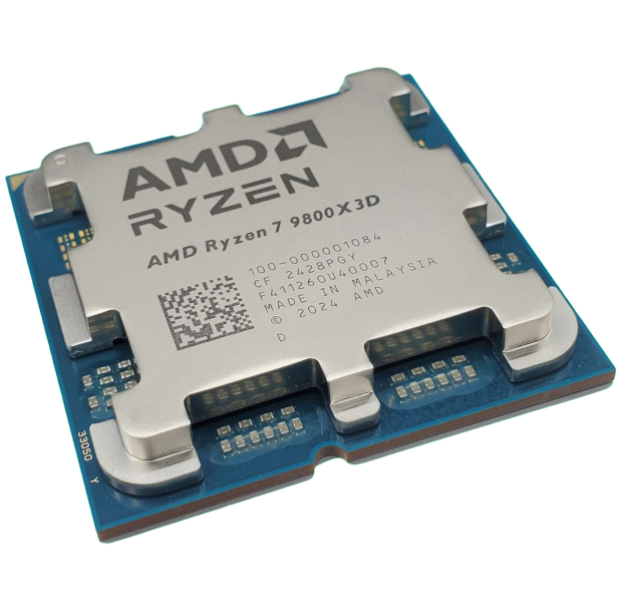
1. Best overall:
AMD Ryzen 7 9800X3D
2. Best budget:
Intel Core i5 13400F
3. Best mid-range:
AMD Ryzen 7 9700X
4. Best high-end:
AMD Ryzen 9 9950X3D
5. Best AM4 upgrade:
AMD Ryzen 7 5700X3D
6. Best CPU graphics:
AMD Ryzen 7 8700G

You must confirm your public display name before commenting
Please logout and then login again, you will then be prompted to enter your display name.