If this were a game of Civilization, we'd certainly be moving into the "Future Era", which the game's wiki describes as containing "marvels beyond the dreams of ancient prophets, and terrors more fearsome than any apocalypse." I mean, we literally shine extreme ultraviolet (EUV) light created by molten tin at 50,000 times or more per second to trace miniscule circuits onto silicon wafers. All in the name of beaming Netflix and games into our eyeballs from increasingly small devices with better battery life. And the Western civilisation isn't the only one to broach the Future Era and have this capability, it now seems.
According to two Reuters sources, China now has a prototype EUV chipmaking machine. It's not yet produced a working chip—that's anticipated to happen in 2028 by the Chinese government and more likely to be 2030—but it is apparently creating EUV light. The light source being one of (admittedly quite a few) technical marvels of the EUV machine today.
Article continues belowThis development seems a little out of the blue for Western industry watchers. The last we'd heard, according to ASML's CEO last year, was that China was still 10–15 years behind the West in its chipmaking capabilities (via Tom's Hardware). In fact, tech author Marc Hijink relays in his book Focus: The ASML way that a few years prior to this, the previous ASML CEO said China was "light-years behind. Light-years!"

ASML took many years to perfect the EUV machine into something that could produce a large number of wafers and run over long periods without requiring constant maintenance. It blew past expectations of when it'd be done, and even today the company is said to tweak its machines while they're deployed. So, having some of the parts for EUV is far from having all of the parts for EUV. It's still highly possible China's efforts are still many years behind ASML, though 2030 seems fairly promising for the prototype.
Nvidia CEO Jensen Huang has been saying that China is "right behind us" for some time, but that was presumed to be regarding AI server capabilities and so on, not actual chipmaker facilities. Plus, we can kind of expect Nvidia to drum up such urgency to help sell its own AI accelerators and "accelerate the diffusion of American AI technology around the world."
China's goal in having its own advanced fab is obvious, and Reuters in fact quotes one of its sources as saying that "China wants the United States 100% kicked out of its supply chains."
It might seem strange to think of chipmaking as American-controlled, given ASML is a Dutch company and the world's biggest chipmaker, TSMC, is based in Taiwan. But much of the world's chipmaking industry is influenced by the US. The whole reason China didn't have access to EUV machines is because—again drawing from Hijink's book—America strong-armed the Netherlands into restricting exports of advanced ASML machines to China. None of the most advanced machines were allowed to be exported, and thus ASML tells Reuters that "no EUV system has ever been sold to a customer in China."
According to Reuters, the Netherlands says it is making policies that will require "knowledge institutions" to screen personnel to stop sensitive technology getting into the hands of "individuals that have ill intentions or who are at risk of being pressured." But I wonder whether this is too little, too late, given China supposedly already has a working EUV machine.
There's more than a little air of cloak and dagger to all this, too. Reuters explains that ex-ASML members were given aliases and "instructed to use their fake names at work to maintain secrecy … The guidance was clear, the two people said: Classified under national security, no one outside the compound could know what they were building—or that they were there at all."
I'm not going to pretend to know whether or how this will be a good or bad thing for Western consumers like yours truly in the end. On the surface, competition is of course good in any market. But when it comes to machines that until now just a single company has been able to make, things might be a little more complicated. Time will tell, I suppose.
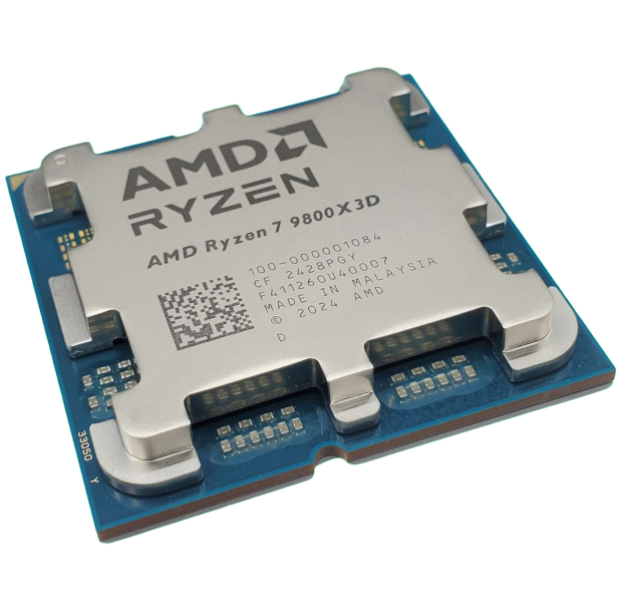
1. Best overall:
AMD Ryzen 7 9800X3D
2. Best budget:
AMD Ryzen 5 7600X
3. Best mid-range:
AMD Ryzen 7 9700X
4. Best high-end:
AMD Ryzen 9 9950X3D
5. Best AM4 upgrade:
AMD Ryzen 7 5700X3D
6. Best CPU graphics:
AMD Ryzen 7 8700G

You must confirm your public display name before commenting
Please logout and then login again, you will then be prompted to enter your display name.