HP warns that memory now makes up around 35% of the cost its PCs, double that of a year ago
Yet another entry for the annals of the memory crisis.
Keep up to date with the most important stories and the best deals, as picked by the PC Gamer team.
You are now subscribed
Your newsletter sign-up was successful
Want to add more newsletters?
Every Friday
GamesRadar+
Your weekly update on everything you could ever want to know about the games you already love, games we know you're going to love in the near future, and tales from the communities that surround them.
Every Thursday
GTA 6 O'clock
Our special GTA 6 newsletter, with breaking news, insider info, and rumor analysis from the award-winning GTA 6 O'clock experts.
Every Friday
Knowledge
From the creators of Edge: A weekly videogame industry newsletter with analysis from expert writers, guidance from professionals, and insight into what's on the horizon.
Every Thursday
The Setup
Hardware nerds unite, sign up to our free tech newsletter for a weekly digest of the hottest new tech, the latest gadgets on the test bench, and much more.
Every Wednesday
Switch 2 Spotlight
Sign up to our new Switch 2 newsletter, where we bring you the latest talking points on Nintendo's new console each week, bring you up to date on the news, and recommend what games to play.
Every Saturday
The Watchlist
Subscribe for a weekly digest of the movie and TV news that matters, direct to your inbox. From first-look trailers, interviews, reviews and explainers, we've got you covered.
Once a month
SFX
Get sneak previews, exclusive competitions and details of special events each month!
Here's another dubious milestone notched up by the memory crisis. The proportion that RAM and storage makes up of the cost of producing an HP PC has doubled this year to 35%.
Specifically, HP's CFO Karen Parkhill was speaking to the usual gathering of highly remunerated bean counters on the company's quarterly earnings call yesterday and spoke thusly:
"To put this in a little bit more concrete terms, we did share last quarter that memory and storage costs made up roughly 15% to 18% of our PC bill of materials and we now currently estimate this to be roughly 35% for the year," Parkhill said.
HP's interim CEO Bruce Broussard also noted that HP is taking steps to smooth out the supply side of the memory crisis as much as possible.
"First, on the supply side, we have leveraged the strength of our supplier relationships and secured long-term agreements covering our memory requirements for fiscal '26. We've qualified new suppliers, built in strategic inventory positions for key platforms and cut the time to qualify new material in half to accelerate our product configuration changes," Broussard said.
While it's not entirely explicit, that certainly reads like HP has likely roped in new suppliers for RAM and NAND flash memory chips. Chinese suppliers? Maybe.
In the meantime, it seems the memory crisis has yet to hit HP's bottom line. HP's personal systems division reported $10.3 billion revenue, up 11% year-on-year, while consumer PC sales were up by 14% and corporate PC sales increased by 9%.
Keep up to date with the most important stories and the best deals, as picked by the PC Gamer team.
Ironically, given that it's AI causing the run on RAM and storage, HP said that demand for AI PCs was driving part of that uptick in sales. "This quarter, AI PC is accounted for over 35% and of our PC shipments, up from 30% in the prior quarter and 25% a quarter before," Broussard said.
"I think there are 2 tailwinds, which we are most encouraged with. We've spoken about this, which is Windows 11 and AI PCs, but more importantly, they are giving us a lot of confidence that the demand will continue," Parkhill added, while HP's President of Personal Systems, Ketan Patel, said, "AI PCs have started to deliver results with more and more ISVs developing applications, which are [running] locally and more effectively than ever before."
Of course, you could argue these most recent figures cover a period that precedes the most damaging impact of the memory crisis. Indeed, some customers probably brought PC purchases forward for fear of future price rises. The real test will be HP's figures over the next year or two.
On that note, HP's Parkhill sounded a cautious note regarding HP's immediate prospects. "Given an increasingly challenging operating environment, and the time it takes to fully implement our mitigating actions, at this point, we expect to be closer to the lower end of our guidance range. We recognize that the environment remains fluid, and we are pulling every lever available to offset these unprecedented headwinds," she said, indicating that the company's financial performance is now expected to land somewhere toward the lower end of its existing forecasts.
Anywho, it was probably only a matter of time before the big boys in the PC market got hit by the memory crisis. The likes of HP have probably been able to hold off the worst of the component price rises for a while, thanks to existing contracts to source large quantities of memory. But as those contracts run out, the inevitable is happening. And it's likely to get worse before it gets better, despite new memory production capacity due to come online.
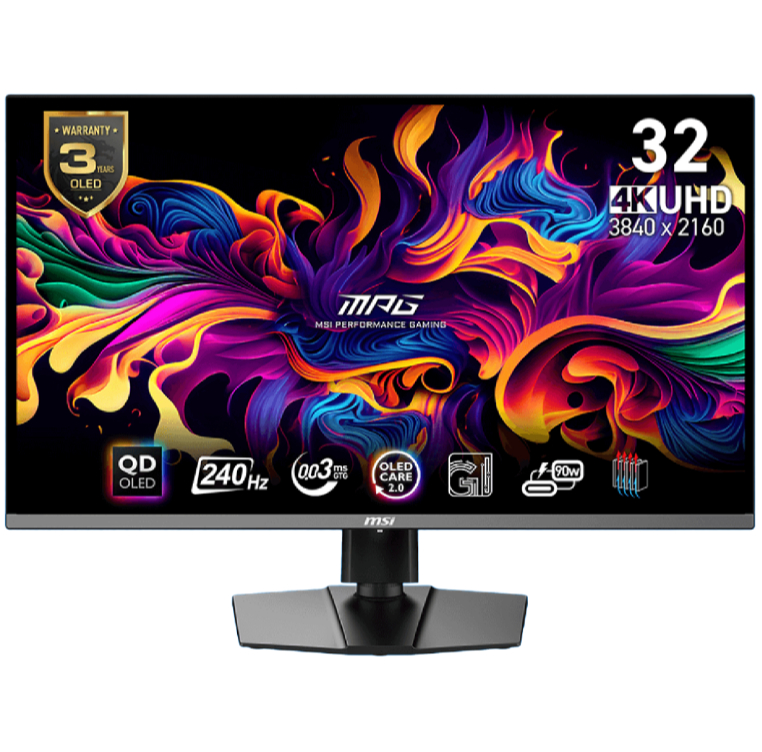
1. Best overall / 4K:
MSI MPG 321URX
2. Best budget 4K:
Asus ROG Strix XG27UCG
3. Best 1440p:
MSI MPG 271QRX
4. Best budget 1440p:
KTC H27T22C-3
5. Best 1080p:
AOC Gaming C27G4ZXE
6. Best Ultrawide:
Gigabyte MO34WQC2
7. Best budget ultrawide:
Xiaomi G34WQi
8. Best 32:9:
Samsung Odyssey OLED G9
9. Best dual-mode:
Alienware AW2725QF

Jeremy has been writing about technology and PCs since the 90nm Netburst era (Google it!) and enjoys nothing more than a serious dissertation on the finer points of monitor input lag and overshoot followed by a forensic examination of advanced lithography. Or maybe he just likes machines that go “ping!” He also has a thing for tennis and cars.
You must confirm your public display name before commenting
Please logout and then login again, you will then be prompted to enter your display name.