Our Verdict
TMR sticks, Hall effect triggers, a charging dock, and customisation options at this price point make the D10 stand out. You do get some budget-related downsides, though, like a just okay D-pad and triggers, and no customizable software.
For
- Sale price point nearly unbeatable
- TMR sticks and a charging dock
- Comfortable and well-weighted
Against
- No software
- Triggers and D-pad are just okay
- GameSir G7 Pro only $20 more
PC Gamer's got your back Our experienced team dedicates many hours to every review, to really get to the heart of what matters most to you. Find out more about how we evaluate games and hardware.
My favourite bit about new tech getting into the gaming hardware market is not their shiny (often very expensive) introduction. It's instead the moment that the more value-oriented brands start to throw it into everything. Mechanical switches, Hall effect triggers, and now TMR. Heck, we've even seen TMR implemented in keyboards like the Cherry Xtrfy MX 8.2 Pro TMR TKL (though it will be a while until we see a truly budget form of this keeb).
Effectively, TMR (tunnel magnetoresistance) is so valued because it's a technology using magnetic sensors to provide highly efficient and precise controls. It not only helps with battery life but combats stick drift, and is even more efficient than Hall effect.
This is what drew me to the EasySMX D10. It undercuts the already pretty budget-friendly Gamesir G7 Pro, giving much of the same specs and even a charging dock, for $20 cheaper. Though $60 / £60 is the official price point on EasySMX's website, you likely won't be paying near that. On Amazon UK, as of the time of writing, it costs just under £30 or $50 on Amazon US.

Compatibility: Windows, Switch, Android
Connectivity: Wireless (2.4 GHz and Bluetooth) and Wired
Ports: USB Type-C
Thumbsticks: TMR
Polling rate: 1,000 Hz
Triggers: Linear Hall effect and non–linear micro-switch
Thumbstick layout: Asymmetrical
RGB: Yes
Extra features: Two reprogrammable buttons, included charging dock
Weight: 256 g (396 g with dock)
Price: $60 | £60
And for its price, the EasySMX D10 offers quite a lot. You are getting a 1,000 Hz polling rate with its 2.4 GHz connector, a charging dock that doubles as the connector, linear Hall effect triggers, and TMR thumbsticks. It's not only accurate, but it's not going to break down in a year thanks to stick drift.
It's comparable in shape, weight and design to the Xbox Series X controller, though not quite as smooth and sturdy in the hands. It's certainly not a flimsy controller, but I feel less comfortable flinging it around than Microsoft's arguably greatest bit of hardware.
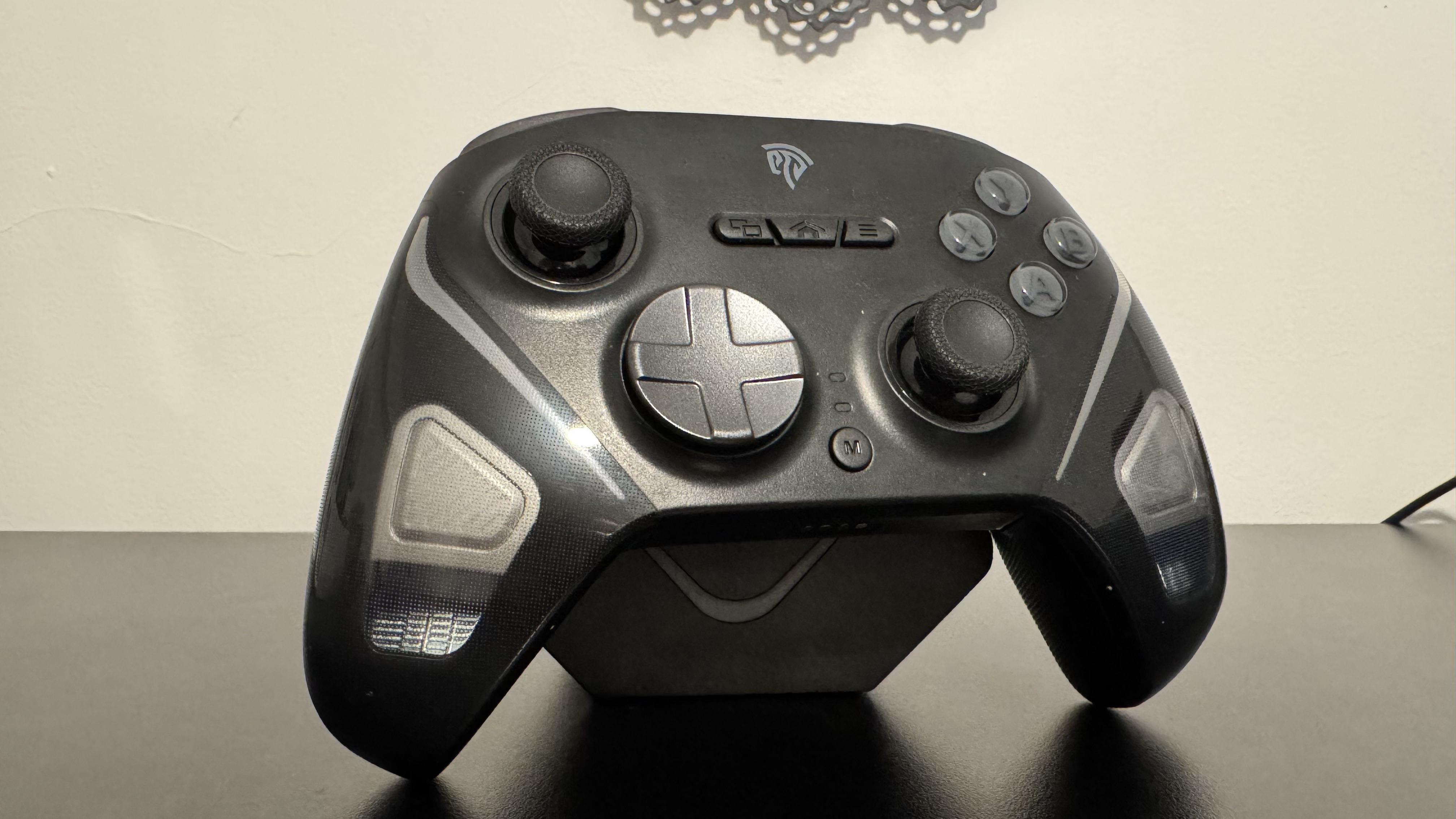
To me, it feels lower quality in terms of general feel compared with the likes of the 8BitDo Pro 3, which is another easy-to-use controller with a built-in charging stand. In its favour, other connected D-pads have a tendency to feel mushy, but this one doesn't. Effectively, the arrow buttons in the D-pad are all connected together, as opposed to four separate buttons. It's a very clicky D-pad, though sound here is inconsistent, with the right side producing a hollow click where the left doesn't.
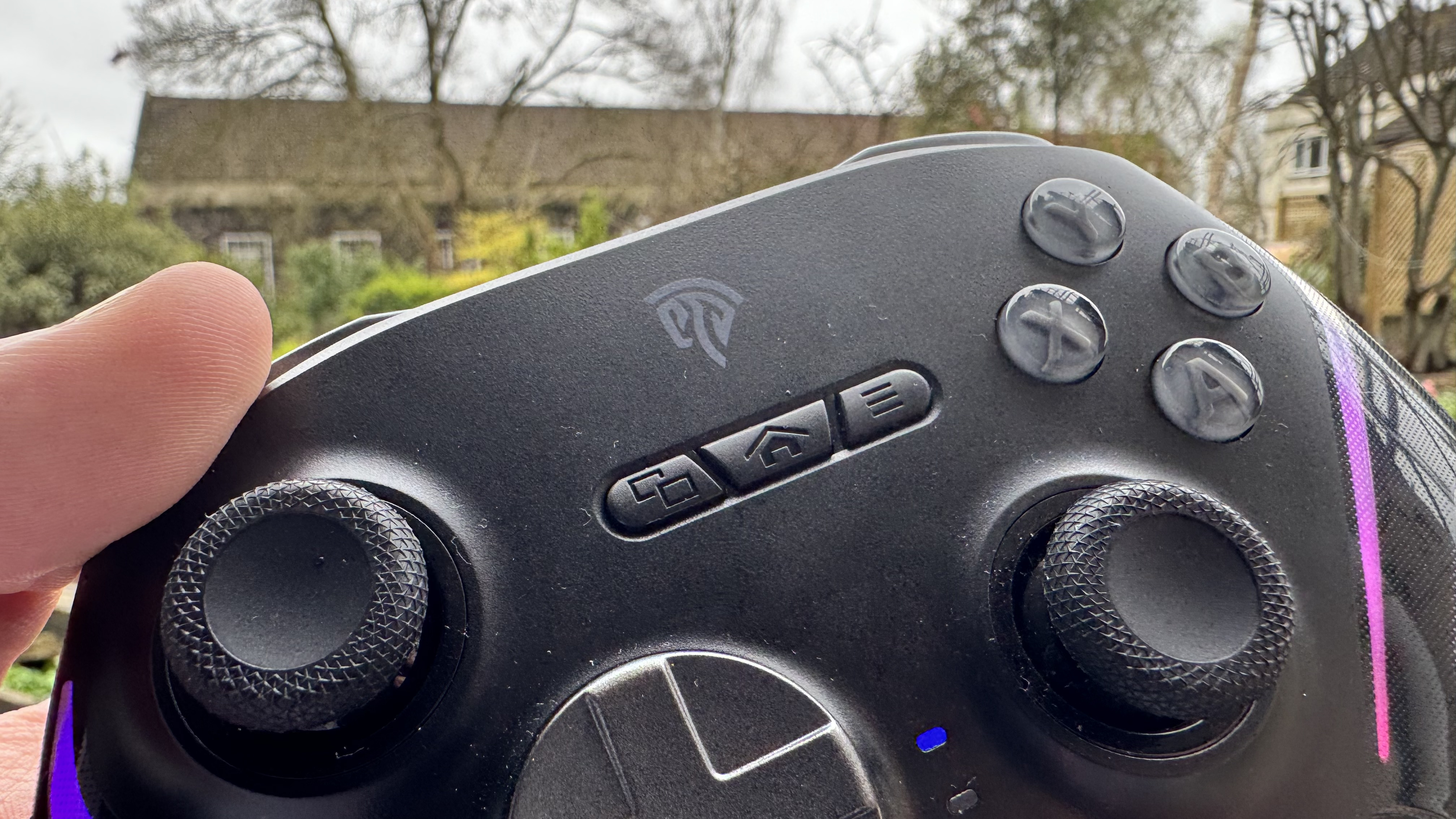
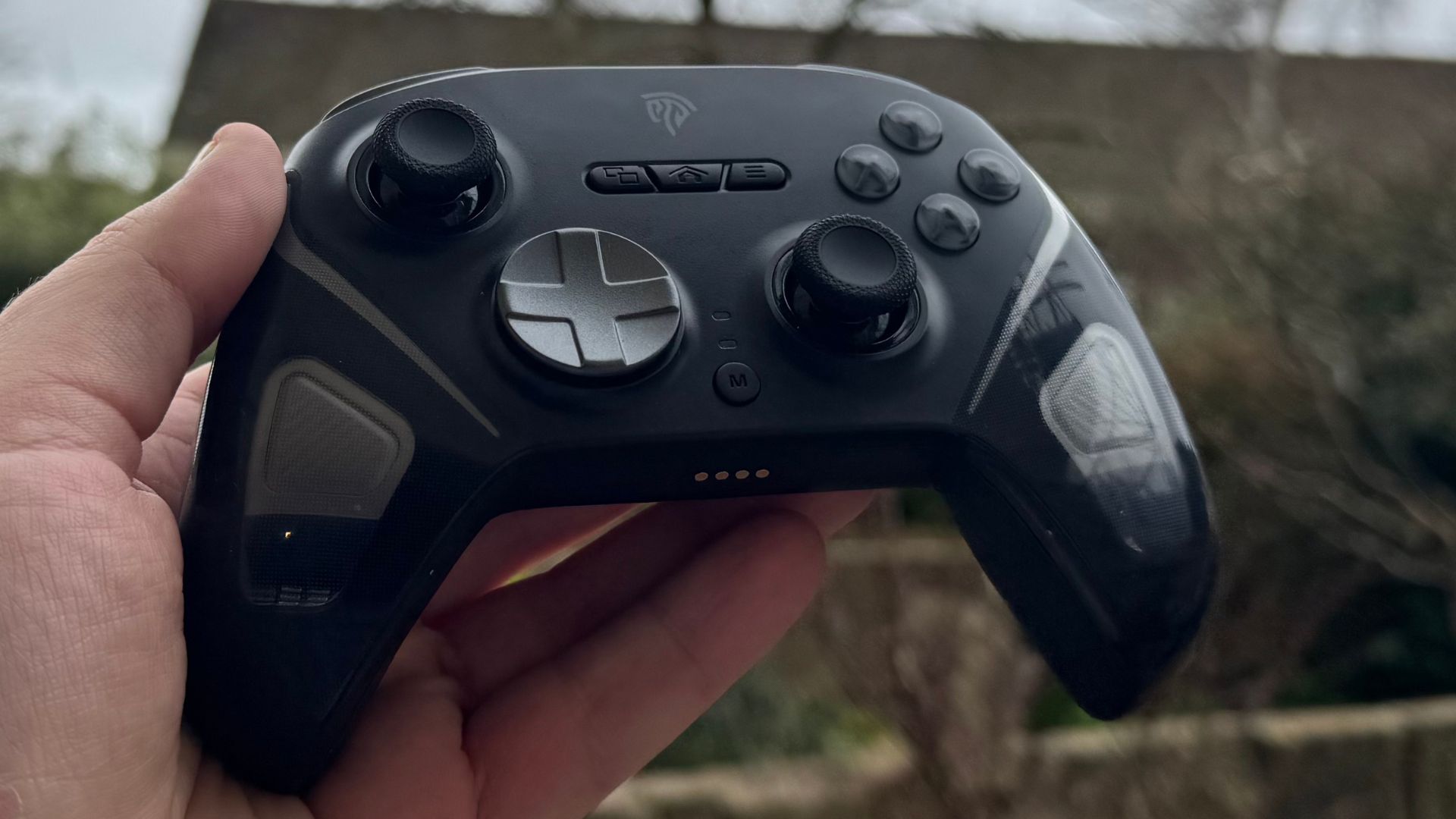
I do find the connected D-pad a tad awkward to hit diagonally, though, which can impact platformers. This doesn't become too much of a problem outside of this use case, as I don't often need a diagonal hit, but it's still worth noting.
Thumbsticks are comfortable to use, face buttons are a tad clacky, but perfectly fine, and triggers are both well-placed and easy to hit. Those triggers, in the long-press Hall effect mode, don't have as much feedback as I'd like, but that's a light preference. In most regards, it's a totally solid controller that feels a tad more budget than some, but that's to be expected as that's almost exactly what this pad is—budget.
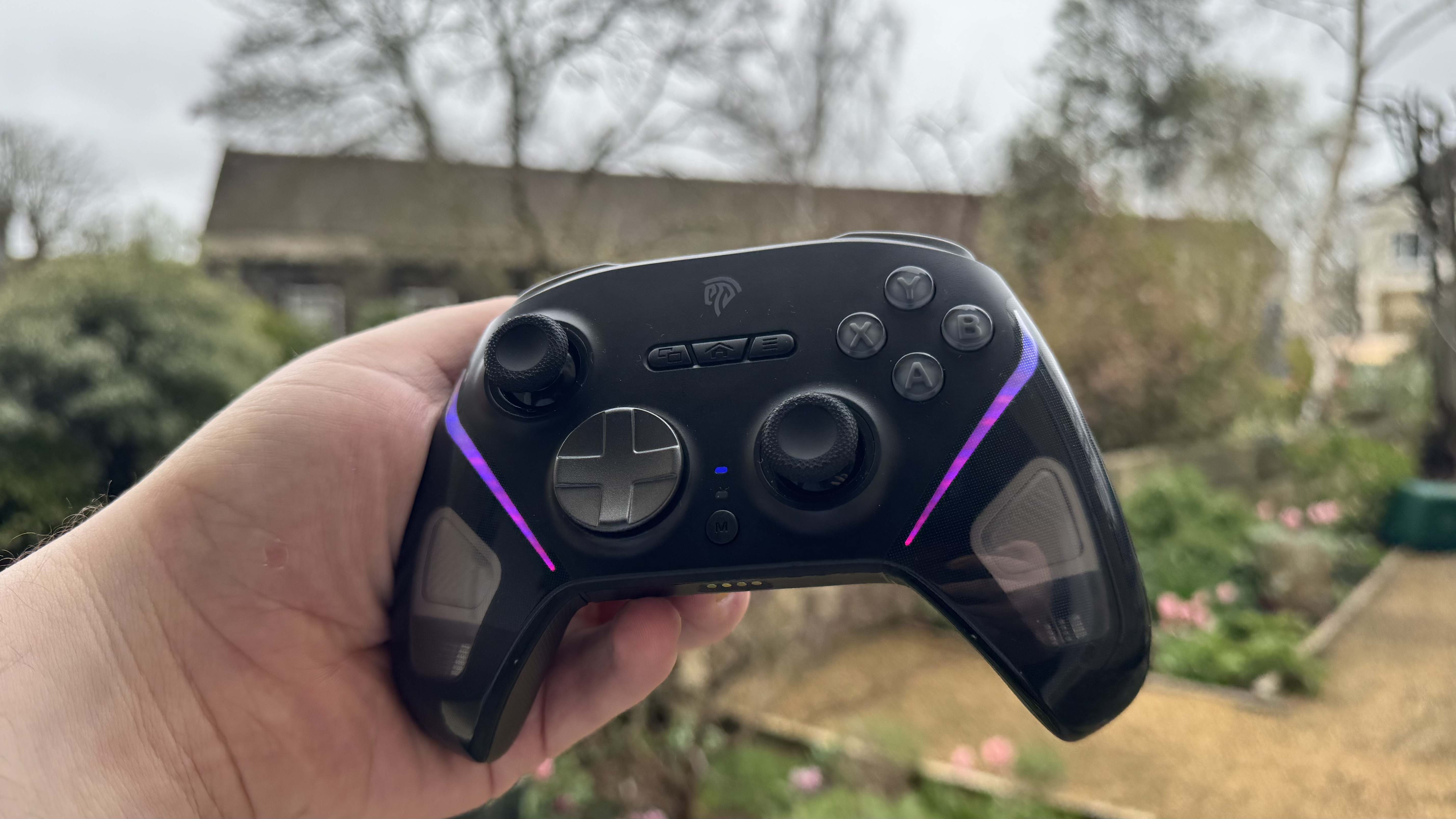
As far as looks are concerned, I'm not majorly into the black model I've been testing. Seethrough grips plus a stripe of RGB on either side certainly help it stand out, but it's one of the more gamer-esque aesthetics out of any controller I have right now, which to me can look cheap. It's certainly not bad in any way, but uninteresting to me. The purple and green version of the controller would be where my money is going instead.
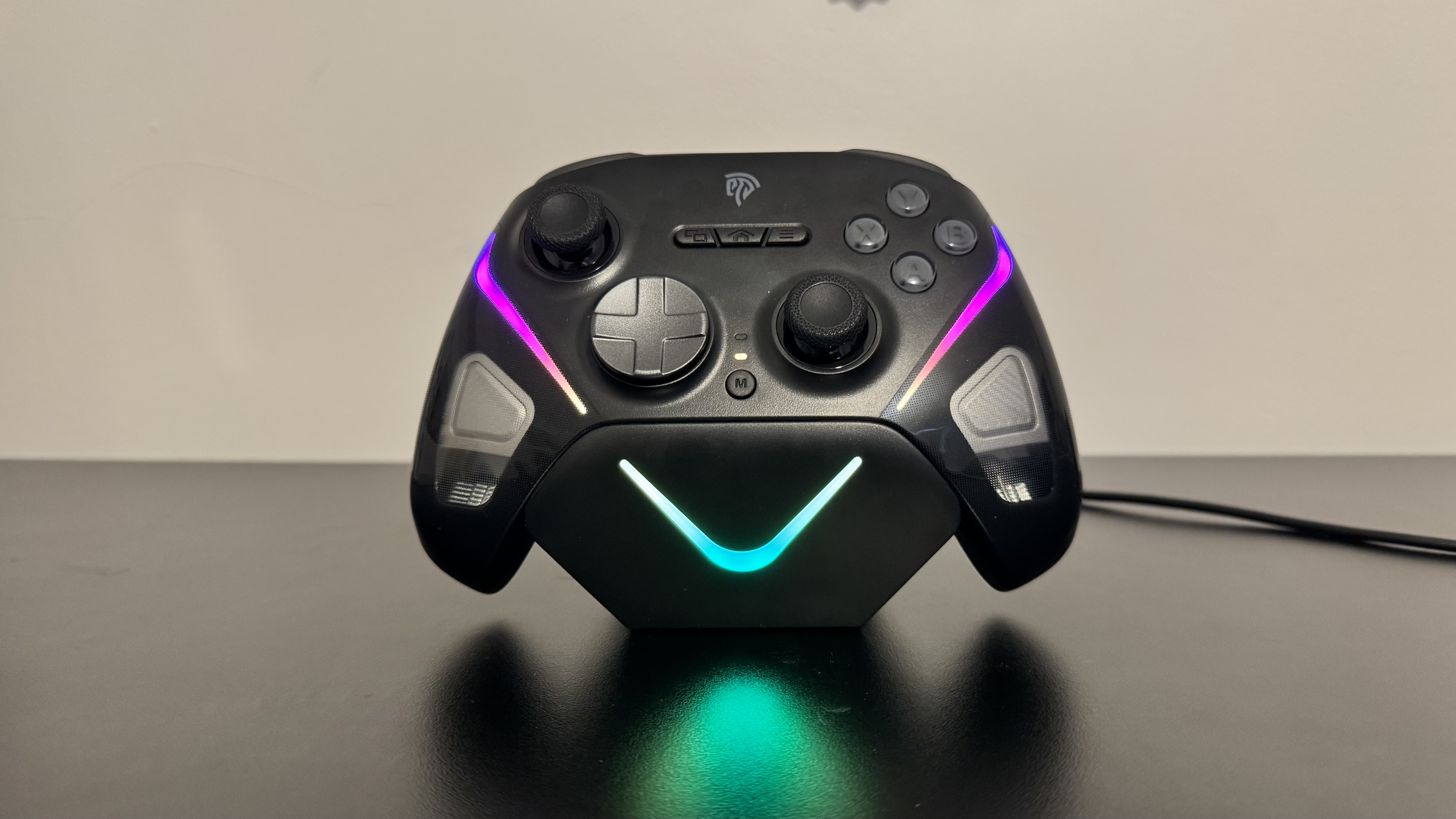
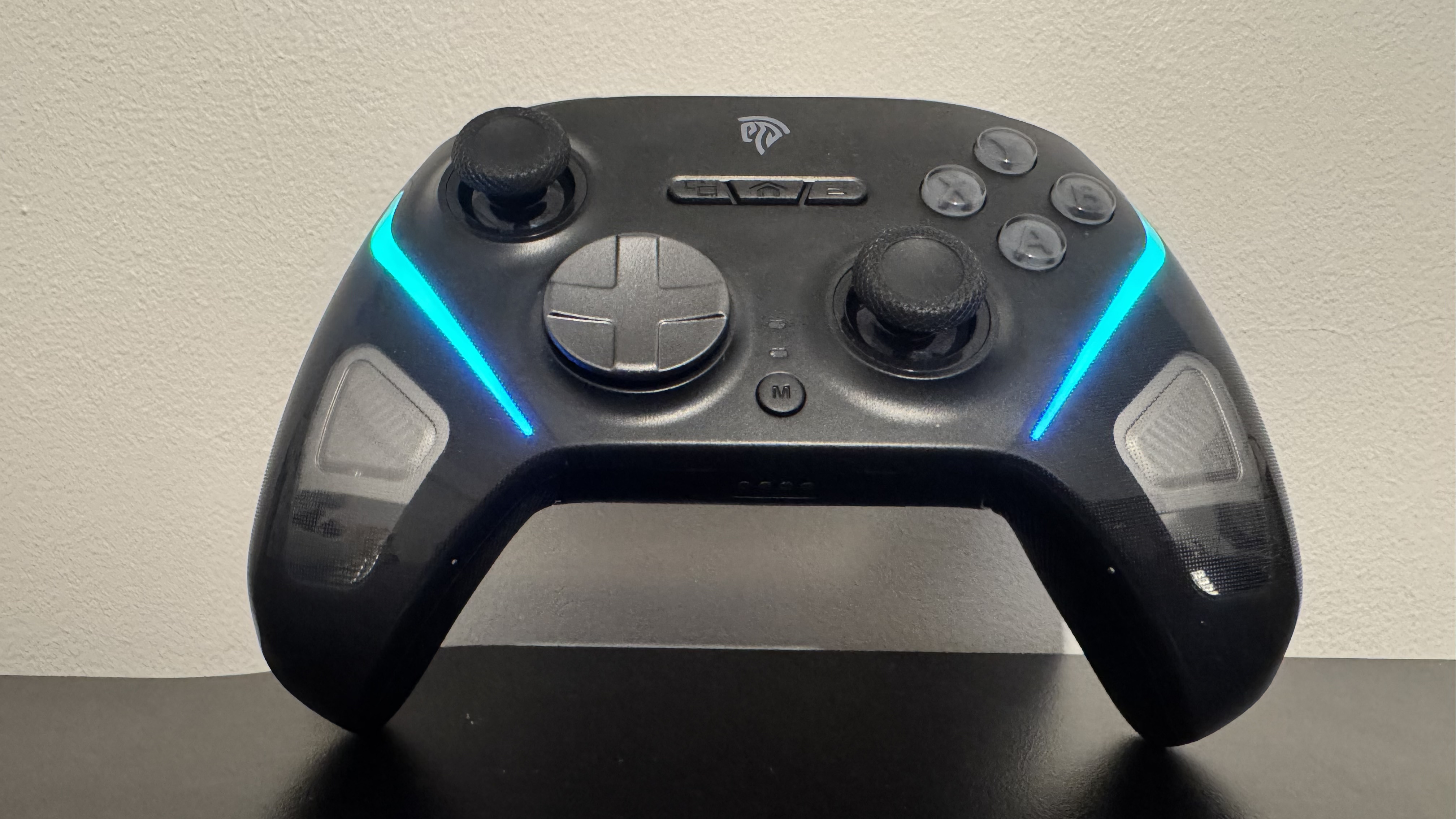
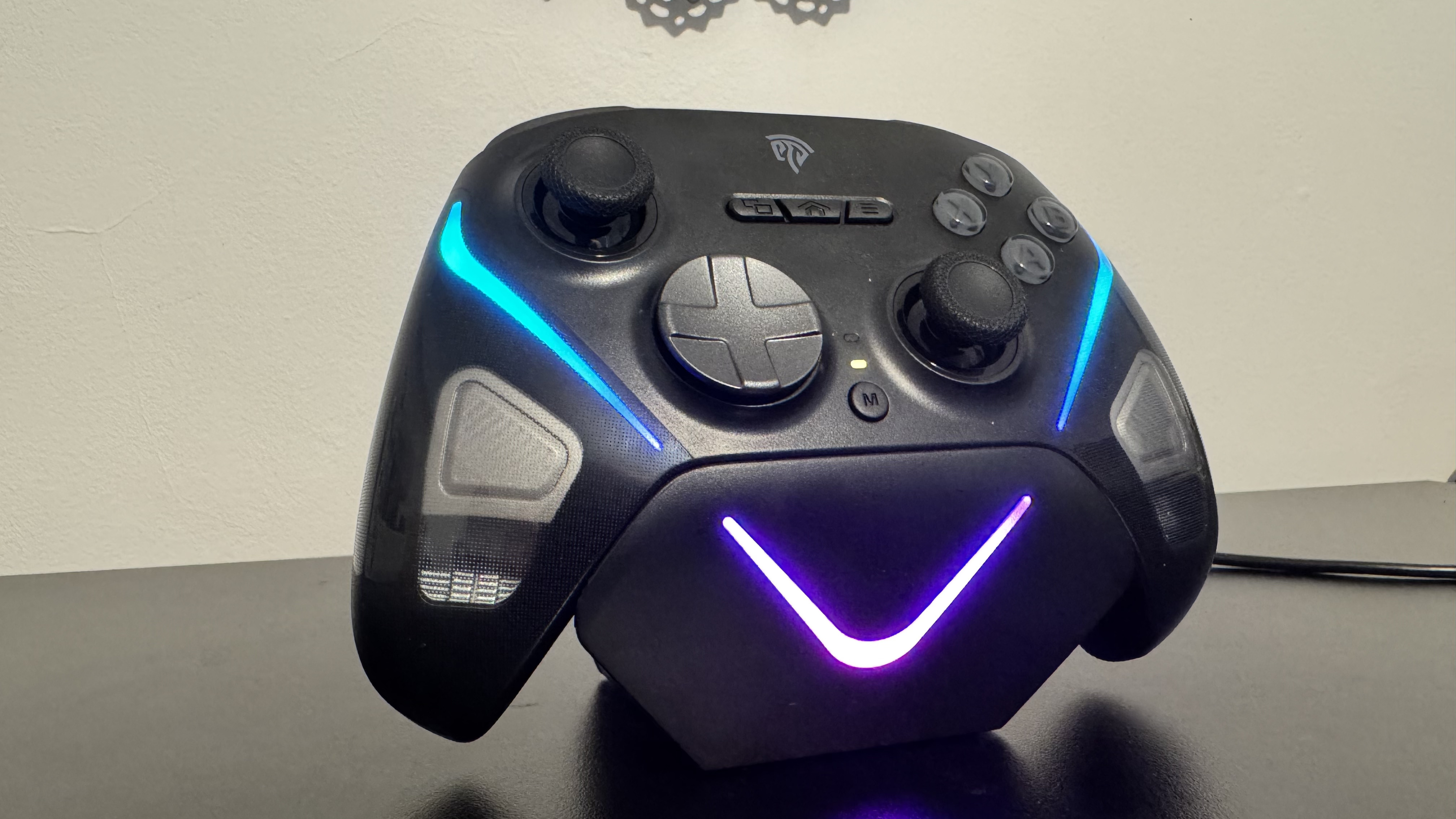
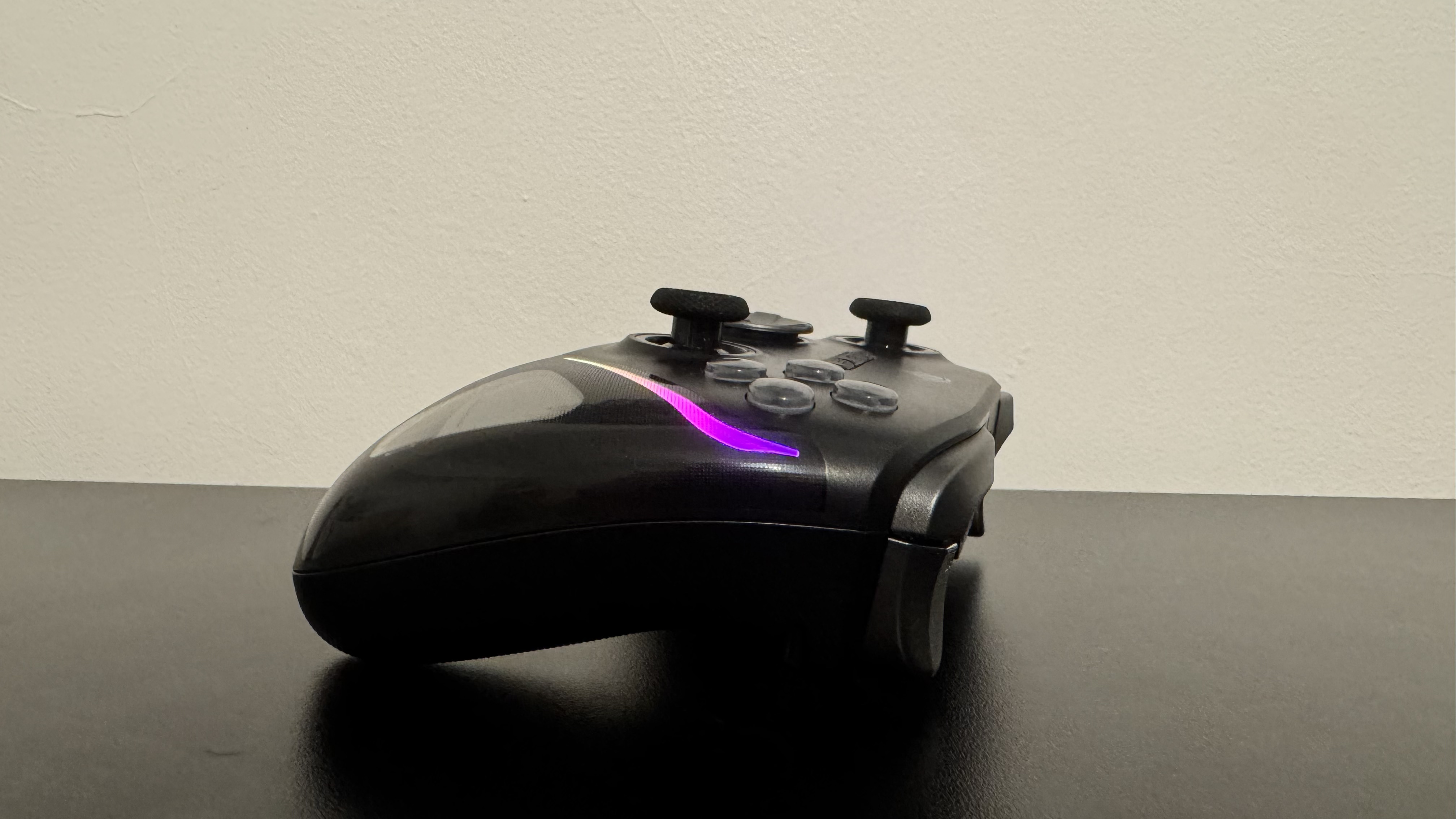
In the hand, it's a comfortable and well-balanced bit of kit. Its weight doesn't feel lopsided, and its textured grips sit into my palms well. I've used it for long gaming sessions with little fatigue.
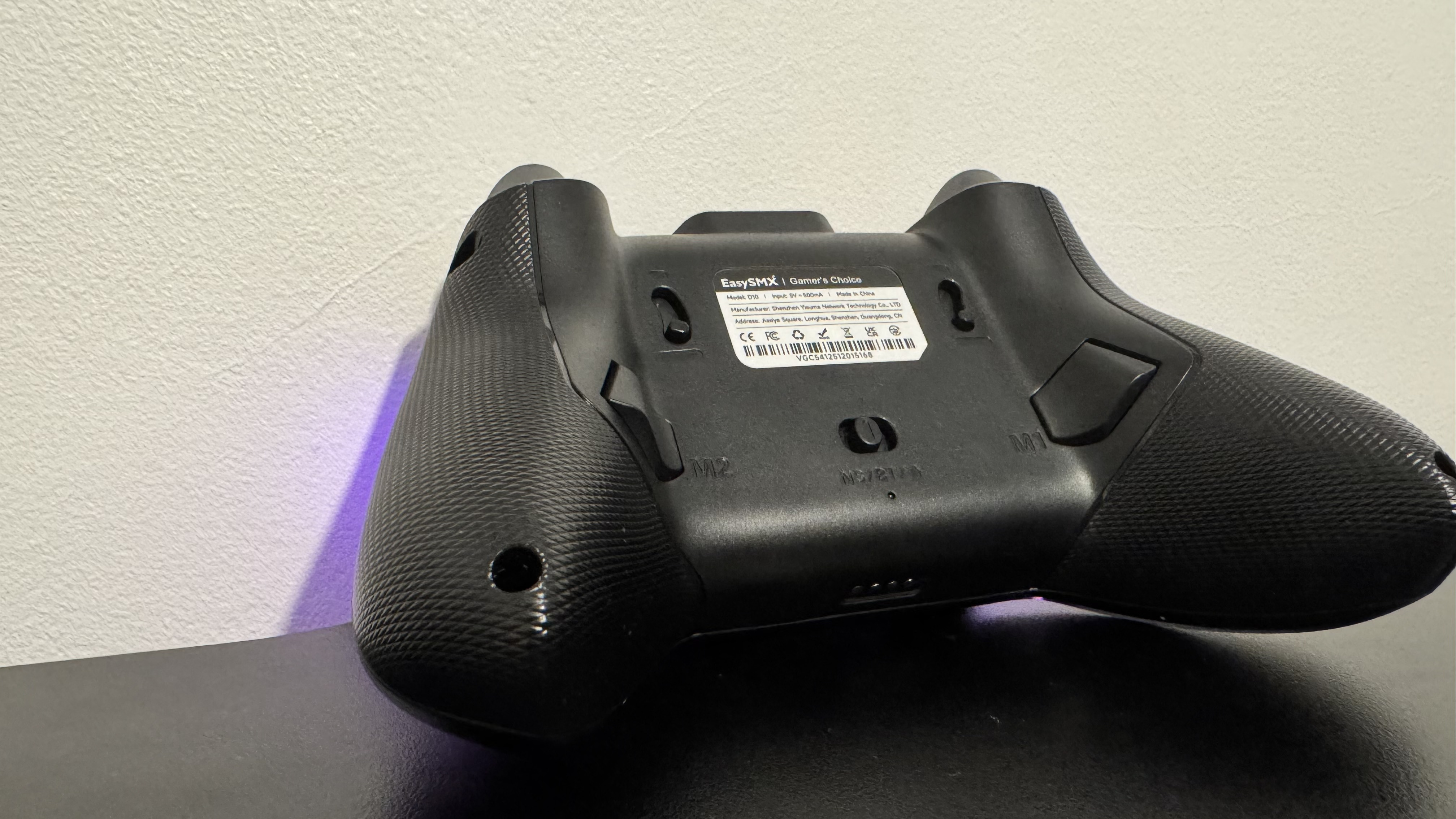
Rocket League, a game filled with the constant pressing of triggers and tonnes of complex controls, performs perfectly well, and remapping via two buttons on the back is easy too. I remapped my air roll to the bumpers, and they function solidly here.
Using the controller in Skate reaffirmed that maybe I'm the problem when it comes to my skating ability. Its selection of tricks are easy to pull off, despite a huge reliance on a single thumbstick, and I can only assume I have TMR to thank for that.
Over in Doom: The Dark Ages, I found the sticks to be accurate, easy to use, and comfortable under the thumbs. I didn't find myself using the reprogrammable back paddles very often, but you can remap them on the fly with ease.
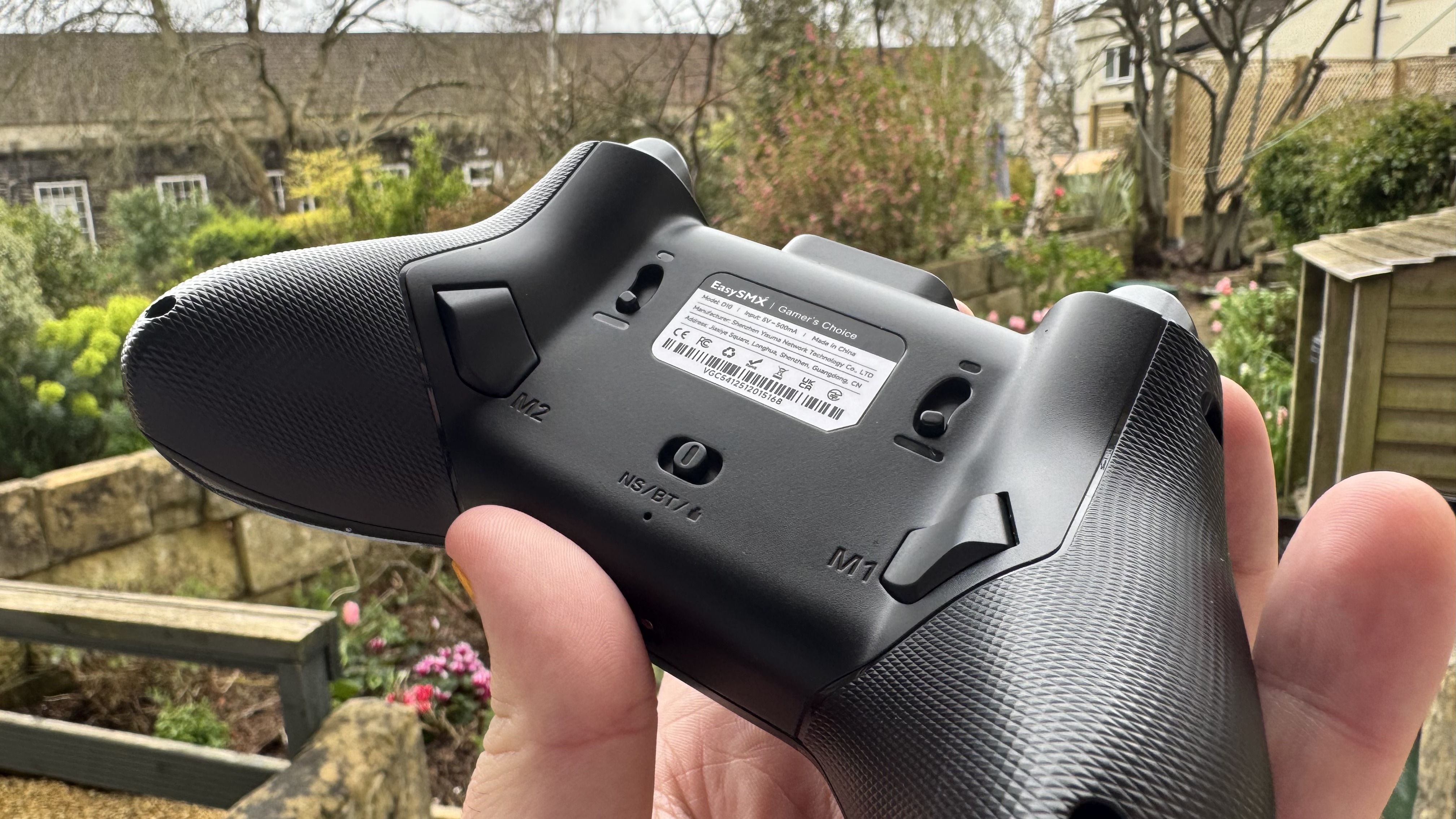
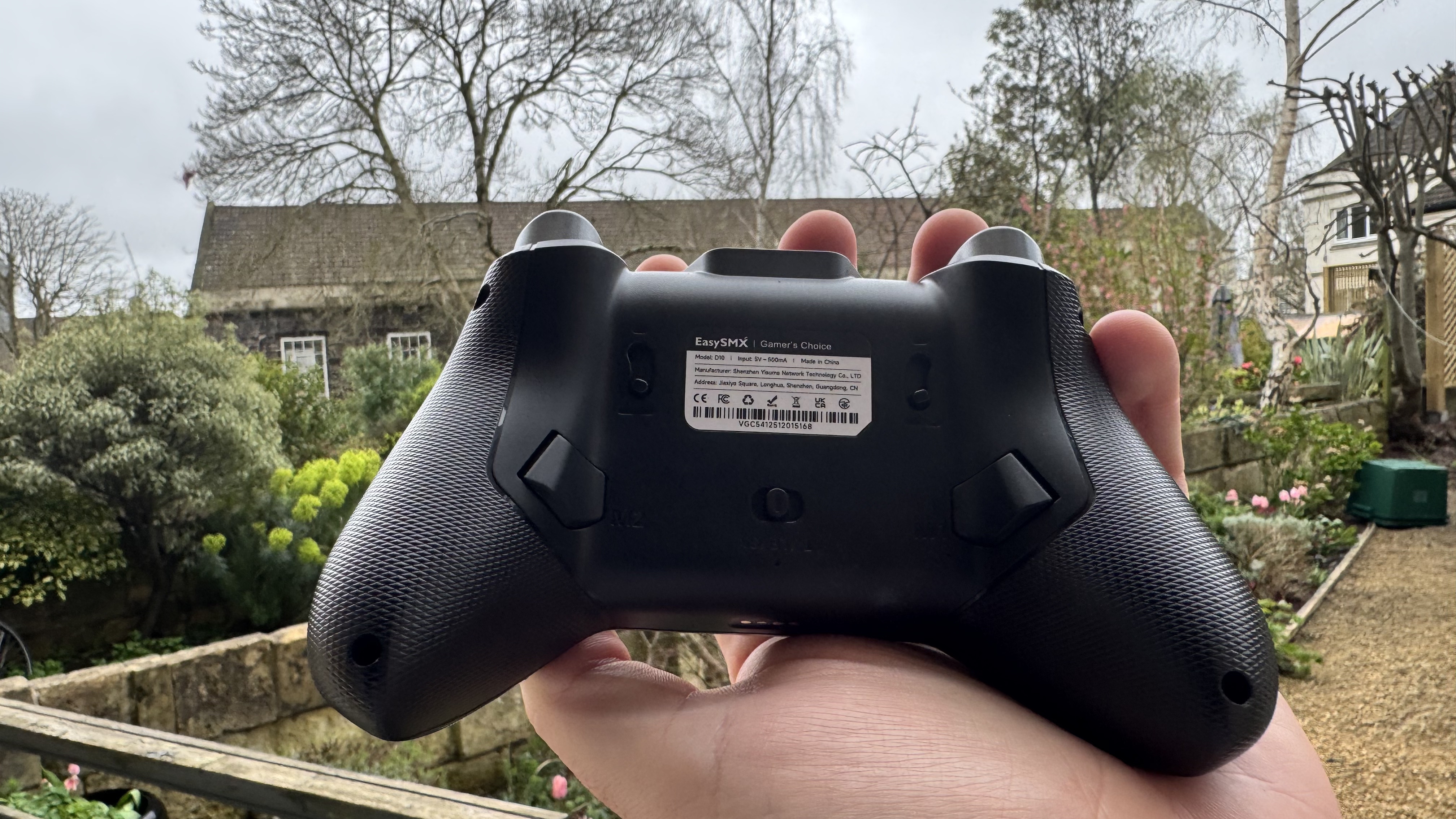
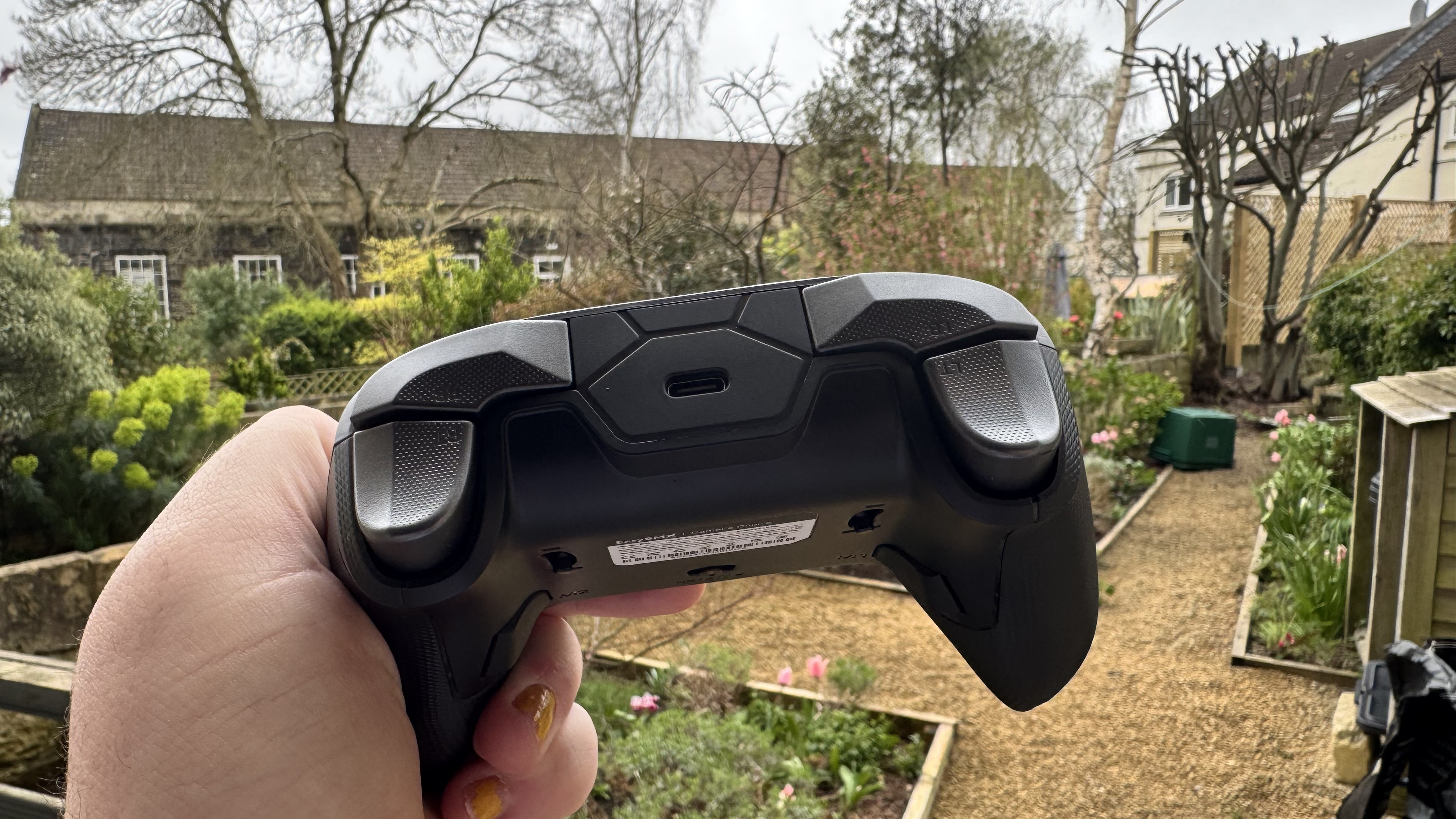
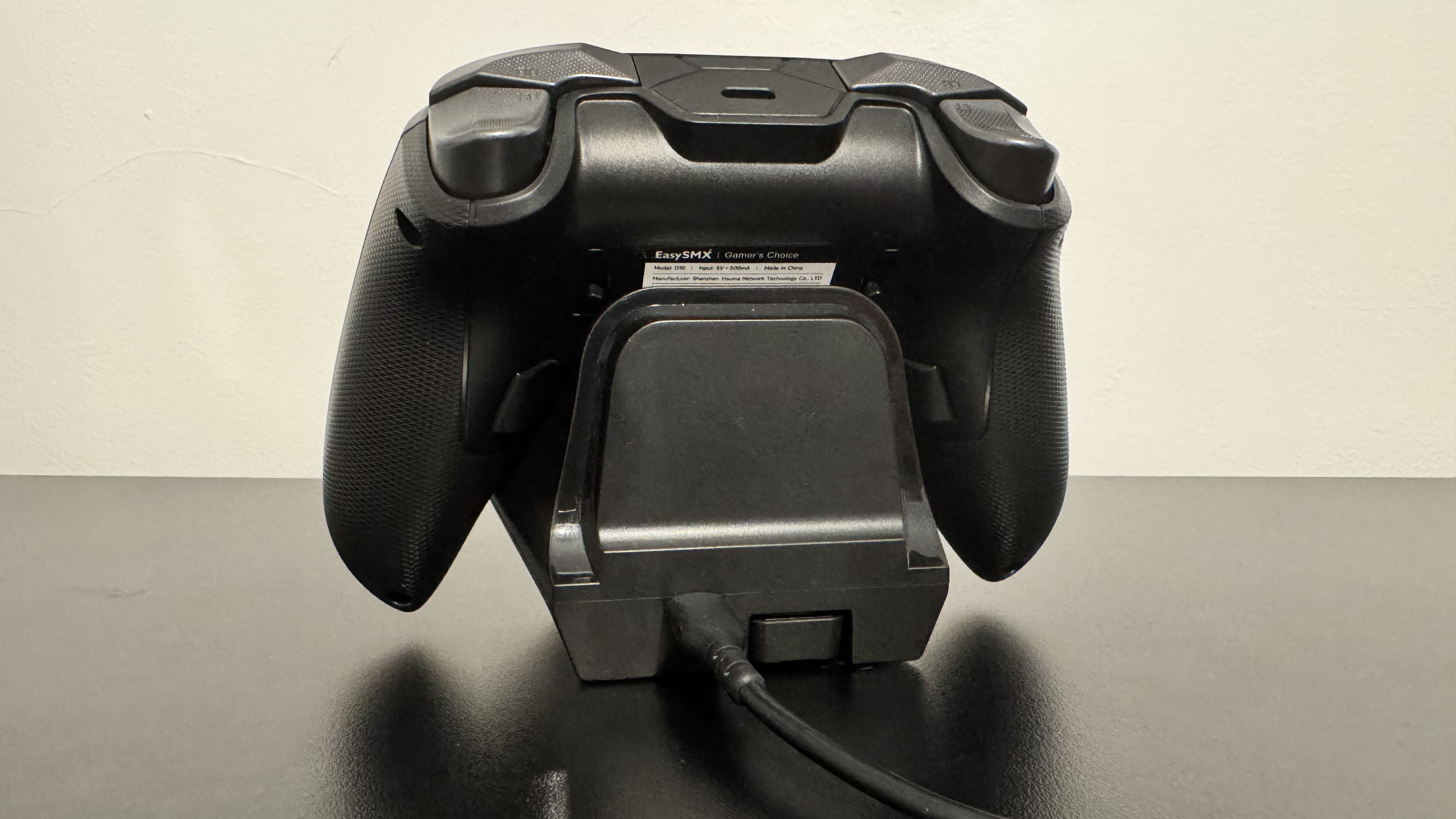
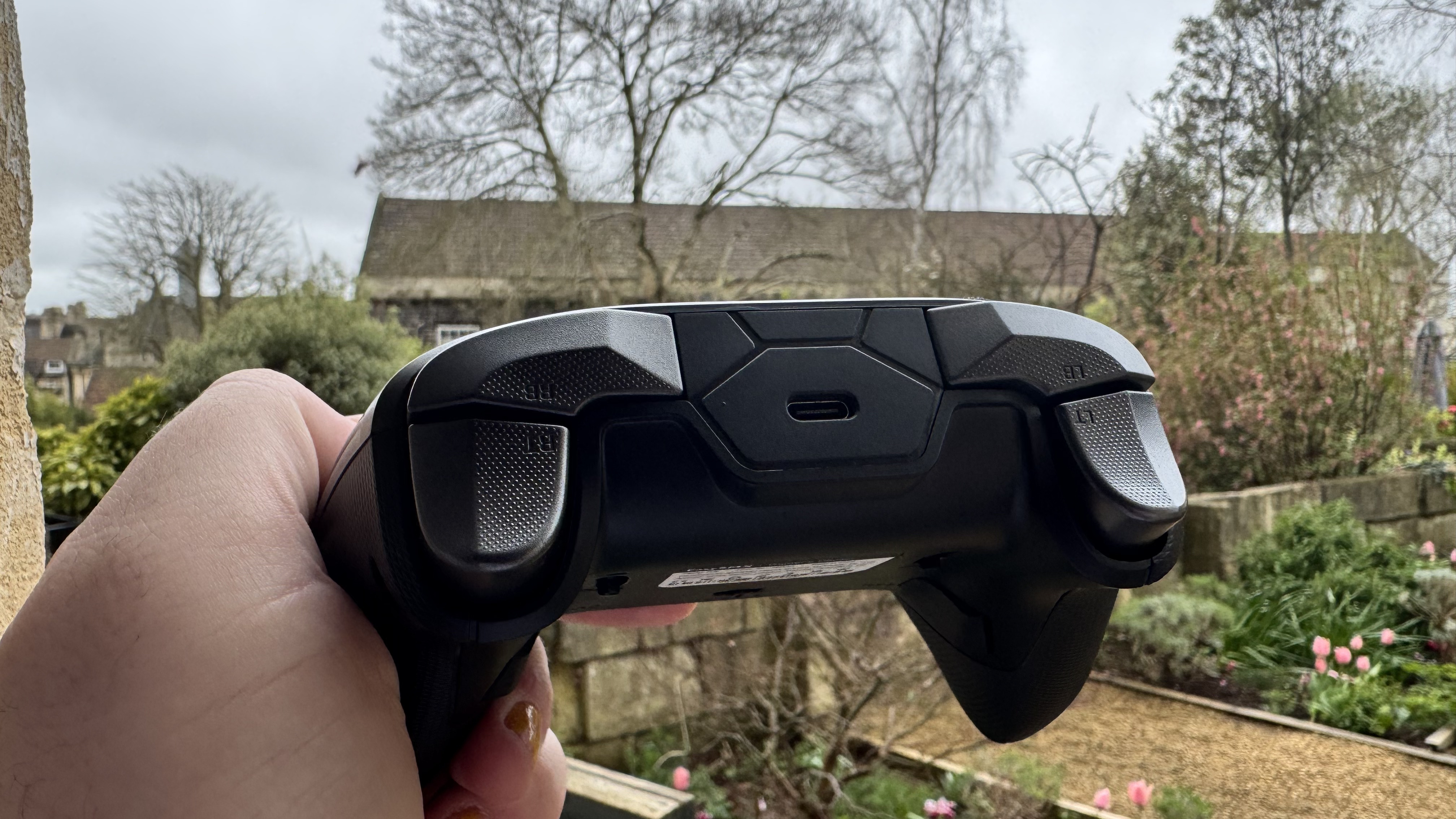
As well as TMR sticks and Hall effect triggers, the controller has a small switch on the back to swap the trigger to a microswitch, which changes the travel distance. This means you can enable an analogue press for the nuances of driving in racing games, and a single button for quick fire in shooters. It's a neat touch that was once the preserve of premium pads and is becoming more and more common with controllers.
I'm a bit of a sucker for charging docks, and the D10's works well. It comes with a 2.4 GHz connector, which you can slot into the dock itself, giving you the ability to charge and connect to the controller through a single USB port. In 2.4 GHz mode, the D10 connects in just a second to my rig, and I've never had any problems with it. It also has a Bluetooth mode and a dedicated Nintendo Switch mode. It also has gyro controls, which is a neat, niche touch.
One peculiar thing about the D10 is that EasySMX provide no software for it. You will have to learn everything through the manual. This does mean having to go onto the EasySMX site for drivers, but controller drivers don't appear to have been updated in years. Luckily, I didn't experience any software issues, even if the lack of customisation is noticeable.
✅ It's on sale: When it drops down to the $40 range, the D10 is an obviously great budget choice.
✅ You forget to charge your controller: The charging dock/connector gives your controller a home when you're done with it, and like your real home, it helps you recharge.
❌ You don't want to learn shortcuts: With no software, the only way to control the D10 is by learning shortcuts.
❌ You mostly play platformers: The connected D-pad is a tad awkward for precise controls. It's certainly something you can get used to, but I wouldn't bother if I were mostly into platformers and fighters.
As such, you will also have to get comfortable with shortcuts, most of which are done via the M button at the bottom of the front of the pad. For the likes of the Nintendo Switch, this is preferable to using software, but learning controls certainly takes some getting used to. These shortcuts can adjust lighting, change rumble, and reprogram buttons.
Though not perfect by any means, EasySMX's D10 provides a cheap alternative to many pro controllers, with plenty of great features and design decisions. You can tell, in some niche ways, that you are getting a budget controller, but it's hard to say no to TRM sticks, Hall effect triggers, a charging dock, and a few programmable buttons at its price point.
There's a fight to be had around the $60-80 mark that I'd struggle to see EasySMX winning, but when it's down to $40, I can't see a better option out there.
1. Best overall:
GameSir G7 Pro
2. Best budget:
GameSir Nova Lite
3. Best high end:
Razer Wolverine V3 Pro 8K PC
4. Best wired:
Scuf Valor Pro
TMR sticks, Hall effect triggers, a charging dock, and customisation options at this price point make the D10 stand out. You do get some budget-related downsides, though, like a just okay D-pad and triggers, and no customizable software.

You must confirm your public display name before commenting
Please logout and then login again, you will then be prompted to enter your display name.