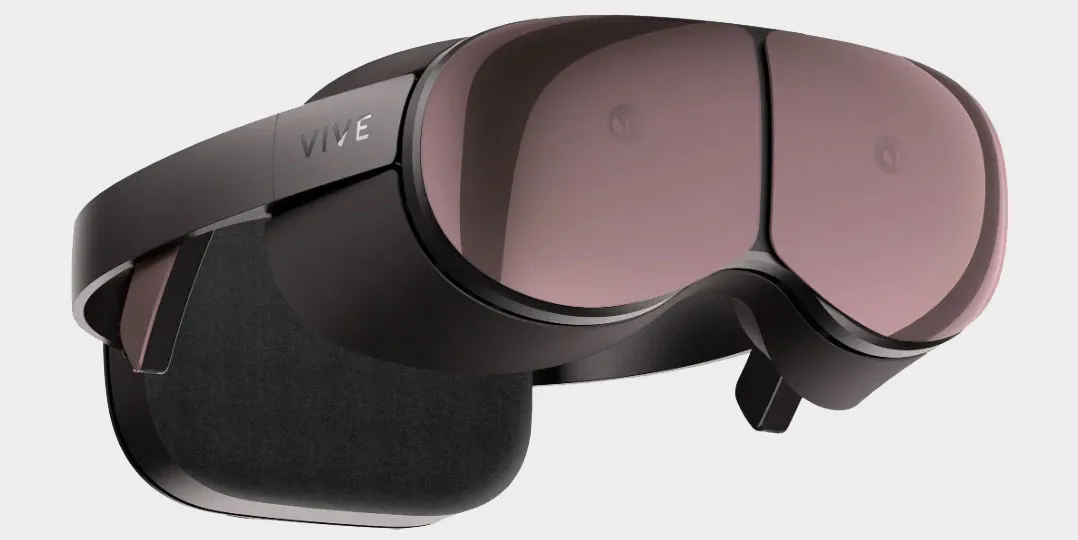
One thing most of today's VR headsets have in common is they are relatively large and somewhat boxy. You're not going to wear an Oculus Quest in public (assuming you can even get your hands on one) without drawing attention to yourself. I don't expect that to change anytime soon, though it does look like HTC is aiming for something a bit more stylish with Project Proton.
As described to Engadget, "Project Proton is a prototype of a future XR glasses-style device from HTC Vive that we hope to hear feedback on from the community as we continue to work on the product."
From the vantage point of HTC CEO Yves Maitre, the prototype headsets look "really, really close to normal glasses." Even Mr. Magoo (for those of you old to enough to get the reference) would turn his head at such a statement. However, the renders shared by HTC do look like googles, and are distinctly different in appearance than headsets like the Vive.
At present, HTC is experimenting with two form factors. One of them appears to be a self-contained design, meaning the necessary hardware is already built into the unit. Shown up top, that version of Proton connects the headset to a cushioned module in the back, presumably where the CPU, GPU, and other necessary hardware will reside.
Then there's this one:

Shown above, this version of Proton would have to be powered by an external device, whether that means tethering to a PC or connecting to a smartphone. It's a similar design overall, though unlike the other prototype, there are no speakers immediately visible. Maybe you have to pack your own earbuds.
HTC is not sharing any specifications at the moment, likely because nothing has been chiseled in stone just yet. However, according to The Verge, both prototypes use passthrough video rather than transparent waveguide lenses. This means you would stare at a VR-style screen with virtual elements plopped onto live video. It's more of an augmented reality or mixed reality experience.
That could change, though the general form factor probably won't.
"We want to move one day to [normal-looking] glasses, and it is a journey," Maitre told The Verge. "We just want to show that we are committed to the journey, that we are investing toward this journey, and we have a first product."
While most of the specs are not known yet, Input reports both headsets will use microdisplays. These have the advantage of being lighter weight, and could potentially allow for a more compact design.
We have plenty of time to speculate, as HTC is shooting to launch something based on these prototypes within the next couple of years.