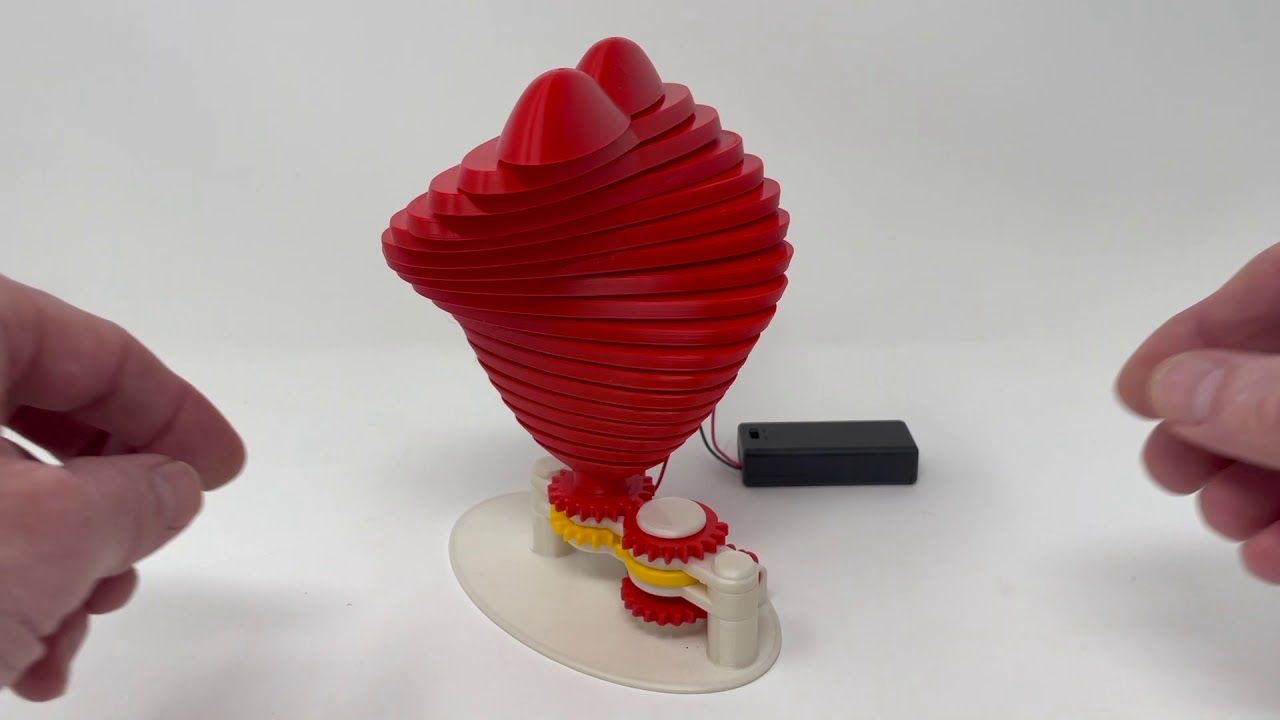
A quick search on Hackaday this morning turned up more than I expected. One featured project that caught my eye was is this cute 3D printed, mechanical heart entitled "A 3D Printed Valentine For My Wife, With A Twist."
It's totally mesmerising is it not?
What's more, a little digging uncovered that its creator, Greg Zumwalt, is the sole creditor for the design of the 1984 original FlightSim 1 for the TRS-80 CoCo. Turns out that designing sentimental, electro-mechanical devices is how he's been spending his spare time, since retirement.


Zumwalt contributed to 37 video games for Tandy Corporation, Atari, EA, and SEGA, among others. His credits include the design of Michael Jordan in Flight, as well as the programming for RoboCop (1989), Biosphere (1986) and a version of Tetris (1989), among other things.
His Hackaday profile is brimming with all kinds of goodies, from hopping mechanisms, to refrigerator climbers, and even an automated, sewing My Little Pony Rarity toy.
But these mini gadgets aren't the only things birthed from a life of coding, engineering and game design. He's also designed larger, more practical mechanical devices, including "flight control systems for military, business and commercial aircraft and the training," according to a chat transcript on the site.

Best chair for gaming: the top gaming chairs around
Best PC controller: sit back, relax, and get your game on
Zumwalt's been forthcoming in his appreciation of the convenience 3D printers have provided his design feats. As he notes, producing gears and the like "became so much easier, taking much less time to get from in your mind to in your hands." Being used to working with cumbersome CNC mills and lathes to produce his components, this new tech must have been a revelation.
He now utilises Autodesk fusion 360, with the "gear add-in as template to which I can add spokes, hubs, threads and other attachment points." So the process has become a lot more streamlined.
If you're looking to get into creating little projects for your loved ones, like the ones Zumwalt's been making, remember it can be an arduous process. Zumwalt explains, "My wife reminded me of the time a little over 2 years ago I came screaming that it was too complicated and 2 years later I'm still learning."
But don't let that put you off. As Zumwalt is proof, perseverance pays off.