





Localisation means making a game ready for a specific local market. This includes everything from creating a translation that stays faithful to the originally intended meaning, to cutting and amending content in line with different countries' laws. The Yakuza series' great localisation is an important factor in its success, and so I asked localisation producer Scott Strichart about the pitfalls of his job.
In order to localise a game correctly you need to have two things: text and context. As with any big creative project on a schedule, you unfortunately don’t necessarily get both at the same time.
“Until recently, we’d never started localisation prior to the game being done in Japan, which was amazing, because we could just boot up every scene, every substory, every movie right in game,” Strichart says. I imagine him wistfully staring off into the distance.
To finish everything on time, localisation now often begins before the original text is even finalised. In some cases Strichart and his team make educated guesses at who is talking to whom, how far away speakers are from each other and sometimes even their gender, the latter of which the form of address in Japanese can help with.
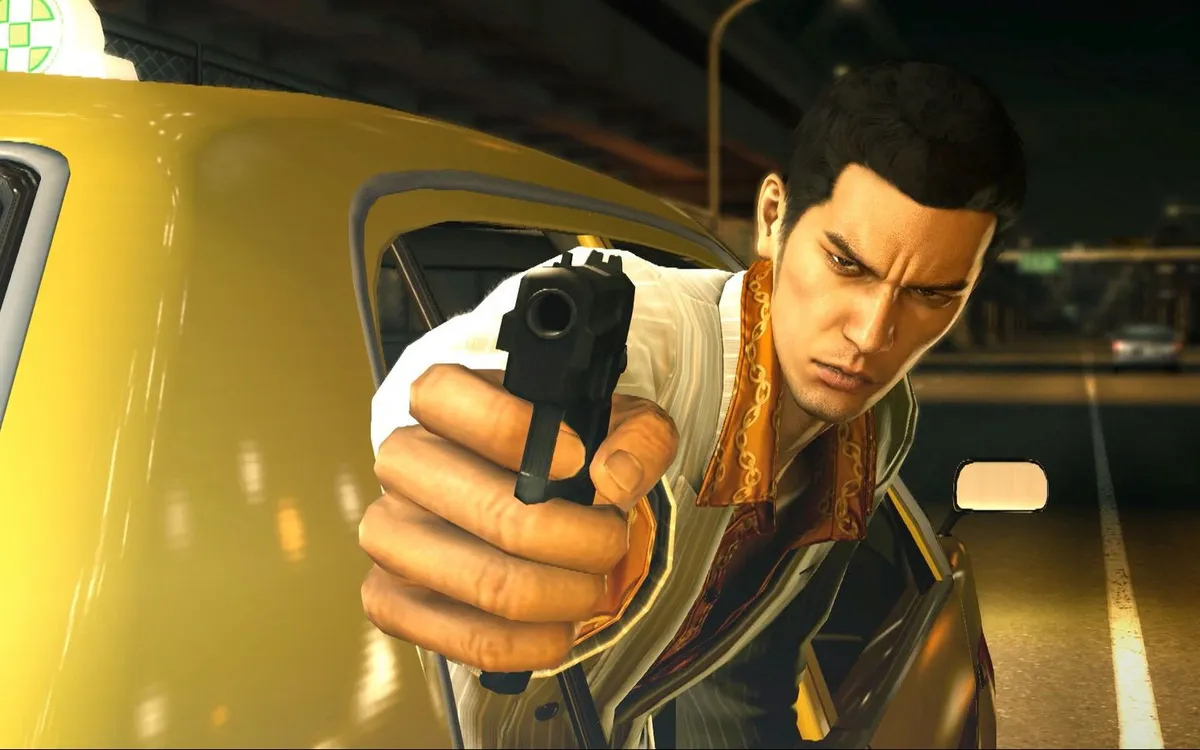
“Once a particular scene comes online, we’re able to check it out and adjust accordingly ... It’ll be an ongoing process to smooth this out with [developer Ryu ga Gotoku Studios], but I’m committed to doing that.” Strichart, who took up his current position prior to the release of Yakuza 0, is an enthusiastic spokesperson for localisation with an apparent love for language.
Having started in QA himself, he acknowledges that building a translator’s skills takes time and teamwork. There’s no small amount of project management behind building an experienced team.
“Usually our more experienced translators and editors handle the main story, while the supporting translators and editors get assigned swaths of text where it makes sense to group up. For instance, all the substories, all the minigames, all the tutorials, with some natural crossovers when it makes sense to do so.
“To date, I’ve also stacked a ton of this work on my own plate, because I enjoy the creativity of it. I love having translators and editors on my team who grow with the games, because they’re already familiar with things like the game’s worldview and the styling we use.”
Magic words
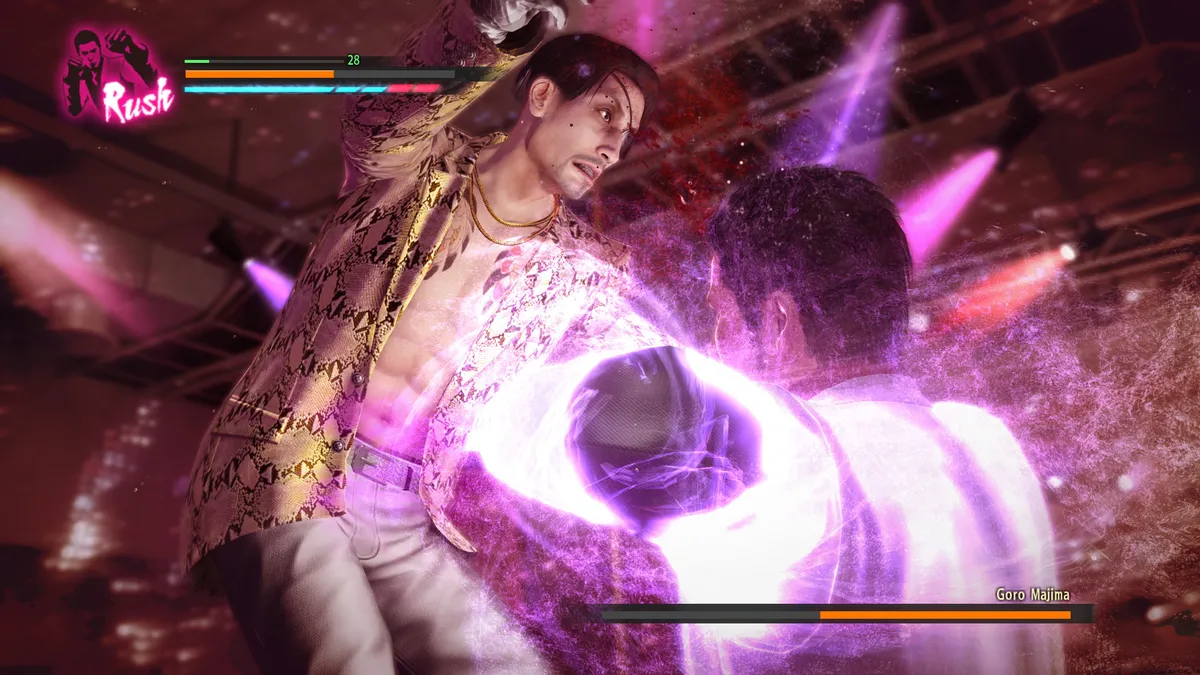
Arguably the most important skills to develop are listening and research. ‘Intent’ and ‘atmosphere’ are two words that you hear regularly in localisation, and Strichart explains why. “This game is set in Japan, and I would never want to lose its sense of place and culture at the cost of a little confusion over street food with no one-on-one translation. Maybe you’ll even learn something from the game! Generally speaking, English is a more idiomatic language, so finding idioms that still match the intent of the Japanese dialogue without necessarily matching the line word-for-word is the touch of magic we bring to the game in hopes of making it sound like good dialogue to the English ear.”
I bring up a scene from Yakuza Kiwami 2 that serves as a good example for the magic Strichart is talking about. In it, Kiryu gets invited into a club where a gang of adult men roleplay as toddlers. When he refuses to play along, the gang leader shouts, “Let’s pacify this bitch!”
“The line was originally ‘Let’s crack this bitch’ in Yakuza 2, but Jon Riesenbach, my editor for Kiwami 2, really took it to the next level. See? Magic.”
Changing accents

Localising also means finding a way to approximate local ways of speaking. Dialects use specific words and accents limited to one country. Western Japan’s Kansai dialect used in the series by characters such as Majima is famous throughout the country, but there’s no singular way to localise it, mostly because any accent (such as the Southern American accent Ace Attorney uses in its place) is also specific to one location. Scott weighs in on the tricky question of how to provide a consistent tone in a text several people work on.
“I made a point to overhaul Majima's accent starting with Yakuza 0. I aimed to remove any direct correlation one could make to an American South accent and embody what is generally perceived as being the root of the Kansai dialect—faster speech, colourful language, and high energy. This accent actually proved problematic, because I was the only one who could really write in it.
“Sam Mullen, our director of production, recently came down on me for it, joking that if I got hit by a car, Majima would have to be written out of the series. I have since written an internal series accent guide and someday, I’ll be forced to let someone else write him.”
There will always be instances in which a reference is so specific to its culture that fitting idioms just don't exist. Strichart says that even when a few Japanese puns are lost, there are enough ways in which the localisation team can make up for it elsewhere. I appreciate Strichart for shedding more light to a part of the game-making process that we tend to take for granted, especially as English speakers.
Good localisations don't just give us something new to play, they also hone our intercultural skills, allowing us to take a peek at the world behind a game.
