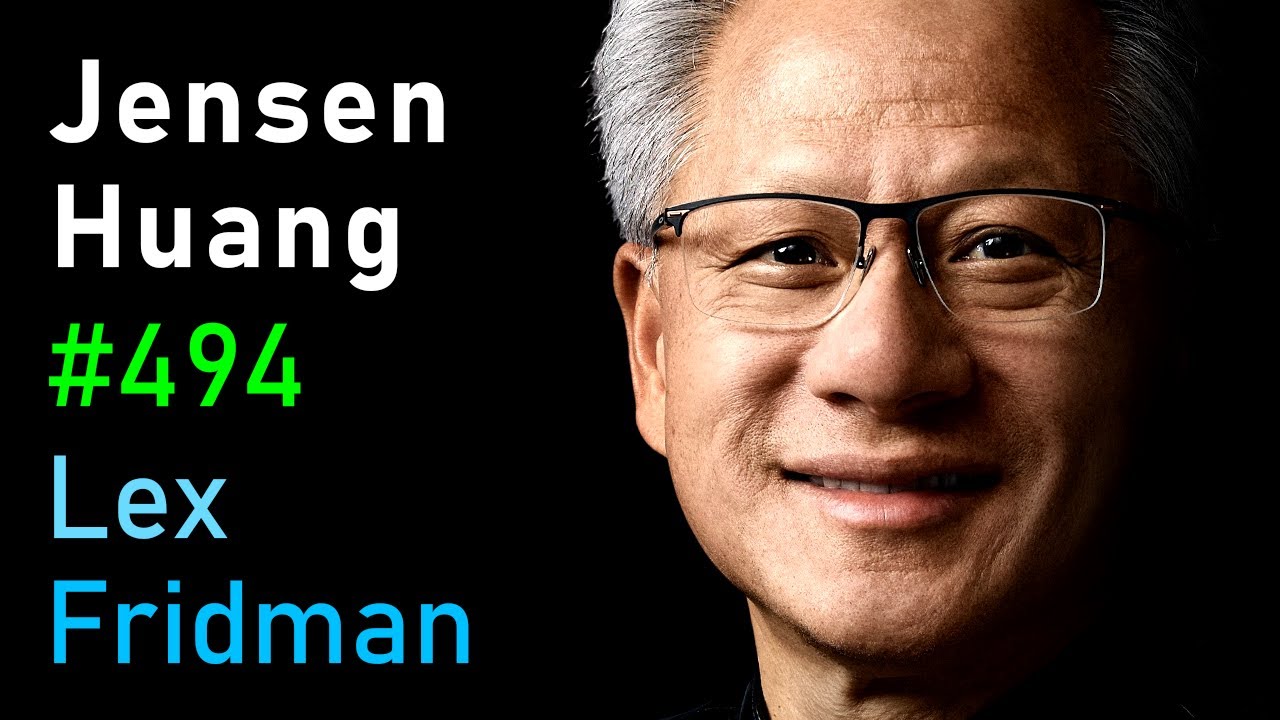
After all the furore surrounding Nvidia's DLSS 5 announcement, which was met with a mixture of curiosity around its AI capabilities and outright objection to the aesthetic changes it appears to make to existing games, CEO Jensen Huang has pushed back against the critique.
"I think their [gamers] perspective makes sense, and I can see where they're coming from, because I don't love AI slop myself. All of the AI generated content increasingly looks similar, and they're all beautiful... so I'm empathetic towards what they're thinking.
Article continues below"That's just not what DLSS 5 is trying to do," Huang continued. "I showed several examples of it, but DLSS 5 is 3D conditioned, 3D guided, it's ground truth structure data guided, so the artists determine the geometry. We are completely truthful to the geometry... in every single frame.
"It's conditioned by the textures, the artistry of the artists, and so every single frame it enhances, but it doesn't change anything."

Hmm. One of the problems with DLSS 5's announcement has been the mixed messaging around exactly how it operates, and I'm not sure Huang's words make things clearer. Certainly, a splitting of hairs between the terms "enhance" and "change" is debatable—and from the demos shown to date, it seems the latter is perhaps more appropriate to describe the infamous "yassified Grace."
"Because the system is open, you could train your own models to determine and you could even, in the future, prompt it," Huang continues. "So you can give it even an example, and it would generate in the style of that, all consistent with the artistry... and so all of that is done for the artist so that they can create something that is more beautiful, but still in the style that they want.
"I think that they [gamers] got the impression that the games are going to come out, the way games are shipped, and then we're going to post process it. That's not what DLSS is intended to do. DLSS is integrated with the artists. It's about giving the artist the tool of AI, the tool of generative AI. They could decide not to use it, you know?"
I think one of the interesting things to pull out of Huang's words is the use of future tense. You could train your own models. You could, in the future, prompt it. But, as was revealed in a recent Q&A session with GeForce Evangelist Jacob Freeman, what DLSS 5 appears to be doing in the demos shown to date is essentially applying an adjustable AI filter to already-rendered 2D frames, with some motion vector data thrown into the soup.

This is all really, really messy. What strikes me at this point is that the version of DLSS 5 shown to the public, and the messaging around how it operates, is still a muddle of AI terminology and odd process descriptions that, at points, seem to directly contradict each other.
And while Huang seems more empathetic towards the gamers' concerns, it does seem like what we've been shown to date is a very early version of something that, on a conceptual level, doesn't seem to have clearly defined parameters.
I guess all there is to do now is to wait for more demonstrations, technical deep dives, and really anything that gives us a clearer bead on what our AI-enhanced gaming future will actually look like. May you live in interesting times, as the old proverb goes.

1. Best overall: AMD Radeon RX 9070
2. Best value: AMD Radeon RX 9060 XT 16 GB
3. Best budget: Nvidia RTX 5050
4. Best mid-range: Nvidia GeForce RTX 5070 Ti
5. Best high-end: Nvidia GeForce RTX 5090

You must confirm your public display name before commenting
Please logout and then login again, you will then be prompted to enter your display name.