Our Verdict
More of a branding exercise than a realistic option for consumers, the Kithara demonstrates ROG can deliver incredible sound, but it's not kitted out with the refinements you'd expect of a true gaming headset.
For
- Incredibly rich sound
- Lots of adjustment and wired options
- Surprisingly multi-compatible
Against
- Lacks some basic gaming headset features
- You will be mocked on Zoom calls
PC Gamer's got your back Our experienced team dedicates many hours to every review, to really get to the heart of what matters most to you. Find out more about how we evaluate games and hardware.
No, the ROG Kithara is not the gaming headset to solve the cost of living crisis. It is a joy to listen to your games and music with, though, and a genuine curiosity in a crowded market. You don't need one, and neither do I, but let's sit awhile anyway and enjoy what ROG and Hifiman have built.
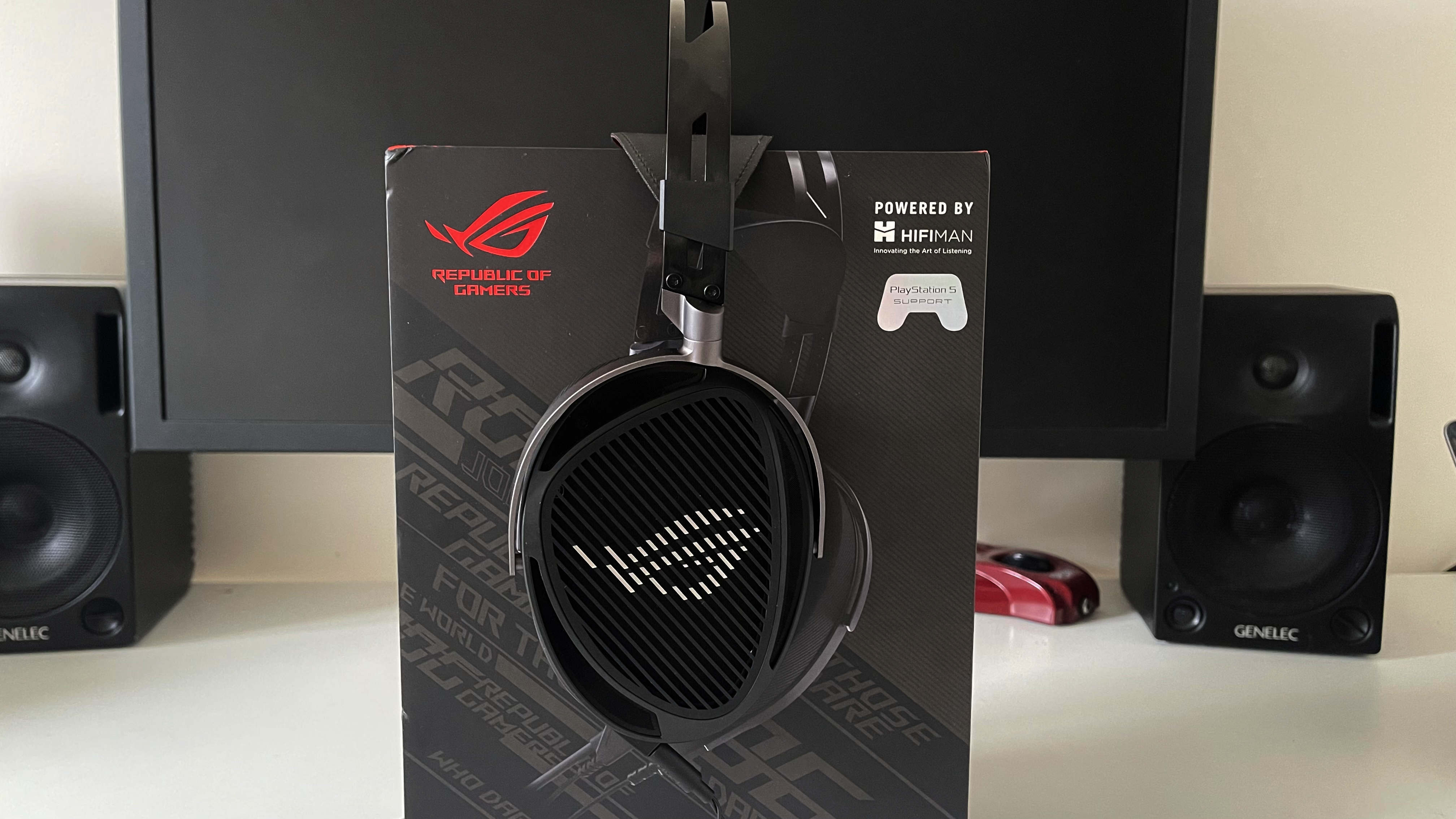
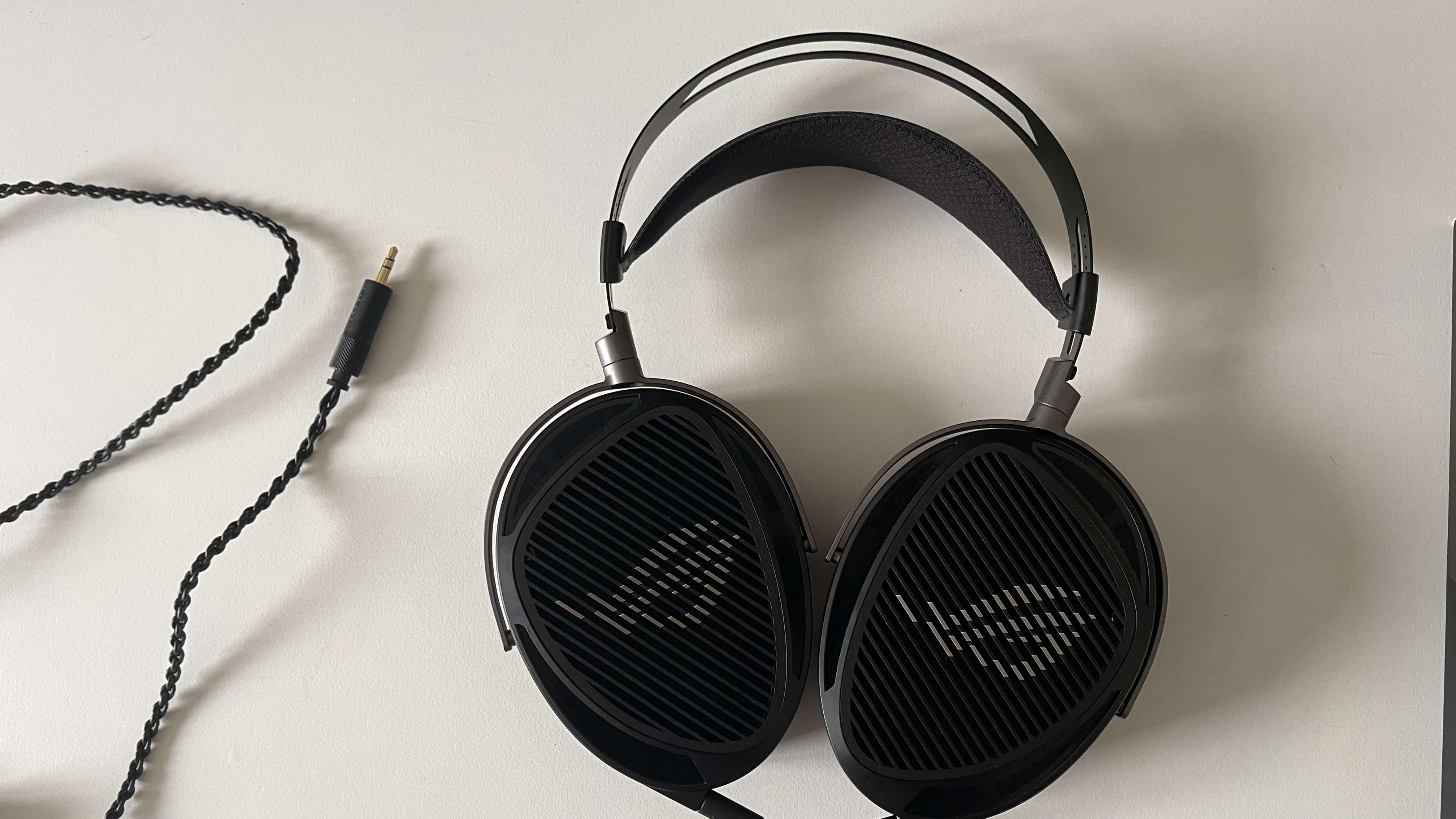
This one's all about the drivers. Vast, 100 mm planar magnetic ones, designed and built in partnership with New York-based audio specialists, Hifiman. Every other element's designed to let those drivers do their thing. An open-backed design that doesn't care one bit about the fact you can hear the tumble drier from your gaming room, or that you're sitting in a quiet coach. A frequency response range broader than a politician's promise. Y'know, audiophile stuff.
✅ You can hear insects breathing: Blessed with supernaturally sensitive ears? The absurd 8Hz-55KHz frequency response range captures nuances other headsets simply don't, and for those who care about that nuance it's a fascinating product.
❌ You don't own vast oil reserves: This is a lot of money to be spending on anything right now, especially a headset. Value was never the point, but if you're on a budget don't lose sleep over this one.
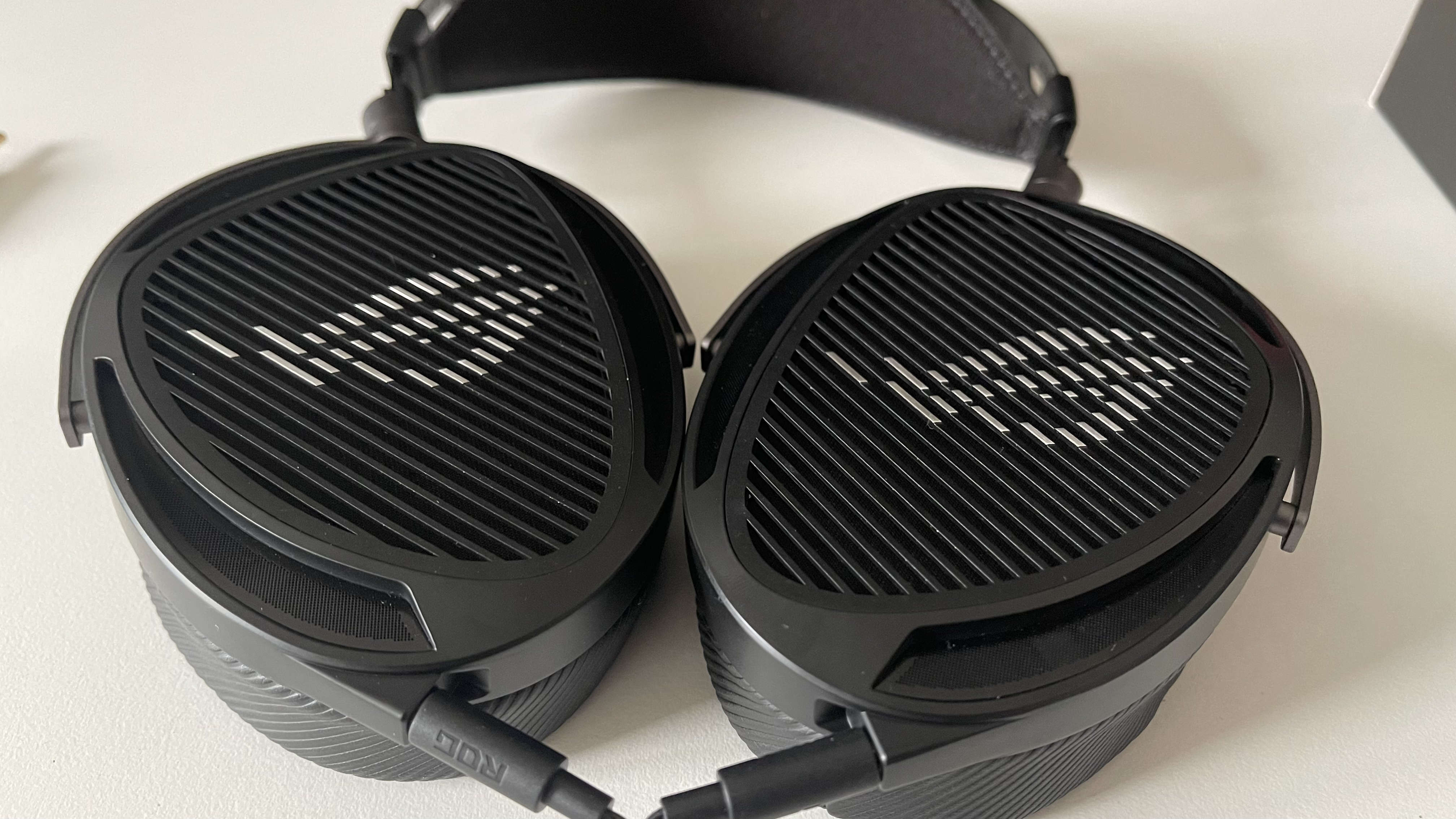
No, it's more like the Kithara is visiting us gamers from the Manhattan loft apartment of a wealthy hifi enthusiast to see what all this ‘Counter-Strike' stuff is about. Its visual cues are all reminiscent of Hifiman's headphone inventory, from the trademark elongated ovals of the earcups you'd see on the Ananda to the suspended headband beneath an aluminium frame, like an Arya.
(If you were wondering, ‘Kithara' is the ancient Greek stringed instrument from which we get the word ‘guitar'. Hang around in the games industry long enough and you're bound to pick up a bit of ancient Greek. If Kratos' adventures don't rub off on you, the peripheral market's fondness for an obscure product name inspired by classical mythology surely will.)
The sound is, of course, extraordinary. It's a far flatter response than most gaming headsets are tuned to produce, particularly at the low end, and if your ears have been addled by the bass response of Razer headsets circa 2011 you might initially perceive a lack of ‘oomph'. But that would be incorrect.
Instead, the Kithara's drivers give all frequencies the room they need to articulate clearly and distinctly, leading to a far richer sound than you get with a $100 headset that's had its mids scooped like a Metallica album. And if you were in any doubt about that EQ response, there's a bit of paperwork inside the box which shows the factory test results on a graph. It's marketing fluff, obviously, but having your eyes met by a ‘sound signature certificate' as you open the box is a nice touch.
The stellar sound reproduction is another reason I keep thinking about these as headphones and not a gaming headset. Because truthfully, I've had the most enjoyable experiences testing the Kithara with music, not games. There are a few games where the wide stereo spread and flat, spacious sound reproduction are genuinely useful, like Counter-Strike 2 and PUBG, where the Kithara picks up footsteps and far-off gunfire with artisanal care. And cinematic games like Crimson Desert whose soundtrack sounds especially primed to tug at your forearm hairs when it's heard through these magnetic planar drivers. They sound great, these games, but you're experiencing them without the usual comforts like wireless operation, chat mix adjustment or an easily locatable mic mute (this one sits inline on the mic cable).
There are no such downsides to enjoying its mellifluous tones in a musical setting, though. It's when I'm playing Yazz Ahmed albums with the sound up that the Kithara feels most at home, doing what it was designed to.
I'm not completely sold on the comfort. While the build quality, material choices and finishes are all absolutely magnificent and easily befitting of the price point, the fact is that this is a heavy 420 g unit and the earcups are big enough to park your car in. The suspended headband design does its best to distribute as much of that weight as possible over a wide area using a broad protein leather contact surface, but the headset still relies on a lot of clamping force to stay put. My head's on the smaller side, and I found that after about an hour I was, if not uncomfortable, then certainly aware I was wearing a headset.
Worse still, it was pointed out on several work calls that I looked… a bit odd wearing it. With the suspended headband pushed down to its lowest point to fit my smaller head, I'm left with about three inches of air between my head and the headset's aluminium upper band. Coupled with the oversized earcups, this was a source of fun to numerous colleagues. Fortunately/unfortunately, I was able to hear that derision with the kind of crystal clarity only a wired, open-backed model with 100 mm drivers can deliver. But I won't subtract marks for that.
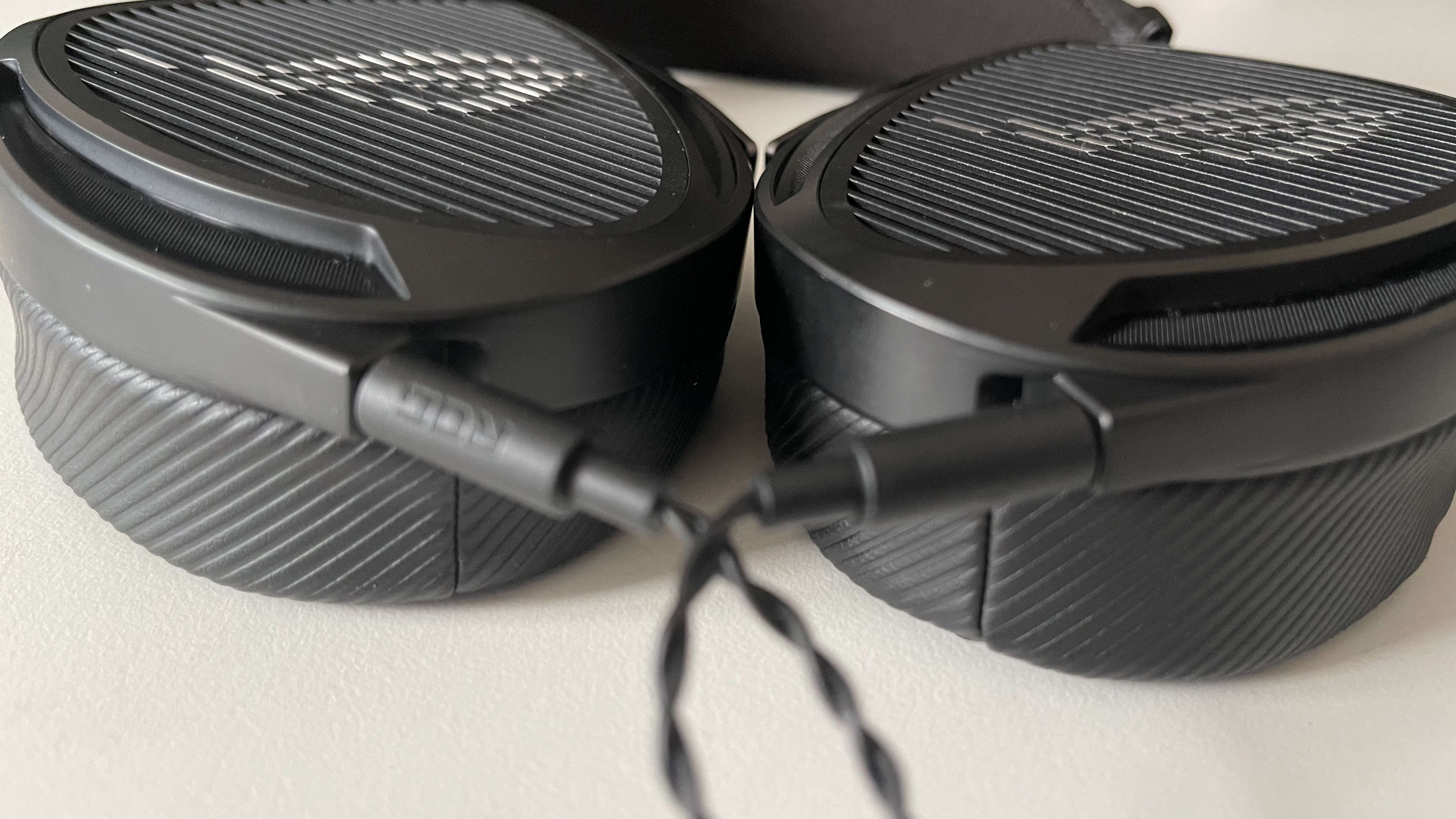
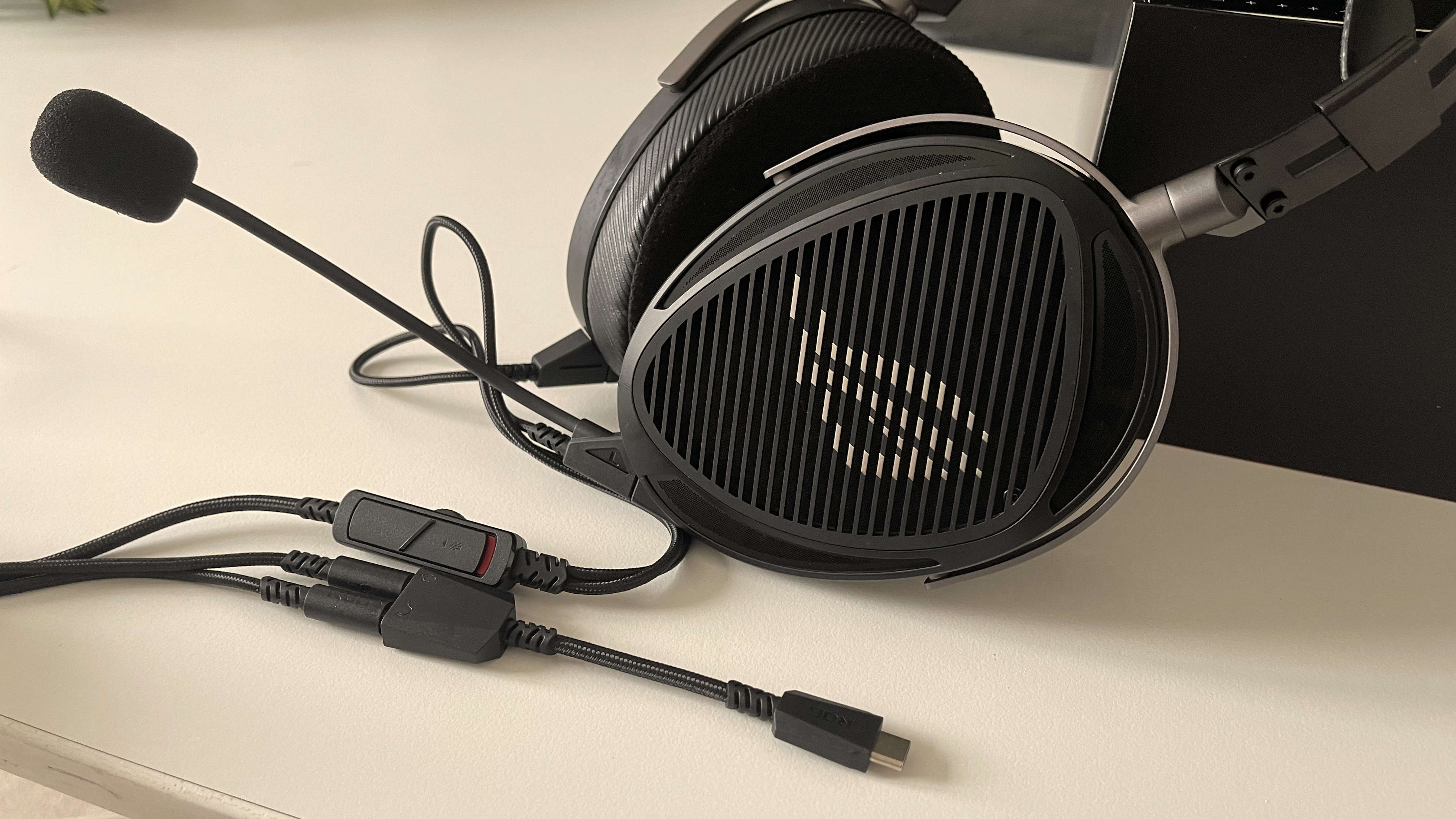
Mic performance is better than Zoom fashion cred though. ROG's opted for a super cardioid polar pattern on this detachable mic, which allows you to point precisely at what you want to be picked up. (In most cases, that'll be your mouth.) That serves as a viable alternative to the digital noise suppression that most gaming headset mics employ, effectively ducking out the keyboard thwocks from your Discord chat.
This headset exists in a very rare sub-category, and it achieves almost everything it sets out to. It reminds me of Audio-Technica's excellent wired ATH-G1, only dialled up to ridiculous. In order to really establish itself as a gaming headset, it needs more features gamers find useful like a comprehensive and ergonomic physical controls layout. But you get the feeling that isn't the point of the exercise. This is aspirational kit, for people who can afford not to worry too much about the price tag, or the value for money. It's a branding exercise that establishes ROG's chops at delivering audiophile-grade sound, albeit in partnership with Hifiman. It does that. That doesn't mean you need it. But it does mean it's a ludicrously enjoyable listening experience.
1. Best overall:
Razer BlackShark V3
2. Best budget:
Corsair HS55 Stereo
3. Best wired:
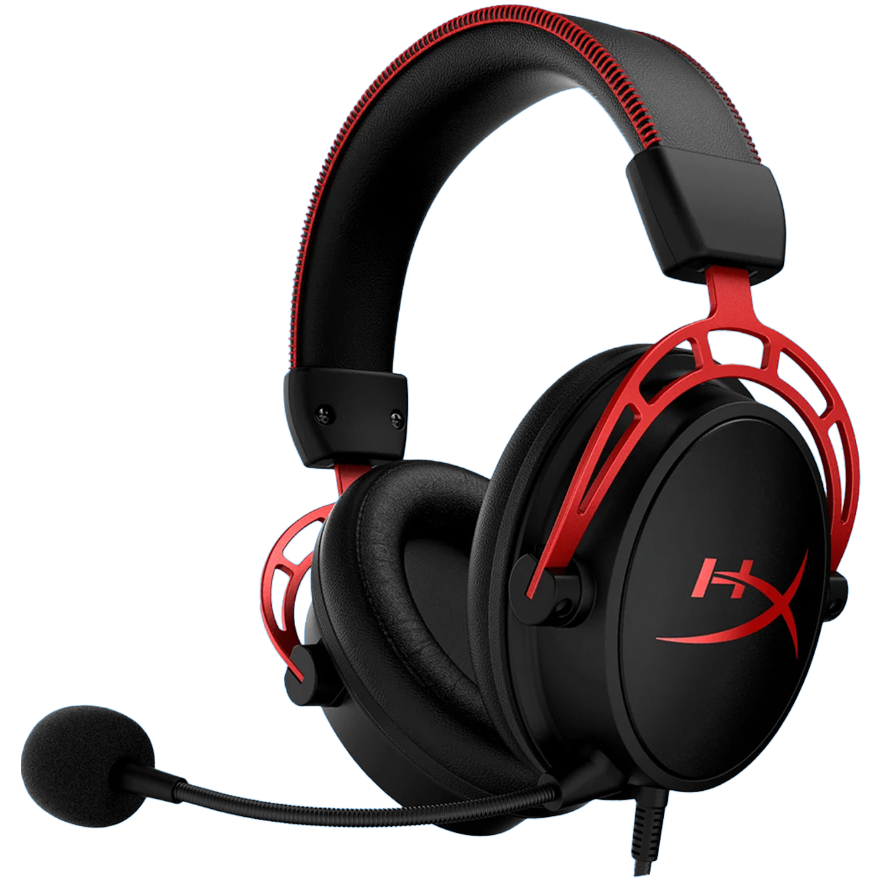
HyperX Cloud Alpha
4. Best mid-range wireless:
SteelSeries Arctis Nova 3X
5. Best audiophile:
Beyerdynamic MMX 330 Pro
6. Best wireless audiophile:
Audeze Maxwell
7. Best for streaming:
Audio-Technica ATH-M50xSTS StreamSet
8. Best noise-cancelling:
AceZone A-Spire
9. Best earbuds:
Steelseries Arctis GameBuds
More of a branding exercise than a realistic option for consumers, the Kithara demonstrates ROG can deliver incredible sound, but it's not kitted out with the refinements you'd expect of a true gaming headset.

You must confirm your public display name before commenting
Please logout and then login again, you will then be prompted to enter your display name.