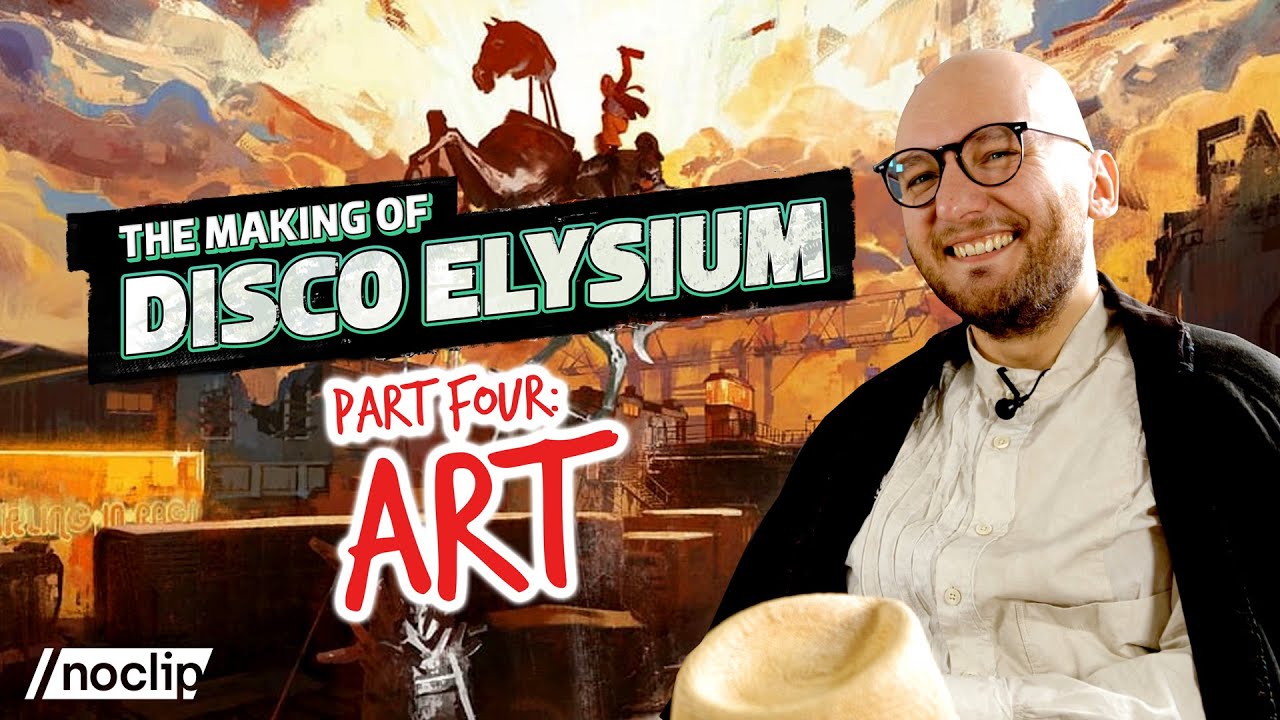
God bless Aleksander Rostov. The art director has been a highlight of Noclip's documentary about the making of Disco Elysium so far, always chiming in with the kind of insight you get with the real-life equivalent of Disco's "Actual Art Degree" thought cabinet project. The latest episode is focused entirely on Disco's art, which means Rostov gets to talk almost the entire way through, and everything he says is fascinating.
Technical artist Siim Raidma mentions the importance of one Pillars of Eternity video from back when Obsidian's CRPG was still in-development, and which explained how its graphics were rendered. Obsidian wasn't to know at the time, but this video—which has also been referenced in a previous episode of the documentary—became a ground zero for the look of Disco Elysium. Rostov and the other artists took this four-minute lesson in isometric perspective and applied everything they knew about modern art to it.
Article continues below"That's why the isometric thing basically works so well," Rostov says. "You just plug the painterly knowledge into it, and you simply make a better isometric image. Because painting is all about the study of the image and how to guide the eye and make this part of the image clean and this part of the image very textured and active and complex to pull your eye here. Then design these motion lines through the image to draw the eye of the viewer."
Rostov also shouts out Kaspar Tamsalu, responsible for concept art of locations. "Quite a few of the dialogue frames are also designed by him," Rostov says, "because he's a comic book artist by heart. When you meet Evrart Claire in the image you will see that the container frames put Evrart here and you're here, and you're lined in between these frames." You're trapped inside and highlighted by the framing, your eye guided up to where the union boss lounges in his comfortable chair—a power dynamic emphasized by the surroundings.

When critics call Disco Elysium a work of art, this is the stuff we're talking about. Unfortunately, one artist is notable by his absence. Anton Vill, who created the artwork for the thought cabinet, isn't mentioned in the episode. Vill is however the lead illustrator for the current incarnation of ZA/UM that Rostov was ousted from, and is working on Zero Parades for Dead Spies. Which sure does look like Disco Elysium.

You must confirm your public display name before commenting
Please logout and then login again, you will then be prompted to enter your display name.