Australian gamers have suffered from poor internet connections more than many other countries in the developed world. Arcane infrastructure, toxic politics that sought to improve it, and game servers located across oceans have all meant that we’ve often been at a competitive disadvantage.
Fortunately, the situation has drastically improved in recent years, and an increasing number of Australians now have access to fast, reliable internet that doesn’t cost the earth. However, the games industry hasn’t stood still, and we still face a plethora of more modern, internet-related gaming issues. So what are they, and what impact do things like connection speed, your home network setup and choice of provider have?
Congestion can start in the home
Most Australian gamers don’t live on their own. In the majority of cases, they’re sharing a home with family or friends or even random housemates—and that likewise means they’re also sharing the same internet connection. But, if everyone is engaging with social media across multiple mobile devices, streaming 4K video to large screens, performing work-related tasks across VPNs, web-conferencing and/or gaming, that shared internet connection can quickly become saturated if it's not fast enough.
While the data bottlenecks of yore may have grown to accommodate dramatically more data than they used to, the associated problems haven’t entirely disappeared — the volume of data we consume has ballooned by an even higher degree.
If multiple household members are using multiple devices at once, a slow connection will struggle to send everything through the digital pipes, producing problems for gamers ranging from high and/or fluctuating pings and latency, total connection drop-outs and very slow game downloads.
When considering the latter, even an update to a AAA game can be a 50GB download nowadays, so this is one area where your internet connection speed definitely matters. The following table shows how long you’ll be waiting for a file of that size to download across various NBN speed tiers – and these are a best-case scenario, without anyone sharing the connection.
Speed tier | Top speed (Mbps) | Approx download time |
|---|---|---|
NBN 50 | 50 Mbps | 8 hours |
NBN 100 | 100 Mbps | 4 hours |
NBN 500 | 500 Mbps | 48 minutes |
NBN 750 | 750 Mbps | 32 minutes |
NBN 1000 | 1,000 Mbps | 24 minutes |
NBN 2000 | 2,000 Mbps | 12 minutes |
Based purely on the above, there’s a strong case to be made that Australian gamers will want to be on a high-speed NBN plan — ideally, one that’s at least 500 Mbps or faster.
Provider matters
So where do you start when it comes to finding a gamer-ready NBN plan?
The first port of call when choosing an internet plan for gaming is, of course, the provider. While Australia’s NBN Co handles the country’s physical infrastructure, you need to choose a retail service provider (RSP) for your connection.
Then you need to figure out what speed tier best suits your situation, and this should accommodate headroom for your entire household’s peak internet usage to ensure that no gaming data gets affected. Essentially, the faster, the better — but as mentioned above, we’d start with a minimum of NBN 500, which can be up to 10 times faster when downloading large files compared to NBN 50. Since NBN Co’s speed upgrades in September, NBN 50 is realistically the next step down, as most providers now charge the exact same price for NBN 100 as they do for NBN 500.
With 5G adoption growing fast, some internet users are swapping NBN for a dedicated 5G home internet plan — or simply using their phone’s hotspot for all their internet needs. Gamers should note that while latencies across 5G networks are significantly lower and more stable than you’ll get from older 4G networks, they can’t reliably match those of a wired NBN connection (even when connecting over Wi-Fi in the home), so you can be at a disadvantage when playing anything online.
Another factor that impacts online gaming is traffic routing. The better providers negotiate partnerships and take specific steps to optimise their network’s connections to major gaming servers and services. This is critical for both maximising download speeds and minimising ping times. For PC gamers, the important ones include distribution platforms like Steam or Microsoft (Xbox services and PC Game Pass), servers for publishers of major online franchises — such as Activision/Blizzard (Call of Duty), Epic (Fortnite), EA (Battlefield) and Ubisoft — and the content distribution networks (CDNs) that many gaming services use such as Akamai, AWS, Azure and Cloudflare.
Another important techie term for gamers to familiarise themselves with is ‘CGNAT’, which is a technology that many internet providers use to share a single IP address across multiple customer connections. Unfortunately, this can often prevent gamers from being able to host matches on their own devices, or from manually optimising online game connections using router tools like port forwarding. So, before deciding on a provider for gaming, it’s critical to check that the one you choose lets you opt out of CGNAT.

Next-level bottlenecks
Australia’s history of slow internet has meant that, in previous years, Wi-Fi modem-routers have often been a secondary consideration when it comes to maximising your internet speed. On paper, even years-old devices can offer dramatically faster Wi-Fi speeds than what most Australians’ internet connections could deliver, but with the recent NBN Co speed upgrades, the situation is no longer so simple.
The hardware inside older Wi-Fi routers can quickly become overwhelmed in a modern multi-device, multi-user environment, whether people are using large amounts of data or not.
On top of that, people’s expectations for fast, stable Wi-Fi coverage within our homes have risen to a level of intolerance for anything less… and black spots are wholly unacceptable.
There’s even the increasing issue of more gamers renting their homes, which can rule out laying network cables to work around Wi-Fi-related performance shortcomings.
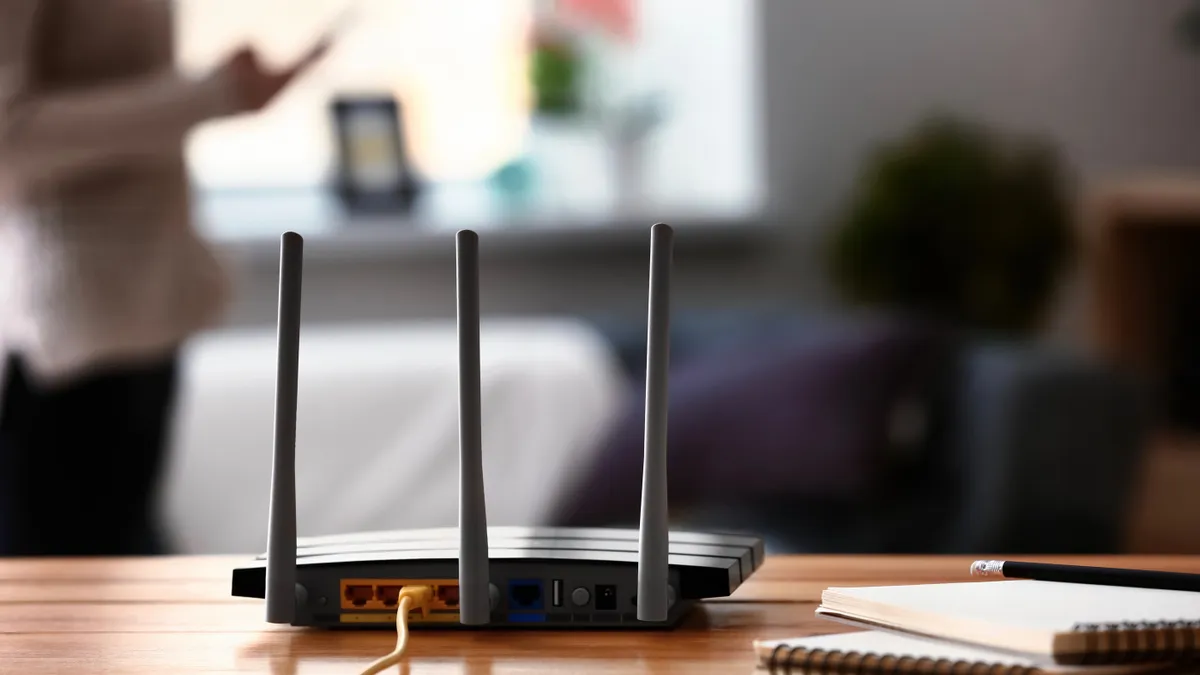
This is where the recent launch of Wi-Fi 7 devices has been something of a revelation. Not only is this latest standard capable of delivering Wi-Fi speeds that are faster than most wired connections, but its wireless latencies are comparable. And, thanks to mesh Wi-Fi systems becoming more popular, it’s become much easier to extend your in-home wireless coverage to fill all nooks and crannies. Wi-Fi 7 devices also typically come with boosted processing power to not only further enhance data speed, throughput and efficiency, but also improve the efficacy of features like Quality of Service (QoS), which can prioritise gaming network traffic to help ensure your online experiences have minimal lag.
If you’re looking to upgrade your router to a Wi-Fi 7 model, some internet providers now offer devices based on this latest spec, sometimes even including the option to expand these to mesh setups by purchasing extra nodes. Superloop is a good example: when you sign up for one of its high-speed NBN plans, new subscribers have the option of a free Amazon Eero 7 (plans up to 1 Gbps) or Eero Pro 7 (2 Gbps plans) mesh router at no cost—the only caveat is that you’ll need to stay signed up for 36 months.
As we hope it’s been made clear, there’s a lot to think about when choosing an NBN provider for PC gaming (or gaming generally) in 2025. The situation has improved drastically in recent months, but there are still some traps to be aware of and tricks to keep in mind to help guide your final decision.