Our Verdict
Reanimal doesn't meaningfully develop Tarsier's approach to gameplay in the Little Nightmares games, but it's a grim sight to behold, and a worthwhile horror adventure.
PC Gamer's got your back Our experienced team dedicates many hours to every review, to really get to the heart of what matters most to you. Find out more about how we evaluate games and hardware.
What is it? Filmic survival horror by the creators of Little Nightmares
Release date February 13, 2026
Expect to pay $40
Developer Tarsier Studios
Publisher THQ Nordic
Reviewed on RTX 3060 (laptop), Ryzen 5 5600H, 16GB RAM
Steam Deck TBC
Link Steam
After eight hours spent in the near intolerably dark world of Reanimal, I'm still not confident I know what it's about, or why it's called Reanimal. The newest game from Tarsier Studios shares a lot in common with the Little Nightmares series it created, but this is a more disturbing and dismal outing, having shaved away most of the subtle, blackened whimsy found in its previous games. It's an often stunning horror game that understands the importance of ambiguity and mystery in a genre that usually opts for the easy resort of gore.
Reanimal's central protagonists are a brother and sister duo. When playing alone I controlled the brother, but in cooperative play—both splitscreen and online—one player controls the sister. Neither are named, and their relationship is vague and sometimes mysteriously combative. I meet them on a foggy ocean, commandeering a dinghy towards the towering cliff faces of a wartorn island. We're here to retrieve three friends from the maw of annihilation. The circumstances under which we lost these friends are never explained, nor is it spelled out why this island is so utterly destroyed, and stalked by gargantuan animal mutants.
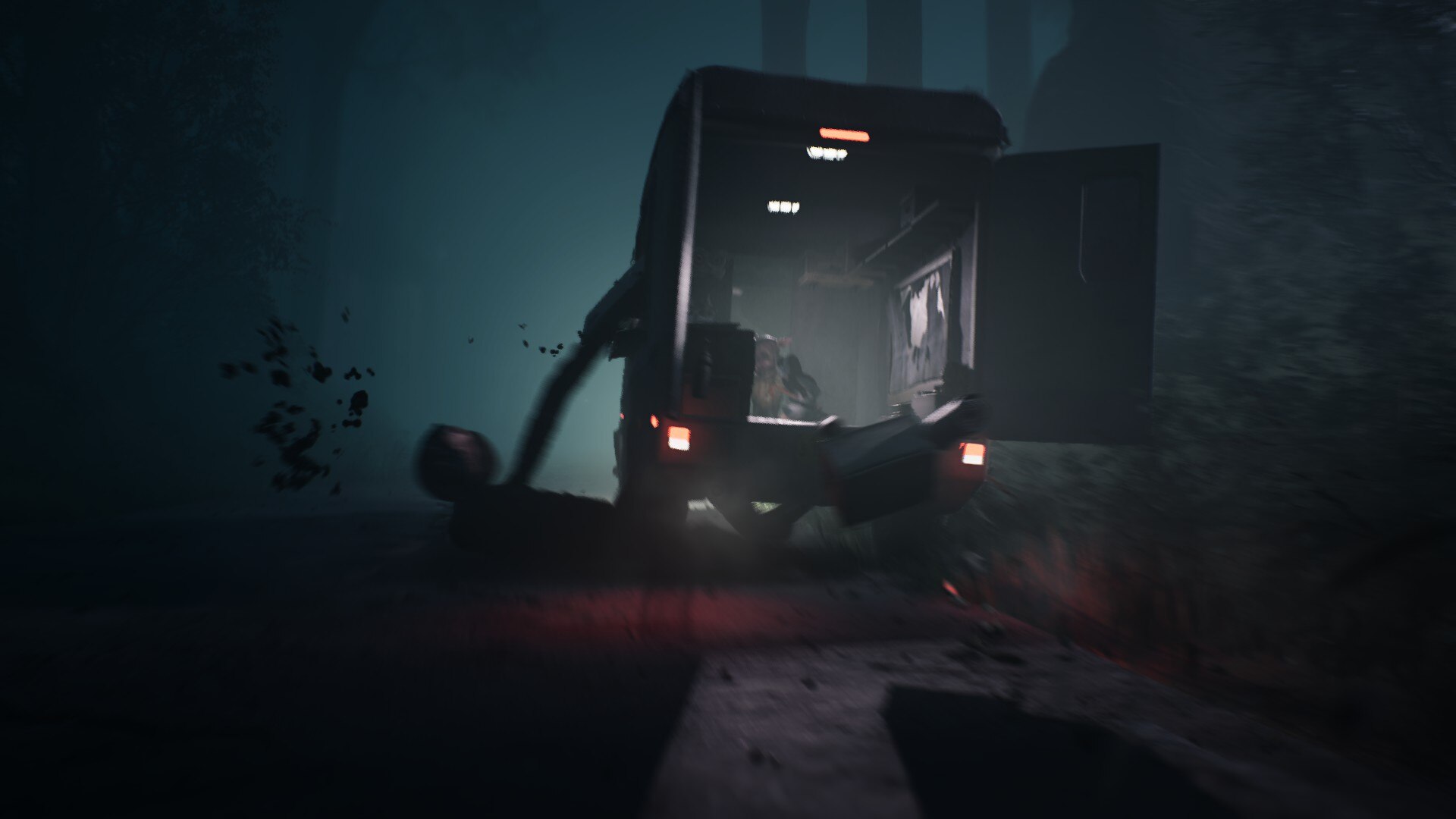
What follows is a horror game that sticks to the Little Nightmares format of creeping around dank locations, sometimes stealthing around giant monstrous threats, and occasionally—usually as a climax—running from a pursuing colossus.
Article continues below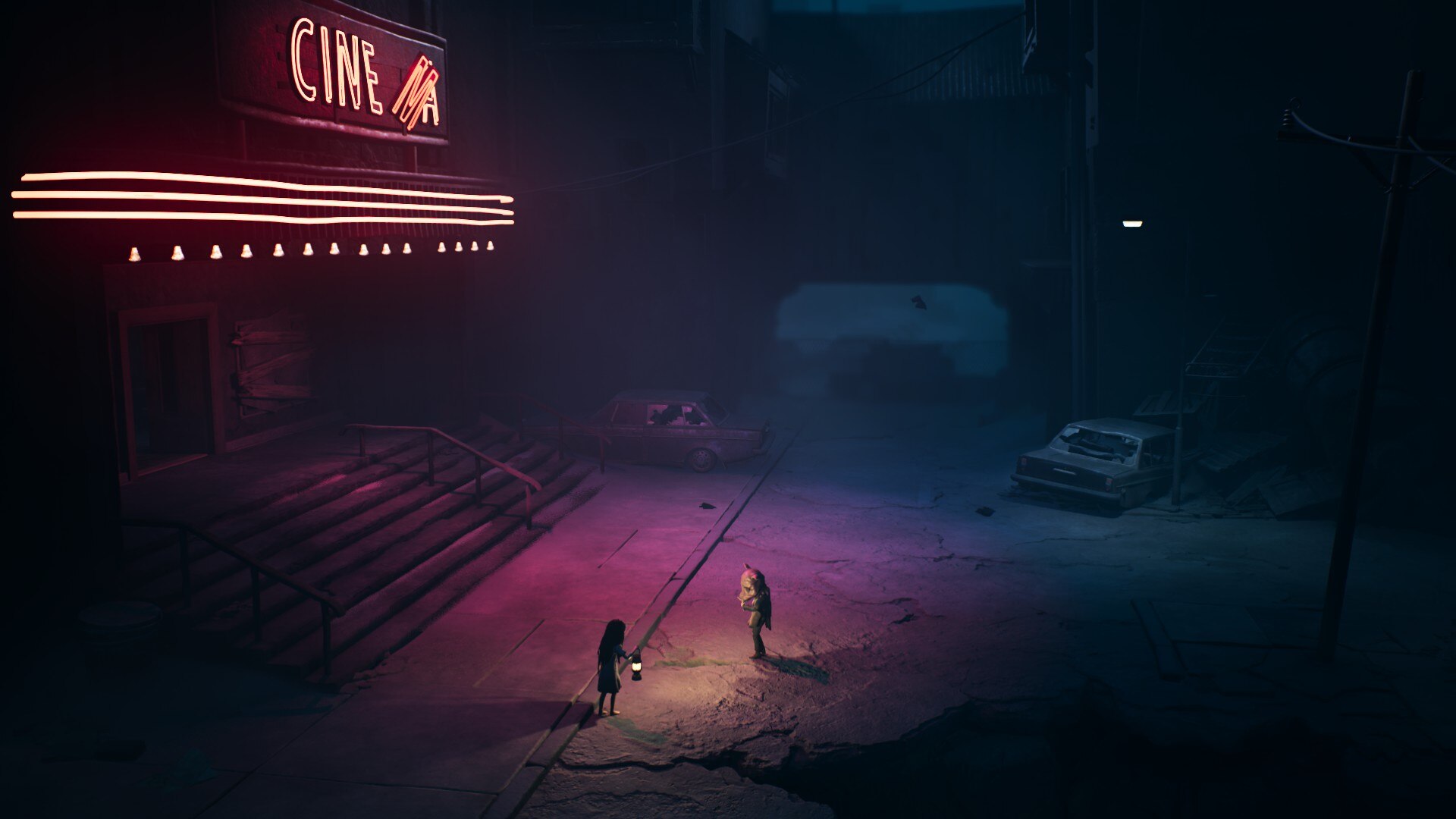
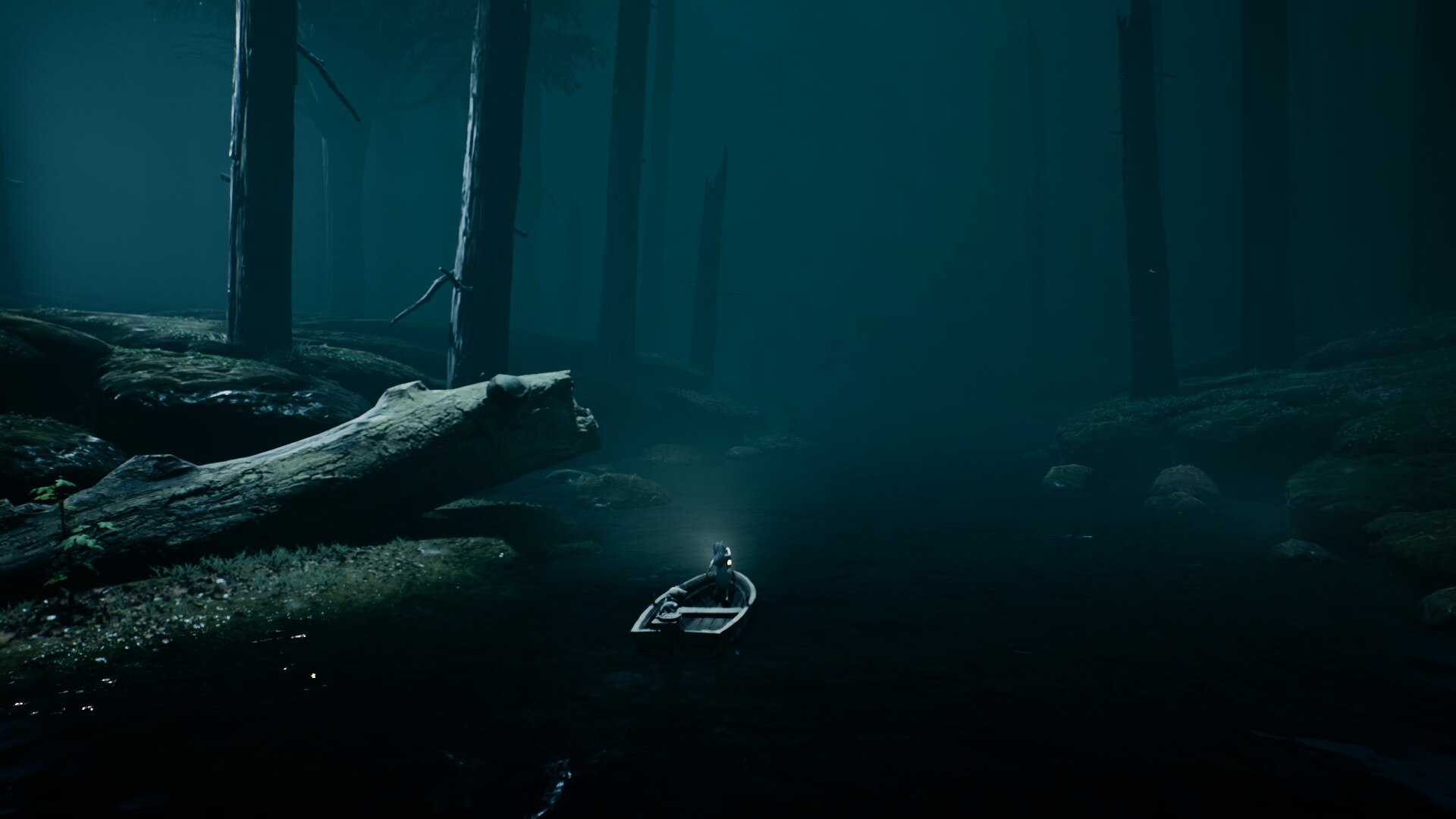
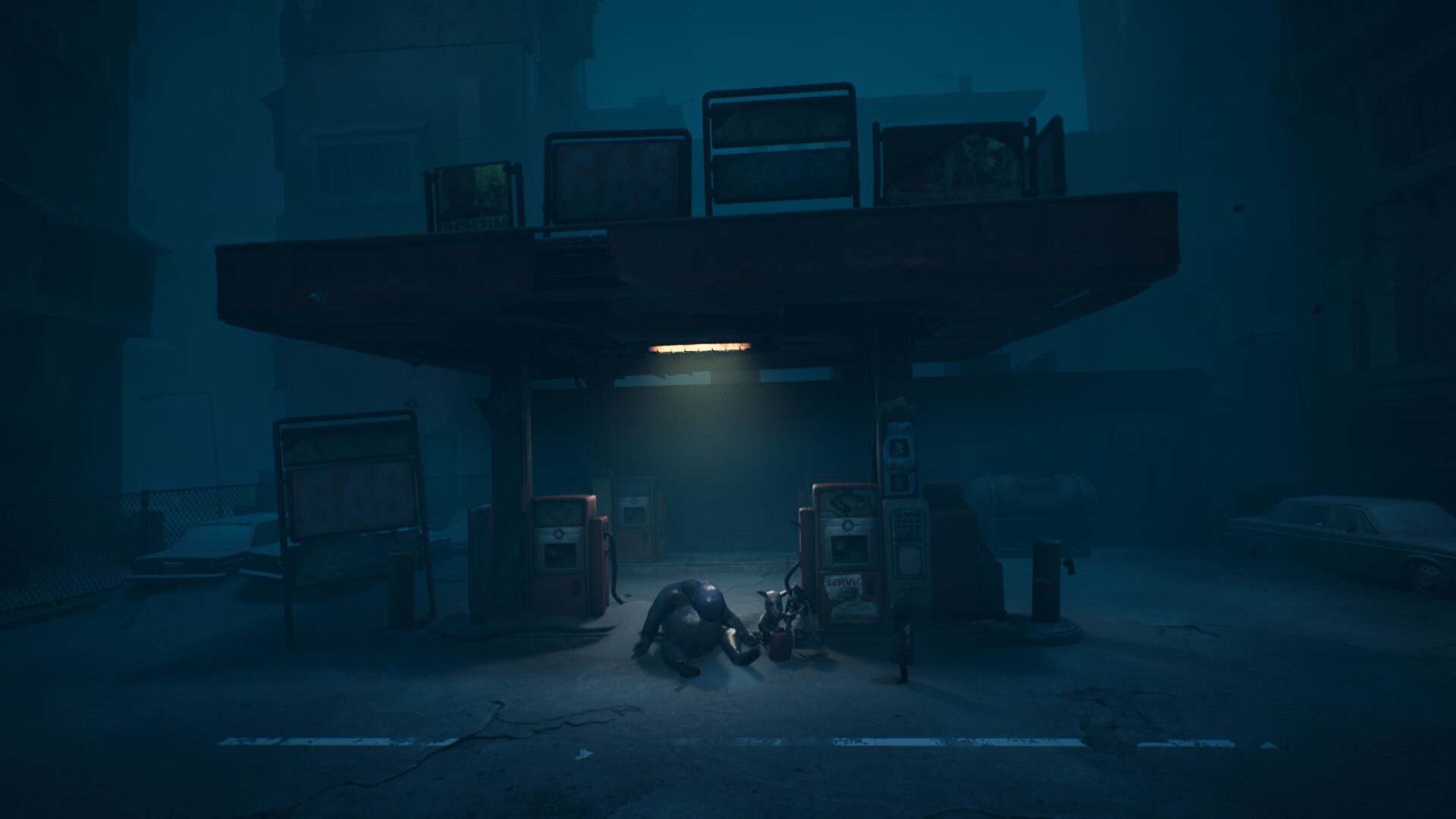
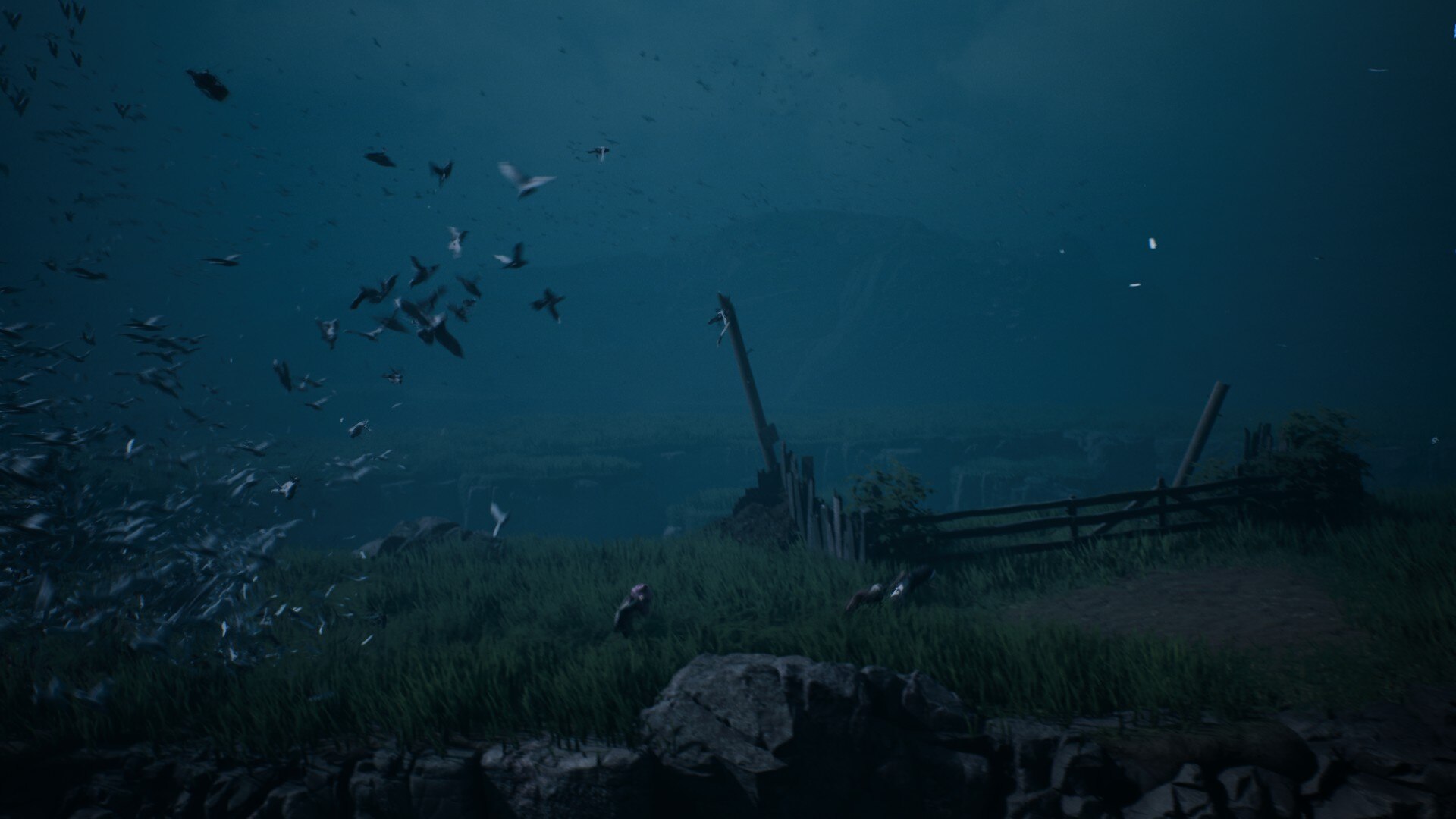
Except in Reanimal, Tarsier opts for a fixed 3D camera perspective that is closer to old survival horror than Little Nightmares, which usually plays out from a sidelong perspective. This doesn't make a significant difference to how Reanimal plays, but it provides Tarsier with the tools to capture the doomy scale of the island, whose grimy, near greyscale expanse takes on a painterly aspect as a result.
This is a seriously beautiful game, with its strange commingling of domestic, military, pastoral and apocalyptic imagery. A significant amount of Reanimal takes place in benighted, panoramic exteriors whose traversal limits are marked by impenetrable darkness or unfathomable chasm. Sometimes we're even allowed to explore, albeit in a restricted way, and often on the aforementioned dinghy, which is sometimes equipped with harpoons.
Creature feature
Tarsier is far more interested in the perfect shot or the most arresting point of view than it is in making its game feel better to handle, which is a problem that occasionally rears its head in the dinghy sections, where full control over the camera feels important but isn't granted. But for the most part, Reanimal follows the blueprint of Little Nightmares: the puzzles are rarely less than super obvious, while everything else—stealth, light combat and chase scenes—feels almost perfunctory, secondary to imagery and atmosphere.
The island of Reanimal flows illogically from flooded towns, to industrial backwaters, to sunkissed meadows
Even the pacing sticks closely to the dictates formed by Little Nightmares: there's a lot of walking through tight areas, lots of balancing across perilous beams, and at least one instance where I had to find a crank to turn a wheel. Some puzzles rely on collaboration, but they don't demand cleverness, nor are they cleverly designed. The foreshadowing of every new gargantuan foe plays out the same way too: you get to see a little bit at a time, before finally you get to see a lot, usually during chase sequences that lean heavily into trial-and-error.
Sometimes I wondered why Reanimal is a game rather than a film, especially as Tarsier Studios has brilliantly evolved its cinematic knack here, but hasn't meaningfully improved its approach to game design. But to call it style over substance would be to imply that this isn't fun to play, and, well, it mostly is: especially with a friend. I genuinely wanted to see this sickly thing through to the end, not because I wanted to know the fate of its protagonists, or what precipitated the failure of their world, but because it's consistently a genuinely beautifully disturbing thing to behold.
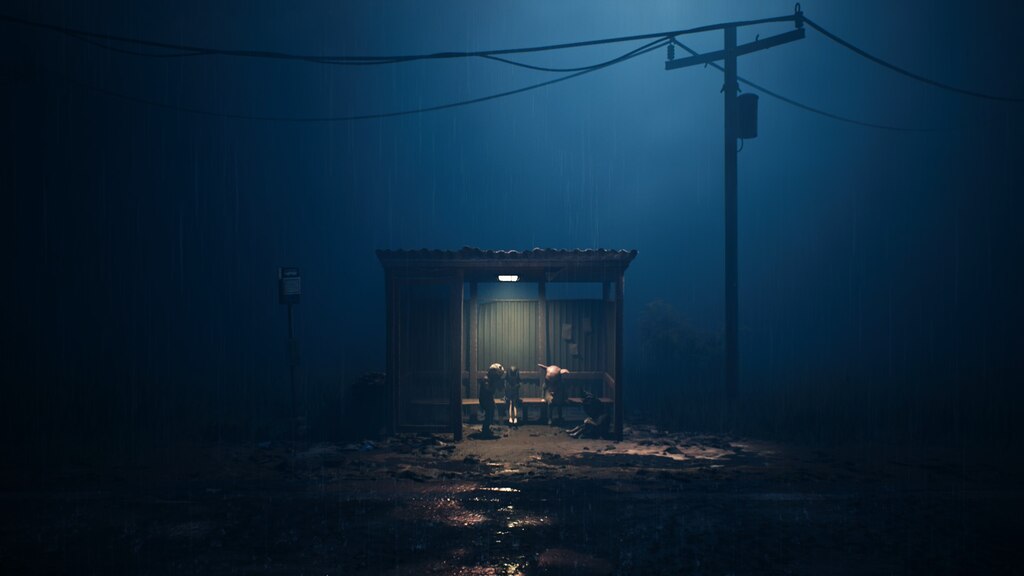
It's remarkable just how resistant Tarsier is to developing its approach to horror gameplay though. But Reanimal is, at least, more sophisticated on the level of storytelling. It's a bleakly impressionistic game that knows loredumps, moralistic didacticism, and barrels of ketchup are actually antithetical to genuinely disturbing horror.
More specifically, Reanimal takes Tarsier's familiar "little people in an oversized hostile world" theme and extends it beyond implied domestic abuse and childhood trauma. The island of Reanimal flows illogically from flooded towns, to industrial backwaters, to sunkissed meadows, but all feel similarly tainted by a sense of having borne witness to unthinkable atrocity. The world of Reanimal is likewise dipped in a terminal madness. When our protagonists speak—and they do, albeit sparingly—their voices are deadpan, expressionless, and exhausted, inured to the chaos around them.
"Do you know why we're here?" Asks one of Reanimal's tiny people at around the halfway point. The answer, by that point, is not going to be useful: by that point I've acclimatised to the tone of the game. "No idea," is the barely enunciated answer. It's possible that Reanimal has no point, and that it's just a new outlet for Tarsier's sickly set pieces and tense pursuits. It's a much bleaker affair than the Little Nightmare games, and better overall, but it'd be nice if it was as complex in the hands as it is conceptually.
Reanimal doesn't meaningfully develop Tarsier's approach to gameplay in the Little Nightmares games, but it's a grim sight to behold, and a worthwhile horror adventure.

You must confirm your public display name before commenting
Please logout and then login again, you will then be prompted to enter your display name.