I used to play a lot of co-operative board games like Arkham Horror, Pandemic, and Space Alert, where it's you and your friends against the board. They're great, because instead of playing a board game for an hour or more and then having your friends be cross at you for thrashing them, the board wins and you all get to feel equally bad instead.
The board would usually win because we don't allow backseat driving, or quarterbacking—that's when the player with the most experience takes over for newbies, basically puppeteering them instead of letting them make their own mistakes. It's always a problem with co-op games, which can be super easy if you play at maximum efficiency but super hard if you just muddle through and react to situations as they happen.
It starts easy. As in a normal game of Magic, the players bring out land—the broccoli-pizza forest card was an instant favorite—and tap it to play cards representing a growing army of creatures. After one peaceful turn you flip the top boss of the boss deck and find out if you're up against Bebop or Leatherhead or whoever, each with their own debuff or special ability, then flip some event cards (the amount differs depending how many players you have). Those event cards might debuff players or make them discard, or they might bring out a Foot Clan ninja who will defend the boss on player turns.
The Turtles share a life total you track on shell-shaped tokens with pizza-slice counters, and the bosses have a life total as well. Deplete that by getting past the Foot Clan to defeat one boss and the next boss comes out—but this time you flip two of them, and then after that three at once. It's a natural ramping-up of difficulty, a videogame-feeling way of making subsequent levels harder. You thought it was easy fighting Rocksteady on his own? Here's Shredder and Krang.
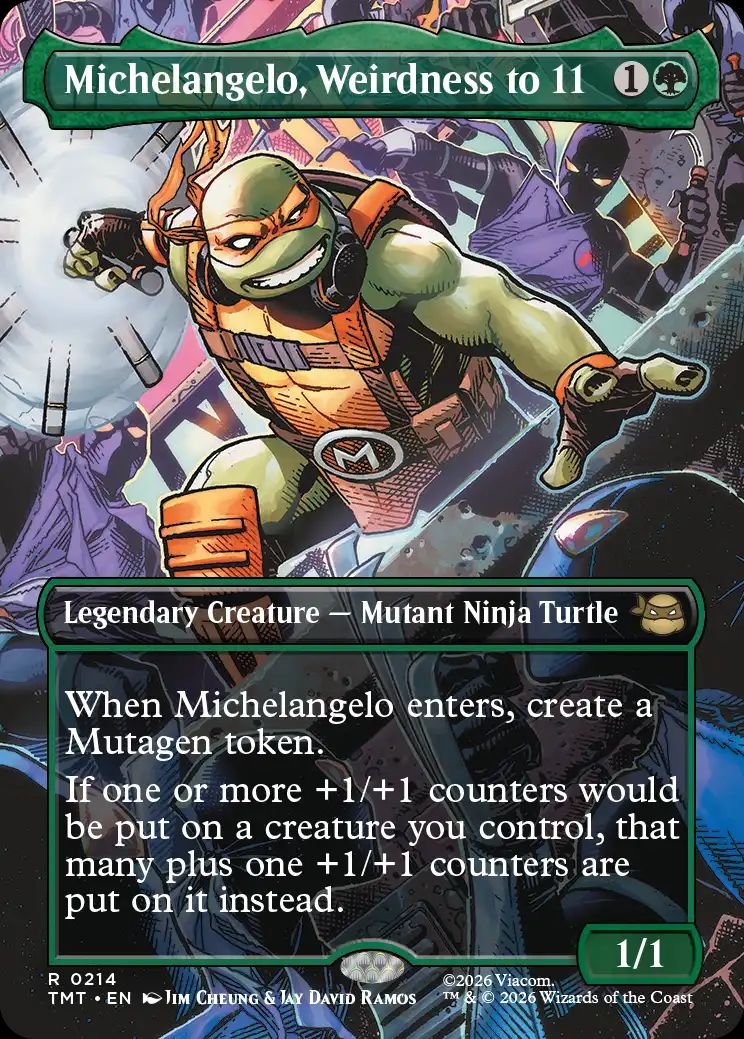
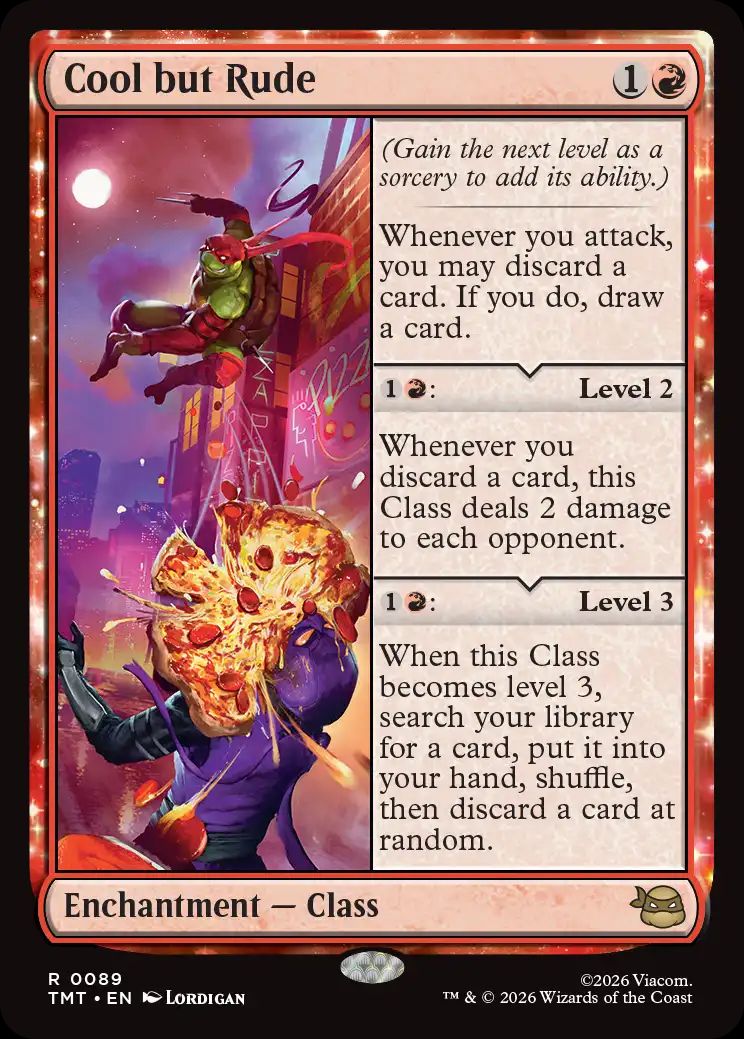
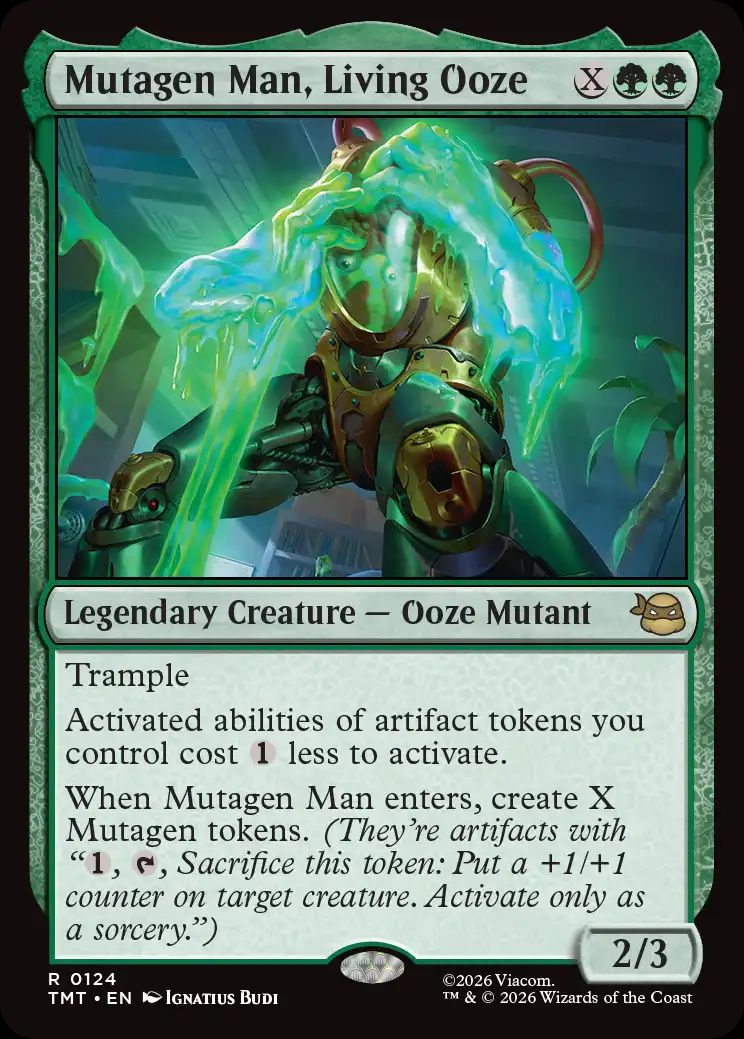
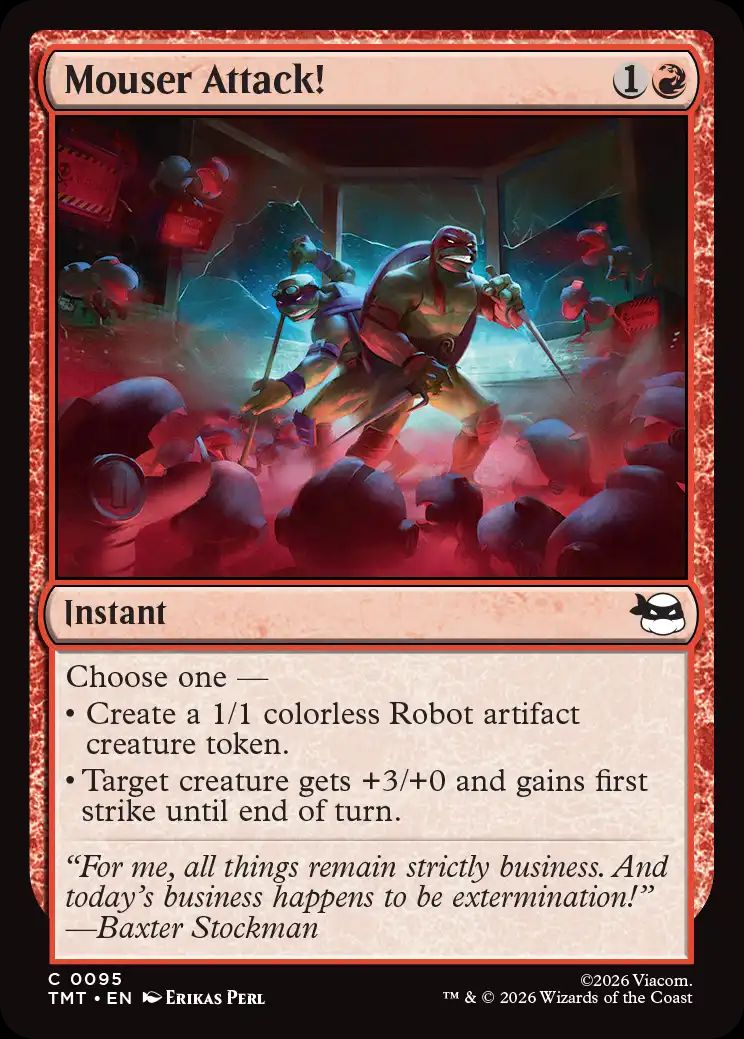
Which is not to say Turtle Team-Up is particularly difficult. We were hit hard by an event that caused damage for each creature we had in play just after I'd brought out a small army of robotic mousers, but we bounced back by working together.
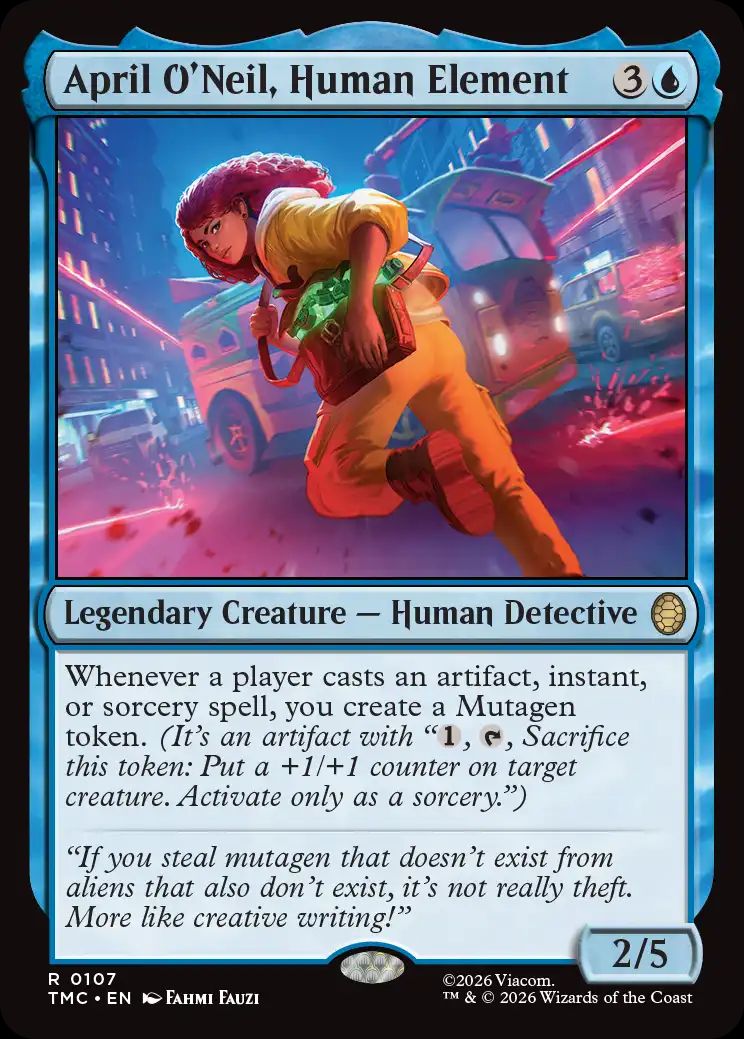
April O'Neil, Human Element was our MVP. She's part of Michelangelo's deck, which is heavy on using Mutagen to power up creatures. April gives out a free Mutagen token when any player brings out an artifact, instant, or sorcery card, and then those Mutagens can be spent on +1/+1 counters to power up creatures. Each one costs mana to play, which I contributed to by playing Casey & Raph, Hotheads to give Mikey a couple of extra points.
In return, other players helped me by paying the four mana it cost to double the power of Casey Jones, Asphalt Hooligan. While calculating his combat damage, I forgot to factor in his double-strike ability until someone else pointed it out. The obscene amount of damage he caused ended up obliterating our final round of bosses, a beautiful victory for teamwork.
Unlike other co-op games, Turtle Team-Up seems easy to win with only a little bit of backseat driving, but the real challenge is in finding out how fast you can win. The rule booklet has a series of titles you earn by clearing it in fewer turns, but it's clearly pitched at first-timers and younger players who'd rather not lose over and over until you figure out the best way to win at Arkham Horror and then bully your friends into playing correctly.
Though I'm not planning to add cards from this TMNT set to my regular decks, and have forgotten half the characters from the show and comics (the Mighty Mutanimals I recognized, the Neutrinos not so much), the Turtle Team-Up box seems particularly useful as a parents-and-kids experience—though one that's also suited for nostalgic adults who are two pints deep, he says from practical experience.
Magic: The Gathering's Teenage Mutant Ninja Turtles set will be on tabletops from March 6, and is available in Arena now.

You must confirm your public display name before commenting
Please logout and then login again, you will then be prompted to enter your display name.