

Stellaris dev explains how planets work
Keep up to date with the most important stories and the best deals, as picked by the PC Gamer team.
You are now subscribed
Your newsletter sign-up was successful
Want to add more newsletters?
Every Friday
GamesRadar+
Your weekly update on everything you could ever want to know about the games you already love, games we know you're going to love in the near future, and tales from the communities that surround them.
Every Thursday
GTA 6 O'clock
Our special GTA 6 newsletter, with breaking news, insider info, and rumor analysis from the award-winning GTA 6 O'clock experts.
Every Friday
Knowledge
From the creators of Edge: A weekly videogame industry newsletter with analysis from expert writers, guidance from professionals, and insight into what's on the horizon.
Every Thursday
The Setup
Hardware nerds unite, sign up to our free tech newsletter for a weekly digest of the hottest new tech, the latest gadgets on the test bench, and much more.
Every Wednesday
Switch 2 Spotlight
Sign up to our new Switch 2 newsletter, where we bring you the latest talking points on Nintendo's new console each week, bring you up to date on the news, and recommend what games to play.
Every Saturday
The Watchlist
Subscribe for a weekly digest of the movie and TV news that matters, direct to your inbox. From first-look trailers, interviews, reviews and explainers, we've got you covered.
Once a month
SFX
Get sneak previews, exclusive competitions and details of special events each month!
Paradox only started its series of Stellaris dev diaries a few weeks ago, and already it's on number 9. This one expands on the galaxy generation explanation from the third diary, getting down to the level of individual planets and their makeup.
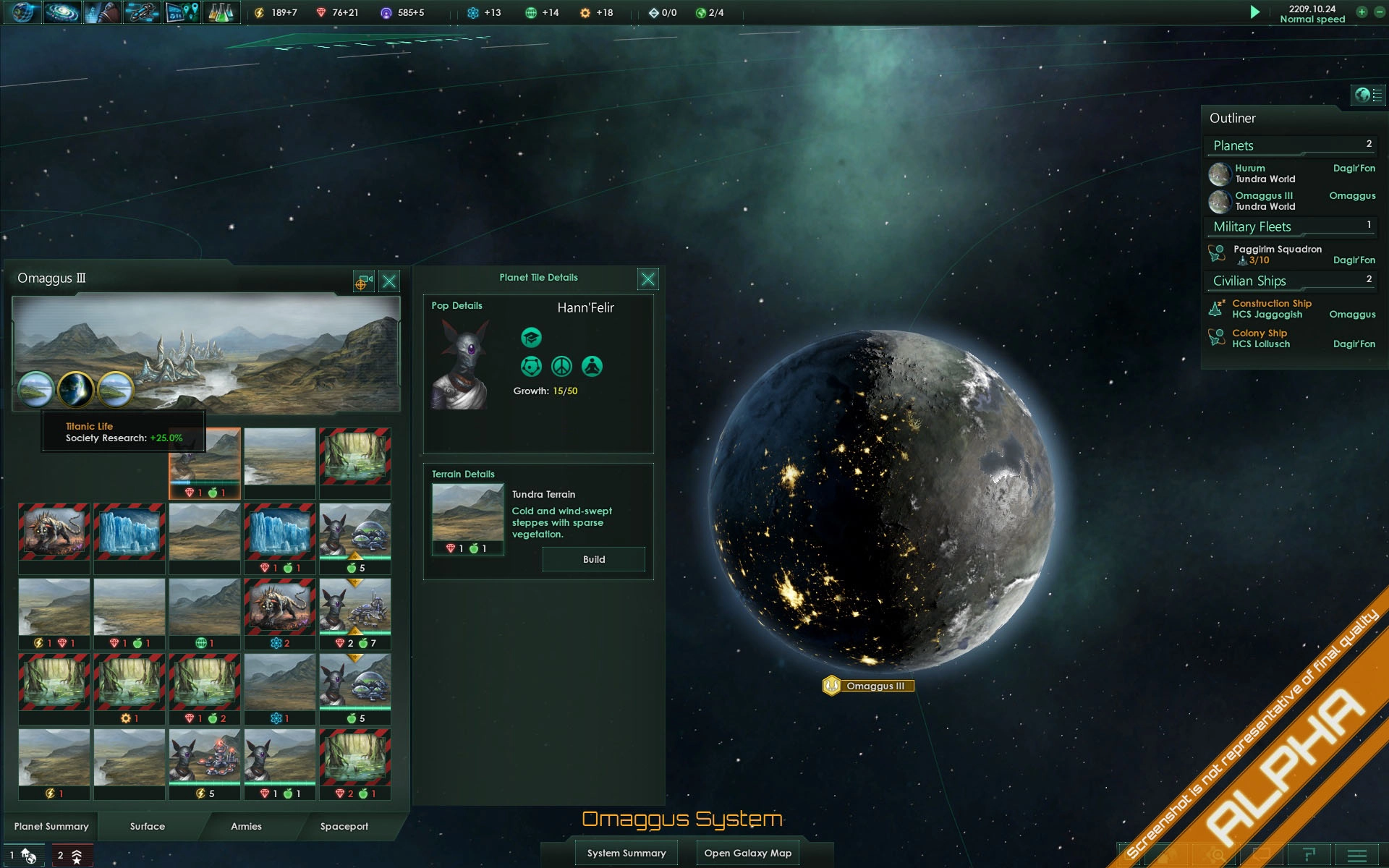
First up, each habitable planet is made up of tiles. You can clear blocked tiles of mountains to create more space, and work a tile by placing a Pop (population unit). You'll want to use some of these tiles to place buildings, and take advantage of adjacency bonuses to maximise efficiency.
Planets are differentiated by modifiers which add flavour and stat bonuses. A planet can have "particularly large lifeforms", or "Titanic Life", which adds a bonus to society research.
Another way to differentiate planets is their resources, which are generated as deposits and spawn on planets depending on their type and modifiers. You obviously have to travel to more than one planet to collect all of the resources you'll need, and some are more likely to be found in certain parts of the galaxy (e.g. inside a nebula).
You can still find resources on uninhabitable planets via their orbital resource slot that allows you to place a Mining Station or Research station in orbit around the planet. The devs promise to tell us more about rare resources (and the Spaceport) in the next diary.
Keep up to date with the most important stories and the best deals, as picked by the PC Gamer team.

