You are now subscribed
Your newsletter sign-up was successful
Want to add more newsletters?

Every Friday
GamesRadar+
Your weekly update on everything you could ever want to know about the games you already love, games we know you're going to love in the near future, and tales from the communities that surround them.

Every Thursday
GTA 6 O'clock
Our special GTA 6 newsletter, with breaking news, insider info, and rumor analysis from the award-winning GTA 6 O'clock experts.

Every Friday
Knowledge
From the creators of Edge: A weekly videogame industry newsletter with analysis from expert writers, guidance from professionals, and insight into what's on the horizon.

Every Thursday
The Setup
Hardware nerds unite, sign up to our free tech newsletter for a weekly digest of the hottest new tech, the latest gadgets on the test bench, and much more.

Every Wednesday
Switch 2 Spotlight
Sign up to our new Switch 2 newsletter, where we bring you the latest talking points on Nintendo's new console each week, bring you up to date on the news, and recommend what games to play.

Every Saturday
The Watchlist
Subscribe for a weekly digest of the movie and TV news that matters, direct to your inbox. From first-look trailers, interviews, reviews and explainers, we've got you covered.

Once a month
SFX
Get sneak previews, exclusive competitions and details of special events each month!
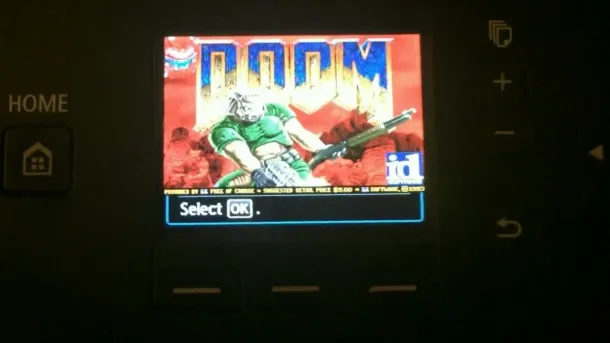
Sometimes, the only way to attract attention to dire warnings about weaknesses in a particular system is to exploit them in a way that can't be ignored. That's what drove Michael Jordon of Context Information Security to make Doom run on a Canon Pixma printer; not because it's cool (although it clearly is) but to demonstrate the inherent insecurities in Canon's wireless printers.
"While you can trigger a firmware update you can also change the web proxy settings and the DNS server. If you can change these then you can redirect where the printer goes to check for a new firmware," Jordon wrote . "So what protection does Canon use to prevent a malicious person from providing a malicious firmware? In a nutshell - nothing, there is no signing (the correct way to do it) but it does have very weak encryption."
Things get awfully technical at that point but the condensed version is that a determined individual could create a custom firmware and update a printer to make it do pretty much anything within the capabilities of the hardware. "For demonstration purposes I decided to get Doom running on the printer," he wrote. "It was not straightforward due to it needing all the operating system dependences to be implemented in Arm without access to a debugger, or even multiplication or division." But it was doable.
"If you can run Doom on a printer, you can do a lot more nasty things," Jordon told the Guardian . "In a corporate environment, it would be a good place to be. Who suspects printers?"
Canon said in a statement that it intends to issue a fix "as quickly as is feasible."


