

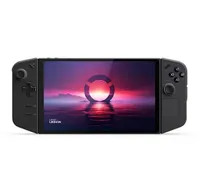
Save $50 on any Lenovo Legion Go and get yourself a mighty handheld PC
Detach the controllers, sit back, and enjoy the pocket powerhouse.
Keep up to date with the most important stories and the best deals, as picked by the PC Gamer team.
You are now subscribed
Your newsletter sign-up was successful
Want to add more newsletters?
Every Friday
GamesRadar+
Your weekly update on everything you could ever want to know about the games you already love, games we know you're going to love in the near future, and tales from the communities that surround them.
Every Thursday
GTA 6 O'clock
Our special GTA 6 newsletter, with breaking news, insider info, and rumor analysis from the award-winning GTA 6 O'clock experts.
Every Friday
Knowledge
From the creators of Edge: A weekly videogame industry newsletter with analysis from expert writers, guidance from professionals, and insight into what's on the horizon.
Every Thursday
The Setup
Hardware nerds unite, sign up to our free tech newsletter for a weekly digest of the hottest new tech, the latest gadgets on the test bench, and much more.
Every Wednesday
Switch 2 Spotlight
Sign up to our new Switch 2 newsletter, where we bring you the latest talking points on Nintendo's new console each week, bring you up to date on the news, and recommend what games to play.
Every Saturday
The Watchlist
Subscribe for a weekly digest of the movie and TV news that matters, direct to your inbox. From first-look trailers, interviews, reviews and explainers, we've got you covered.
Once a month
SFX
Get sneak previews, exclusive competitions and details of special events each month!
Lenovo Legion Go | 8.8-inch 1600p 144Hz | Ryzen Z1 Extreme | 16GB LPDDR5x-7500 | 512GB PCIe 4.0 NVMe SSD | $699.99 $649.99 at Lenovo (save $50)
Lenovo's handheld PC is as powerful as they come and boasts a luscious, big screen. The detachable controllers are really sweet and one can even double as a mouse, albeit a very basic one. It is huge, though, so not the most portable of devices and games with fancy graphics will struggle with native resolution.
Price check: Best Buy $649.99 | Amazon $649.99 | Newegg $699.99 (1TB)
It wasn't very long ago that handheld PCs were hulking devices, sporting processors far too slow for gaming. That's definitely not the case anymore and the best handheld gaming PCs are fantastic little machines. Lenovo's first entry into this market is a tad late to the party but it's come in with all guns blazing.
The first thing you'll notice is the screen: At 8.8 inches in size, it's one of the biggest out there and the 1600p 144Hz panel is gorgeous to look at and use. It does make the Legion Go somewhat of a bulky affair and it's certainly not as portable as an Ayaneo Air 1S or even the Valve Steam Deck.
But this is where the Legion Go plays its ace card. Detach the controllers, set the chassis on its integrated stand, and then sit back to enjoy a great gaming experience. The right hand one can even work as a basic mouse, though you'll be better off using a proper one.
Lenovo packed a lot of top-spec hardware inside, with AMD's Ryzen Z1 Extreme handling all of the processing duties, and 16GB of fast LPDDR5x-7500 memory to back it up. The base models comes with a 512GB PCIe 4.0 SSD but you can get a 1TB version for an extra $50.
The Legion Go and most other handheld PCs are best suited to indie-style games or ones that just aren't heavy on the graphics. The GPU inside the Z1 Extreme is an RDNA 3-powered Radeon 780M, with 768 shaders.
That's not powerful enough for AAA games at 1600p, even at Low settings, as Jacob discovered in his Legion Go review. It's just too many pixels for the little Radeon to handle, so just knock it down to 1080p, enable FSR upscaling if it's supported, and you'll be fine.
These hardware specs would typically command a very high price but Lenovo is pitched it just right, at a cent under $700 for the 512GB model. So with the current $50 on both models, you're getting a seriously good machine for a really nice price.

Keep up to date with the most important stories and the best deals, as picked by the PC Gamer team.

Nick, gaming, and computers all first met in the early 1980s. After leaving university, he became a physics and IT teacher and started writing about tech in the late 1990s. That resulted in him working with MadOnion to write the help files for 3DMark and PCMark. After a short stint working at Beyond3D.com, Nick joined Futuremark (MadOnion rebranded) full-time, as editor-in-chief for its PC gaming section, YouGamers. After the site shutdown, he became an engineering and computing lecturer for many years, but missed the writing bug. Cue four years at TechSpot.com covering everything and anything to do with tech and PCs. He freely admits to being far too obsessed with GPUs and open-world grindy RPGs, but who isn't these days?


