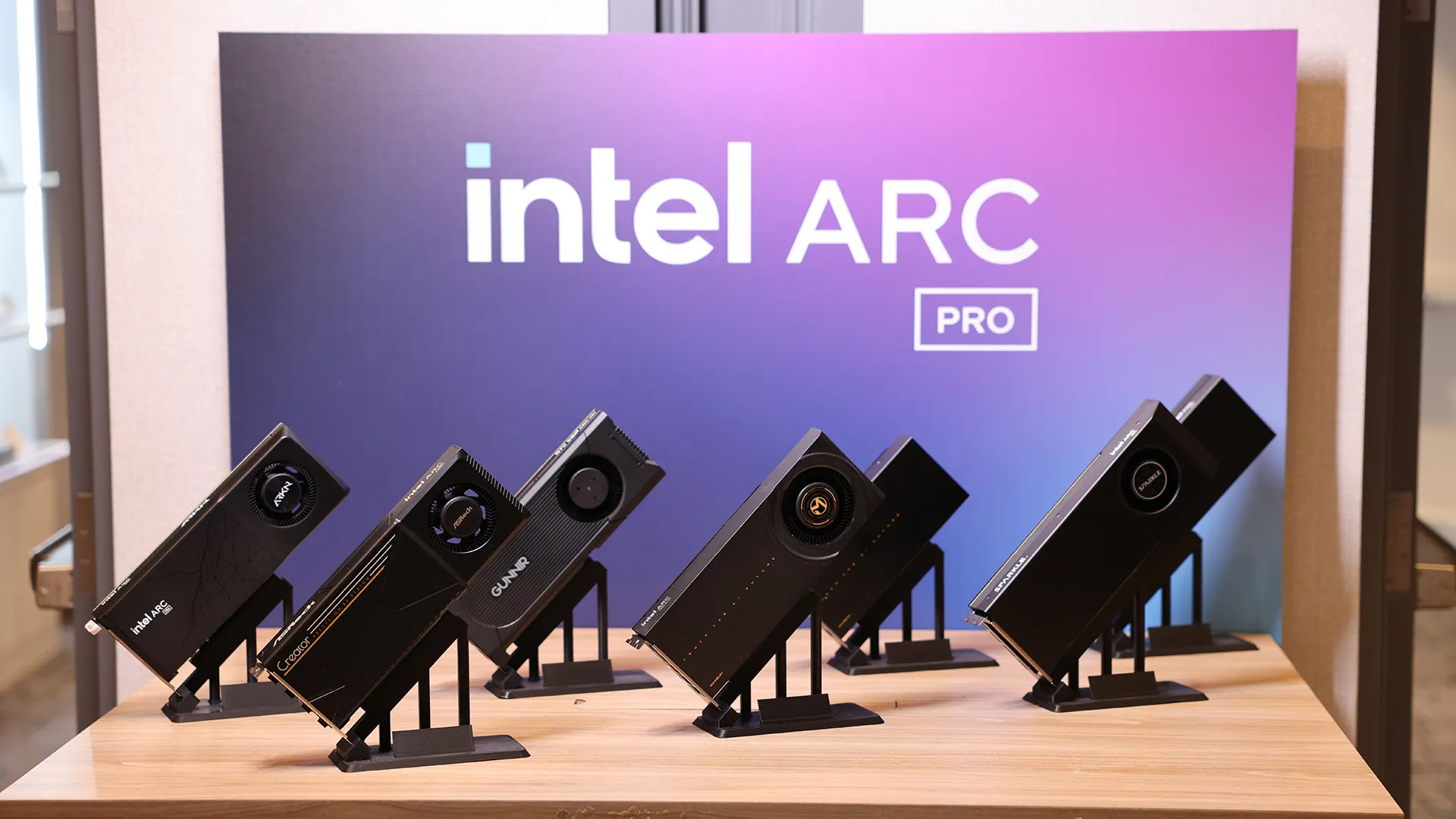
The rumours were right, after all. But it doesn't actually matter. Intel has finally launched the fabled Big Battlemage GPU, the one with 32 Xe cores codenamed G31. But it's not the cut-price Nvidia RTX 5070 we've been hoping for.
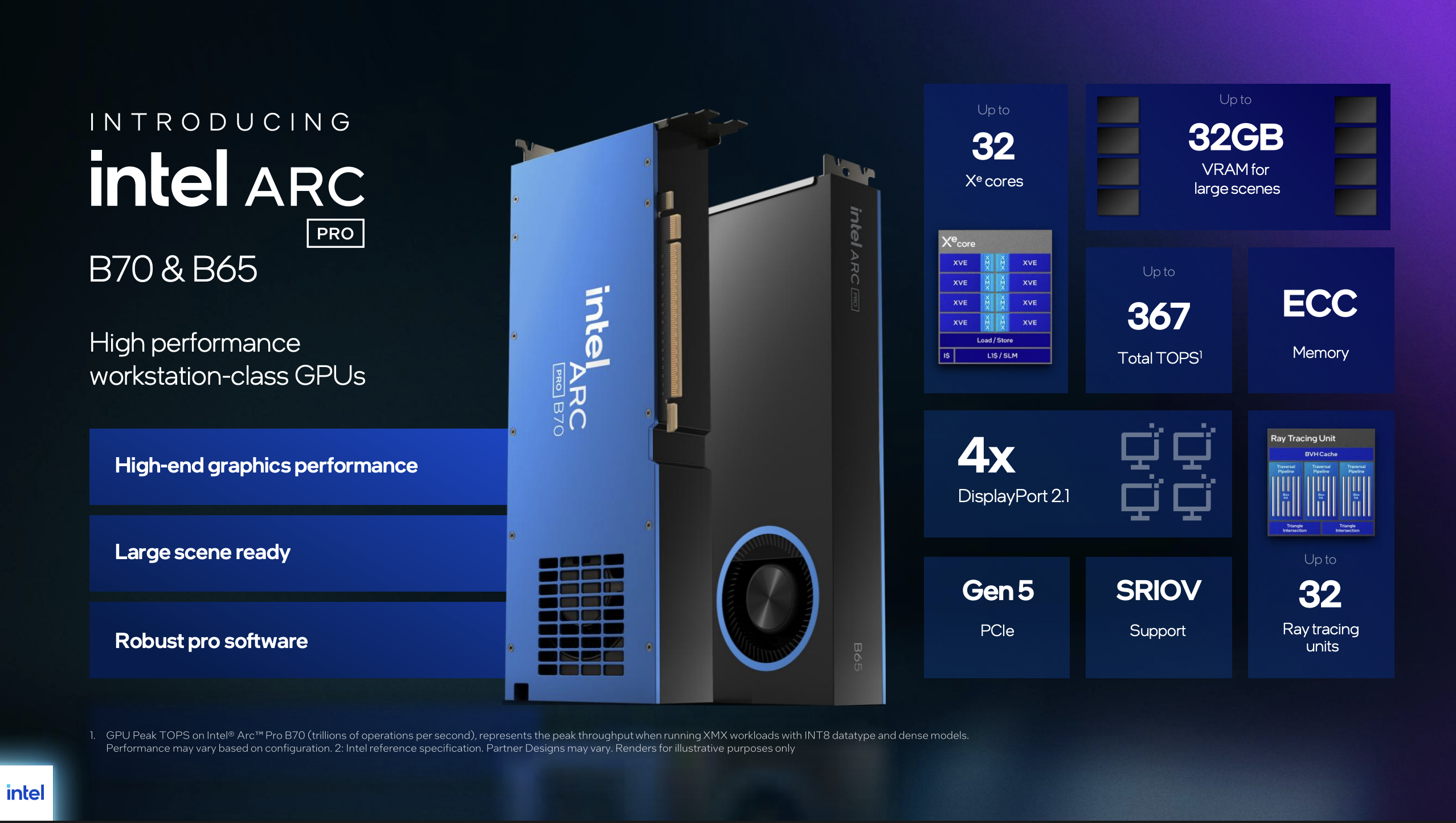
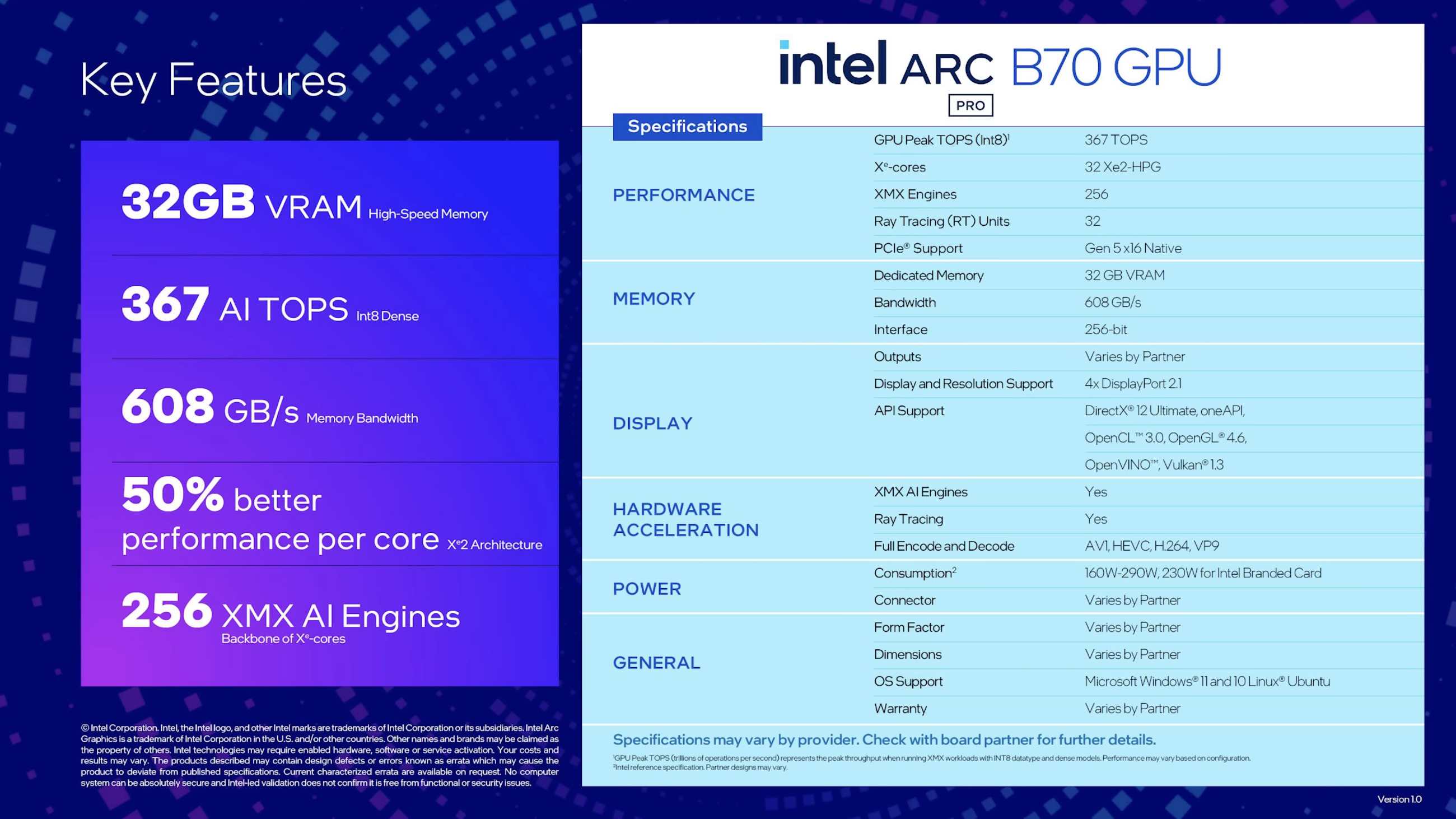
Instead, the new GPU has been branded the Intel Arc Pro B70, hooked up with a full 32 GB of VRAM and saddled with a $949 price tag. The "Pro" element of the branding is a dead giveaway here: This is not the Intel Arc B770 graphics card gamers have been waiting for.
While that 32 GB slab of VRAM is really what this GPU is all about, how does the 367 INT8 TOPS performance compare? Well, for what it's worth an RTX 5080 is good for 450.2 INT8 TOPS and the RTX 5070 246.9 INT8 TOPS.
Note that these figures are all for INT8 dense performance. If you think you've seen higher INT8 TOPS figures for some Nvidia GPUs, likely they were INT8 sparse ratings which are exactly double that of INT8 dense.
Anywho, along with the Intel Arc Pro B70, Intel is also launching the Intel Arc Pro B65. That's based on the existing G21 GPU as seen in both the Intel Arc B580 gaming card and the Arc Pro B60 professional card. But for the B65, it's also been stacked with 32 GB of VRAM, but the Xe core counts remains at 20 and the INT8 dense rating is 197 TOPS.
Pricing for the B65 will be lower than the B70, but Intel has yet to give a precise figure. Of course, the unanswered question in this is how the G31 chip in the B70 might have performed in games. No doubt we'll find out to some degree when the cards land with customers.
The Intel Arc Pro B70 was available from yesterday, so we will find out soon enough. The caveat is that it's not clear if—and perhaps unlikely that—Intel has put any work into drivers for the G31 GPU to support gaming. So, it's odds on that the results will be a disappointing mix of games running very slowly or not running at all, and generally not representative of what the GPU is actually capable of.
For now, there's no indication at all that Intel has imminent plans to launch G31 as a gaming GPU. The consensus is that the AI boom and spike in memory prices have killed any prospect for launching the G31 branded as the Intel Arc B770 and aimed at gamers. And yet we can still hope.
1. Best overall: AMD Radeon RX 9070
2. Best value: AMD Radeon RX 9060 XT 16 GB
3. Best budget: Intel Arc B570
4. Best mid-range: Nvidia GeForce RTX 5070 Ti
5. Best high-end: Nvidia GeForce RTX 5090

You must confirm your public display name before commenting
Please logout and then login again, you will then be prompted to enter your display name.