Join The Club





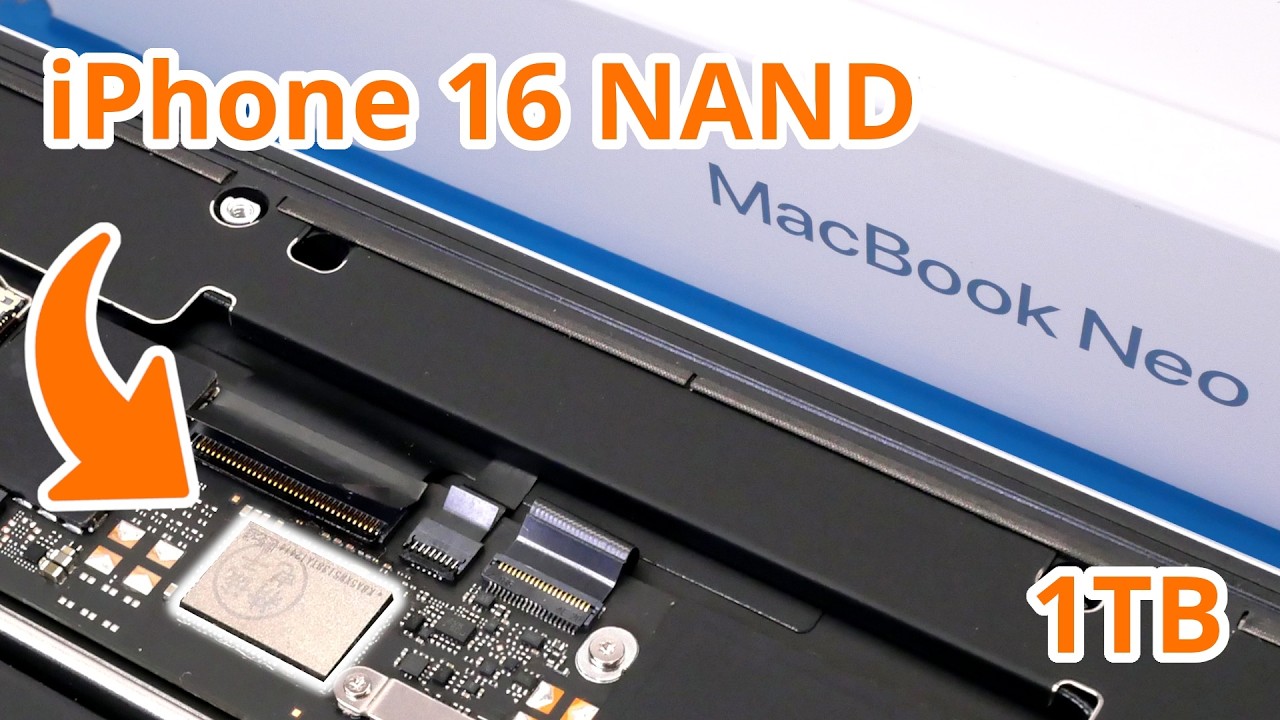
It's fair to say that Apple's new MacBook Neo has given the Windows-based laptop market something to think about. Powered by the same chip used in the iPhone 16, the $599 computer has reportedly been selling very well. That's despite it only having 512 GB as the best storage option. But if you're as handy as one YouTuber is at electronics work, doubling that amount is a distinct possibility.
Dosdude1 begins by checking that the new flash chip is completely blank, using a dedicated device and piece of software, before kitting it out with a full array of solder balls. None of what I've just described is a trivial task, even if one has all of the necessary equipment, but it's certainly a lot easier to do than the next stage.
Like many low-cost laptops, the MacBook Neo uses a single, soldered NAND flash chip to store data. Normally, removing such chips is quite easy: You simply heat the component to the point that the solder balls melt and gently prise the chip away from the circuit board. However, in this instance, the flash chip is surrounded by lots of surface-mounted devices (SMDs) and the underside is jammed with 'underfill'.
Not that this seems to deter dosdude1 in any way, but with judicious shimmying with a tool, and plenty of heat, the original flash chip comes off with nary an issue (though one SMD had to be removed first, to allow for the tool to get into the underfill).
Interestingly, the mounting area on the circuit board has more pads than the flash chip does, so it's possible Apple designed the Neo to use a physically larger flash device to have bigger storage options. Given how expensive SSDs have become, it was probably dropped due to cost reasons.
Anyway, the old chip gets swapped for the new one in a matter of moments, and then it's time for the final stage: Getting the Neo to run in DFU mode, and then use another Apple device to transfer the operating system and other files to the 1 TB drive. Dosdude1 has clearly done this many times before, because the whole process seemed to run without a hitch.
And voila! They're now the proud owner of a 1 TB MacBook Neo. The only question I have about all of this concerns the fiscal element. The 512 GB Neo costs $699—$100 more for double the storage—so if you already have the electronic gubbins and expertise required to do the flash lobotomy, it would seem to be a very sensible thing to do if you could get a 1 TB flash module for less than $200.

Alas, a quick browse of Ali Express suggests that such chips are more expensive than that, but I'm sure a savvy electronics shopper could get one for less. Apple demands around $200 more for a 1 TB 13-inch MacBook Air than the base 512 GB model, and the same price gap on the Neo could make it look like a rather poor option.
Then again, you've got little chance of picking up a 1 TB gaming laptop for $899, so perhaps not. Looks like dosdude1 knew exactly what they were doing.

1. Best overall:
Razer Blade 16 (2025)
2. Best budget:
Lenovo LOQ 15 Gen 10
3. Best 14-inch:
Razer Blade 14 (2025)
4. Best mid-range:
MSI Vector 16 HX AI
5. Best high-performance:
Lenovo Legion Pro 7i Gen 10
6. Best 18-inch:
Alienware 18 Area-51

You must confirm your public display name before commenting
Please logout and then login again, you will then be prompted to enter your display name.