The announcement that the next RPG from Baldur's Gate 3 developer Larian is a new title in the Divinity series didn't come as a huge surprise. We knew Baldur's Gate 4 wasn't on the cards, and a few days ago a trademark filing gave it away.
Ultimately, this is a world that Larian has spent over 20 years primarily dedicated to—it was always likely that's where it would return to to capitalise on its huge modern success.
Article continues belowLet Larian cook

Sean Martin, Senior Guides Writer: Even as someone who only discovered Larian games with the advent of Baldur's Gate 3, it's clear to me that this is an extremely positive move for the developer. With BG3, it had to abide by the strictures of Faerun and Dungeons and Dragons, but frankly, having absolutely knocked that out of the park so entirely, establishing such a massive audience, it's time for the developer to go back to their original setting.
Even if it somehow ends in a poorer game, I want to see what Larian will do when given free rein over a massive project like this, having learned so much from Baldur's Gate 3. I know absolutely nothing about Divinity and its setting, but I have faith, based on how damn good BG3 was, that the result will be something worthwhile.
Sure, Dungeons and Dragons did bring a lot to Baldur's Gate 3, but I think that game's brilliance is rooted in a significantly more than just its setting and any borrowed mechanics.
Does anyone really care about Rivellon?

Robin Valentine, Senior Editor: Don't get me wrong—I love Larian's RPGs, and I also think it was the right move for the studio to work on its own IP going forward. But while I love both Original Sin games, I just don't think there's anything interesting about Rivellon as a setting.
Not only is it fundamentally a pretty generic fantasy world, it also has very little consistency of tone or style. To me, Original Sin 2 felt like it was in a different world to the previous game, and both are disconnected from the other games in the Divinity series. It just feels like a soup of fantasy tropes that Larian drops whatever it likes into each time.
This is the series where for one entry they decided dragons with jetpacks were a thing and then never mentioned it again.

I'd much rather see those talents put to work on a completely new setting, with a more interesting premise.
For a while I'd just accepted that as a developer it was much stronger on interesting mechanics and interactions than world-building… but then Baldur's Gate 3 came along with some of the best sense of place of any D&D game. It made the Forgotten Realms come alive. So it seems like Larian does have the expertise these days to craft a really immersive RPG world.
I'd much rather see those talents put to work on a completely new setting, with a more interesting premise and without any of the baggage of Divinity. Particularly a shift of genre could have been really refreshing—imagine all that interesting immersive sim-like design in a sci-fi world, for example.
Hopefully this new game will be enough of a reboot of the Divinity setting to get me on board with it—and I'm sure either way I'll still really enjoy the game. But I can't help wishing we were getting more of a clean slate.
No one cares about Rivellon, but they care very much about Larian

Andy Chalk, NA News Lead: I think going back to Divinity isn't just the right move, it was also inevitable. Larian (or at least Swen) has such an obvious passion for and commitment to the setting, there's no way it was going to be left to lie fallow once Larian found itself in a position where it can do whatever the hell it wants. This is a studio that's spent damn near two decades trying to make Rivellon a thing. They're going to quit now? No chance.
That deep-rooted belief in the series is what makes this the smart play. This is Larian's best shot at making Divinity an A-list RPG, and you know it's going to make the most of it.

Larian has always been a brilliant systems maker, and now it's demonstrated a similar talent for storytelling.
And I think it's got a pretty good shot of succeeding. Larian, as Robin said, has always been a brilliant systems maker, and now it's demonstrated a similar talent for storytelling. Put those pieces together and I don't think it much matters what world you set your game in. Baldur's Gate 3 really was Divinity: Original Sin 3 in all but name, after all, and I have a very hard time believing that all the hundreds of thousands of people who played and loved it were long-suffering Sword Coast freaks with fond memories of the days when BioWare was like eight guys in Edmonton.
So now Larian gets to come at its most prized possession with bottomless resources, a sterling reputation, and a massive built-in audience, most of whom probably couldn't care less about Divinity—probably haven't even heard of it, sorry but it's true—but also care very much about what the Baldur's Gate 3 guys are getting up to next. That has to be tremendously exciting for the team, and I think that will be reflected very strongly in the game.
This was exactly the right move

Harvey Randall, Staff Writer: I think it's easy for us to forget just how generic of a fantasy setting The Forgotten Realms is, but in case you needed a reminder—while Larian definitely benefitted from Wizards of the Coast's many years of worldbuilding and lore, the meat of a story is in how its told, not a series of references you can point at and get.
Having played both Divinity: Original Sin 2 and Baldur's Gate 3, I always felt like DOS2 was shackled to a humbler scope. Larian's eyes felt far bigger than its stomach: Here was this textured, interesting world, constrained to being shown via text boxes and somewhat-goofy graphics. I agree with Robin that it has "very little consistency in tone and style".
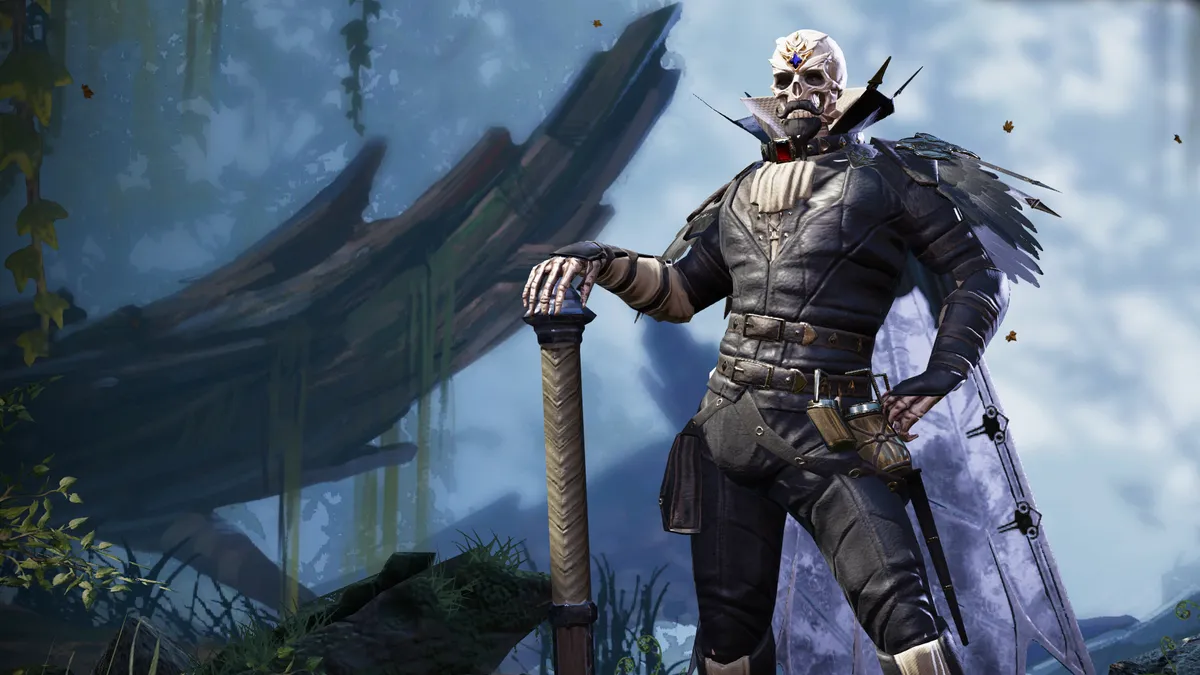
But I don't think that's because of Rivellon itself, I think that's because it's hard to really sell emotional pathos when you're looking at a text box, and Loshe is doing 'idle animation 4' in front of you. Would Astarion's heartwrenching journey have worked nearly as well without Neil Newbon's mocap performances backing it up? Probably not!
Baldur's Gate 3 felt like Larian casting all of that off. The studio has plenty of confidence when it comes to designing an RPG, but in terms of presentation and storytelling? BG3's where the studio really nailed it. Full mocap performances, some spectacular voice work, and a flair for big moments that brought me back to BioWare's golden age.

And if you're Larian, looking back at your legacy—wouldn't you want to give Rivellon another go, now you've really found your stride?
There's a reason our own Lauren Morton said the studio was one to look out for if you're a "mourning BioWare fan", because it feels like Larian's filling those legendary shoes while the actual BioWare spins out and crashes in a ditch somewhere. Baldur's Gate 3 was the game where it got those particular boots fitted, and I think there's little reason to doubt it can pull off something just as impressive again.
And if you're Larian, looking back at your legacy—wouldn't you want to give Rivellon another go, now you've really found your stride? This is rare air the studio's breathing: A huge boost of funding, a clearly talented and empowered writing staff, an effective system in place for recording and translating mocap performances, and the complete creative freedom to do whatever it damn well pleases.
I don't know if I was ever truly taken by Rivellon. What I do know is that Larian's bringing its newfound confidence in storytelling with it, and if there ever was a time to reinvent its long-standing setting, to really pitch me on what makes it interesting, to lure me in with characters and lore backed up by setpieces and cinematics? The time is now.

You must confirm your public display name before commenting
Please logout and then login again, you will then be prompted to enter your display name.